When the Finger Lakes Land Trust spent $1.3 million to acquire a 132-acre homestead adjacent to Buttermilk Falls State Park in Ithaca, New York, the transaction looked on paper like a routine real estate deal for public green space. In reality, it was an emergency intervention. Over the past decade, surging foot traffic, suburban sprawl, and agricultural runoff have squeezed the iconic gorge park from every side. By securing the property on Sand Bank Road, conservationists effectively bought a critical buffer zone to protect the watershed, relieve severe trail congestion, and establish safer public access before rising real estate values locked the land away forever.
Land conservation in Upstate New York rarely makes front-page news unless a billionaire is involved or a pristine lake is threatened by industrial dumping. Yet the quiet mechanics of deals like the Buttermilk Falls acquisition dictate whether public parks survive the next fifty years intact or slowly degrade into overcrowded, ecologically fragmented islands. Most visitors see a waterfall and a parking lot. They do not see the decades of hydrological vulnerability, zoning pressure, and municipal tax battles happening just beyond the split-rail fence.
Anatomy of an Emergency Land Deal
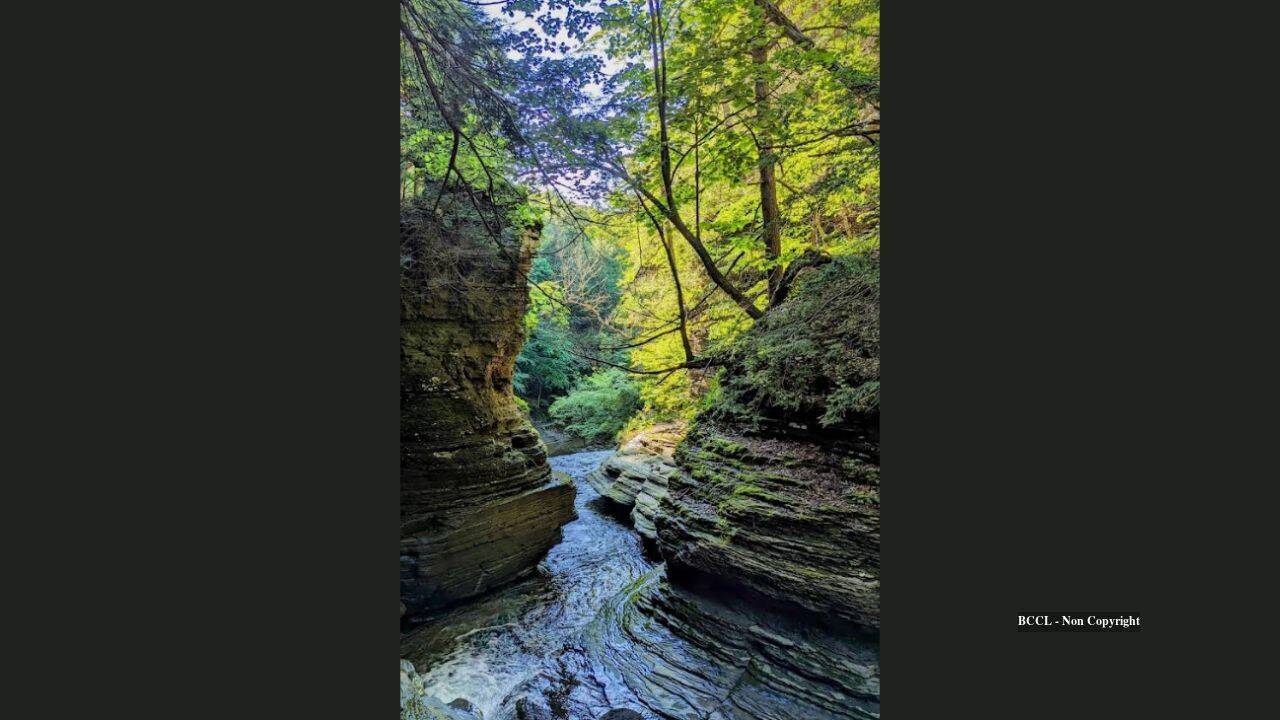
To understand why a nonprofit land trust would drop $1.3 million on a single homestead in Tompkins County, you have to look at the geography of the Finger Lakes region. Glaciers carved deep, narrow gorges into the shale and sandstone bedrock, creating dramatic waterfalls like Buttermilk Falls. Those same geological features make the parks exceptionally fragile. Water moves fast down steep inclines, carrying whatever sits on the rim directly into the gorge below.
The 132-acre property sits directly along the park's southern boundary, encompassing open fields, woodlands, and vital frontage along Buttermilk Creek—the very waterway that feeds the park's famous cascades. Had a private developer purchased the parcel, the consequences would have been immediate and irreversible. High-density residential construction on the rim alters drainage patterns, increases impervious surface area, and introduces lawn chemicals and septic runoff straight into the creek.
The Bridge Strategy of Land Trusts
State agencies are notoriously slow. New York State Parks cannot simply pull a checkbook out of a desk drawer when a key parcel hits the open market. State acquisitions require appraisals, environmental reviews, legislative appropriations, and bureaucratic sign-offs that routinely take two to four years. In a hot real estate market like Ithaca, a prime 132-acre tract lasts weeks, not years.
This is where organizations like the Finger Lakes Land Trust operate as financial shock absorbers. They use private donations, bridge loans, and state grant commitments—such as funding from New York's Environmental Protection Fund—to act with the speed of a private buyer. Once the trust secures the deed and removes the threat of development, it holds the land in a conservation escrow of sorts until the state can formally transfer the acreage into the park system. It is a workaround born of necessity, bypassing government inertia to beat private capital to the punch.
The Overtourism Trap in the Finger Lakes
For decades, Ithaca was a quiet college town with a handful of scenic gorges known mostly to locals and Cornell University students. Social media and the post-2020 domestic travel boom obliterated that obscurity. Attendance across New York State Parks shattered records repeatedly in the early 2020s, pushing infrastructure designed in the Civilian Conservation Corps era past its breaking point.
Buttermilk Falls bore the brunt of this surge. Located just minutes from downtown Ithaca and major highways, the park became a primary choke point for weekend tourists.
- Parking Lot Gridlock: On peak summer weekends, the main lower lot fills before 10:00 AM, forcing cars onto the shoulders of Route 13 and creating severe pedestrian hazards.
- Trail Erosion: Heavy foot traffic off designated paths compacts soil, kills root systems, and accelerates erosion along the steep gorge rim.
- Water Quality Stress: High visitor volume in the natural swimming area at the base of the falls strains local sanitation systems and stirs up sediment.
Acquiring the Sand Bank Road homestead directly addresses the access bottleneck. Rather than funneling every single visitor through the congested lower entrance off Route 13, the new acreage opens the door for alternative trailheads, expanded upland hiking loops, and dispersed parking away from the fragile gorge floor. Spreading people out is the only way to keep them from loving the park to death.
Following the Money and the Hidden Costs
A $1.3 million price tag in Tompkins County raises immediate questions about valuation, funding sources, and long-term maintenance. Roughly $9,800 per acre might sound steep for rural Upstate New York farmland and woods, especially to outsiders accustomed to depressed Rust Belt real estate prices. Inside the Ithaca market, however, that number reflects the intense pressure of suburban expansion radiating outward from Cornell University and Ithaca College.
Land values in the Finger Lakes have climbed steadily as remote workers and regional buyers compete for acreage with views or proximity to natural amenities. Conservationists are no longer competing against dairy farmers; they are competing against luxury homebuilders and subdivision developers.
| Acquisition Factor | Public Benefit | Hidden Financial & Operational Burden |
|---|---|---|
| Watershed Protection | Prevents septic and chemical runoff into Buttermilk Creek | Requires ongoing invasive species management on former farmland |
| Expanded Trail Access | Relieves severe congestion at the main Route 13 entrance | Demands millions in new state capital for trail construction and parking |
| Wildlife Corridor | Connects fragmented forest habitats along the southern rim | Increases boundary enforcement and search-and-rescue coverage areas |
| Property Tax Base | Permanently removes development threat from town zoning | Shifts local tax burden unless state makes Payment in Lieu of Taxes (PILOT) |
Buying the land is actually the cheapest part of the equation. The hidden costs arrive the day after closing. Former agricultural homesteads often come with aging outbuildings that must be safely demolished, old farm dumps that require environmental remediation, and fallow fields quickly overtaken by invasive buckthorn and autumn olive.
Furthermore, turning raw acreage into safe public parkland requires engineering. New York State Parks will need to fund wetland delineations, build boardwalks, grade gravel parking areas, and install signage before a single hiker can legally set foot on the new trails. If state budget priorities shift during an economic downturn, newly acquired parcels can sit in limbo for years—legally protected from bulldozers, yet entirely inaccessible to the taxpayers who helped fund the purchase.
The Local Tax Friction Nobody Likes to Mention
Whenever a nonprofit land trust or state agency buys a million-dollar property, a quiet tension ripples through the local town hall. Rural and semi-rural municipalities rely heavily on property taxes to fund school districts, road maintenance, and volunteer fire departments. When private land transitions into tax-exempt conservation status, the local tax base shrinks.
In New York, the state mitigates this friction through Payment in Lieu of Taxes (PILOT) programs, where the state reimburses local jurisdictions for lost tax revenue on state-owned parkland. However, municipal leaders across Upstate New York have long complained that state PILOT assessments lag behind real market values, leaving towns shortchanged as maintenance costs for local roads—like Sand Bank Road—increase due to tourist traffic.
Conservationists argue, with solid economic backing, that open space actually saves towns money. Residential subdivisions rarely pay enough in property taxes to cover the true cost of the municipal services they demand, particularly school bus routes, water infrastructure, and emergency response. Preserving the 132-acre homestead keeps municipal service demands near zero while bolstering the tourism economy that keeps downtown Ithaca restaurants and hotels afloat. Still, for a town highway superintendent staring at potholes caused by out-of-state SUVs, the macroeconomic benefits of watershed preservation feel abstract compared to an immediate budget shortfall.
Why Connectivity Matters More Than Acreage
Conservation biology has moved past the outdated model of saving isolated "museum pieces" of nature. A 100-acre park surrounded by asphalt and subdivisions eventually loses its ecological vitality. Amphibian populations crash when roads cut off their seasonal migrations to vernal pools. Forest-interior birds fail to breed when edge predators like raccoons and house cats penetrate deep into narrow woodland strips.
The true strategic value of the Buttermilk Falls acquisition lies in habitat connectivity. The new parcel does not just make the park bigger; it links the state park to adjacent protected lands, including properties conserved by the Finger Lakes Land Trust and municipal watersheds.
By stitching together a continuous green corridor from the gorge floor up into the surrounding hills, the deal preserves a vital migration pathway for wildlife adapting to shifting climate patterns. White-tailed deer, black bears, bobcats, and dozens of migratory songbird species rely on these unbroken forested ridges to move safely across the region. Without buffer zones like the Sand Bank Road property, Buttermilk Falls would gradually become an ecological dead end.
The Future of the Finger Lakes Gorge System
The Buttermilk Falls transaction is a blueprint for how conservation organizations are fighting a defensive war across the Northeast. Climate change has altered rainfall patterns in New York, bringing fewer gentle soaking rains and more violent, concentrated cloudbursts. When five inches of rain fall in three hours over Ithaca, the gorges bear the brunt of the hydraulic force.
In 2021 and 2023, severe flash flooding tore through Finger Lakes state parks, ripping out stone staircases, undermining bridge abutments, and forcing weeks-long closures at Buttermilk Falls and nearby Robert H. Treman State Park. Undeveloped forest and meadowland upstream act as a natural sponge, absorbing stormwater and releasing it slowly into the creek system. Every acre paved over for driveways and rooftops multiplies the destructive power of the next storm surge hitting the gorge.
Protecting the 132-acre homestead will not stop extreme weather, nor will it instantly eliminate the traffic jams on Route 13 next July. What it does is buy time and physical margin for error. It keeps concrete out of the headwaters, gives state park planners room to re-engineer visitor flow away from fragile cliffs, and proves that proactive land acquisition remains the single most effective tool for keeping public parks from collapsing under the weight of their own success.