The coffee in the paper cup has gone cold, but the man staring out the window of the Via Rail train doesn’t seem to notice. Outside, the blurred green and grey of the Quebec-Windsor corridor rushes past at a stubborn, mid-century pace. For decades, commuters along this stretch have shared a collective, exhausting ritual: watching the world move faster everywhere else while they remain trapped in a perpetual state of transit limbo.
For a brief moment, it felt like the waiting was finally coming to an end. The federal government’s ambitious proposal for a high-frequency, high-speed rail line promised to stitch together Quebec City, Montreal, Ottawa, and Toronto with steel tracks and unprecedented velocity. It was marketed not just as an infrastructure project, but as a modern spine for a changing nation.
Then came the political fracture.
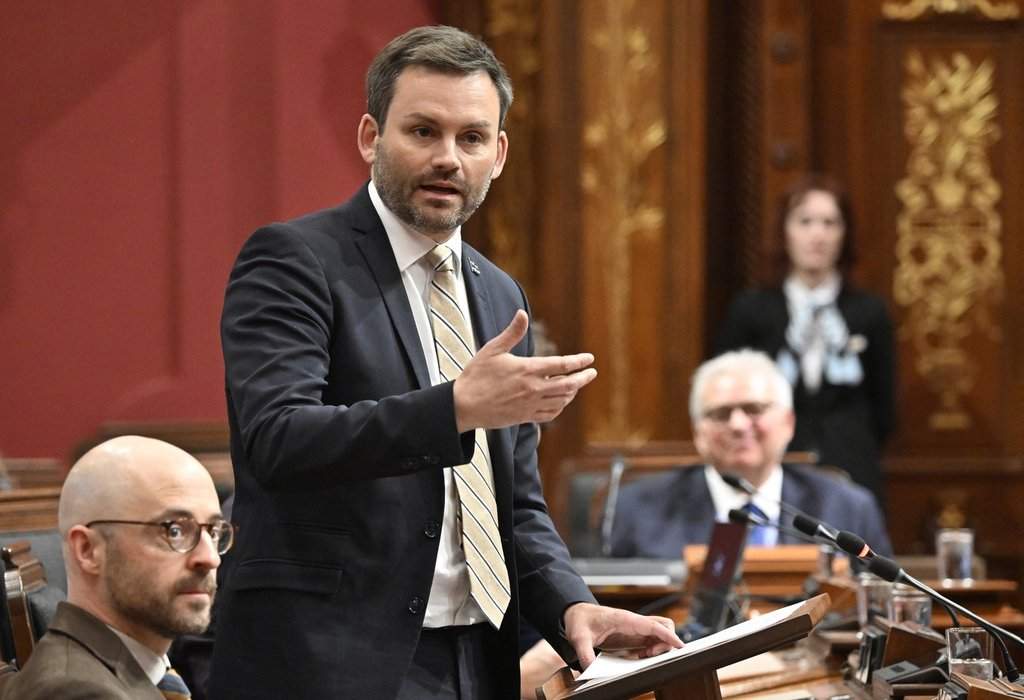
Paul St-Pierre Plamondon, the leader of the Parti Québécois (PQ), stepped to a microphone and injected a heavy dose of sovereign reality into Ottawa’s multi-billion-dollar dream. If the PQ forms the next provincial government, Plamondon warned, Quebec will pull out of the federal high-speed rail project entirely. Just like that, a project meant to connect people became a line drawn in the sand.
To understand why a train track can trigger a constitutional identity crisis, you have to look past the engineering blueprints and sit with the people who actually live along the proposed route.
The Sovereignty of the Track
Consider a hypothetical commuter named Marc. Marc lives in Trois-Rivières, a city historically positioned as a vital lung between Montreal and Quebec City. For years, Trois-Rivières has felt somewhat bypassed by the economic hyper-growth of the larger hubs. When the federal high-speed rail project was announced, it felt like a lifeline. It meant a 30-minute trip to Montreal. It meant opportunities.
But inside the offices of the Parti Québécois, the project looks entirely different. It looks like an encroachment.
The PQ’s objection isn’t rooted in a dislike for fast trains. Everyone wants to get home faster. The resistance stems from a fundamental question of control: who owns the dirt, the air, and the future of Quebec’s territory?
By tying Quebec’s two major cities into a federal loop that terminates in Toronto, the PQ argues that Quebec is essentially surrendering its transportation sovereignty to Ottawa. The fear is that a federal Crown corporation or a private consortium selected by the federal government will dictate the economic development, the environmental impacts, and the linguistic landscape of Quebec’s most vital corridor.
Plamondon’s ultimatum is a classic political chess move, but it carries immense risk for ordinary citizens. If the PQ pulls the plug, the entire business case for the multi-billion-dollar line begins to crumble. A high-speed rail network in Canada without Montreal and Quebec City is like a spine without a skull. It ceases to function as a unified organism.
A Tale of Two Speeds
The debate exposes a profound cultural divide in how we view progress. On one side, the federal vision is one of grand connectivity—a seamless, post-national corridor where borders matter less than economic efficiency. On the other side, the nationalist vision prioritizes local autonomy, arguing that a train line designed in Ottawa will always serve Ottawa’s interests first, leaving Quebec towns as mere whistle-stops on someone else's journey.
The tension is palpable on the ground. Step into any café in Quebec City, and the conversation isn't about track gauge or electrification logistics. It is about respect.
"We have been promised a fast train since the 1970s," says one elderly resident, shaking his head. "Every election, they bring out the maps. Every election, the maps disappear."
The complexity of the current federal plan doesn't help build trust. It is a confusing hybrid of high-frequency rail (HFR) and high-speed rail (HSR). The federal procurement process has invited international consortia to pitch designs that can hit speeds of up to 300 kilometers per hour, but the final parameters remain murky, expensive, and years away from reality.
When a project is that abstract, it becomes incredibly easy to weaponize politically. The PQ has seized on this ambiguity, suggesting that Quebec could build its own high-speed link—a purely provincial line connecting Quebec City and Montreal—on its own terms, using its own engineering expertise, and keeping the profits and decision-making power within the province.
The Hidden Cost of Walking Away
But building a provincial train network in isolation is easier said than done. The financial math is staggering.
High-speed rail is one of the most capital-intensive endeavors a government can undertake. It requires vast tracts of land expropriation, massive environmental assessments, and technological imports that strain even federal budgets. If Quebec walks away from the federal project, it walks away from billions of dollars in federal funding. It means Quebec taxpayers would have to foot the entire bill for a domestic alternative, or face the reality of getting nothing at all.
The real tragedy of this political tug-of-war is the time lost.
While politicians debate jurisdictions and sovereignty, the climate crisis doesn't wait. The clogged highways between Montreal and Toronto continue to spew emissions. The airports remain bottlenecked with short-haul flights that should have been replaced by electric trains twenty years ago.
Every year spent arguing over who holds the pen on the contract is another year that citizens spend stuck in traffic on the highway, watching the brake lights stretch out into the dark.
The View from the Platform
The platform at the station is quiet now. The wind blows a discarded newspaper across the concrete. On the front page, a headline details the latest political polling numbers, calculating the probability of a PQ government and the subsequent death of the rail project.
This is no longer a technical debate about infrastructure. It has mutated into something far more volatile: a proxy war over identity, autonomy, and the definition of a nation. The tracks have become a metaphor for two different futures pulling in opposite directions.
The train finally pulls away from the station, heavy and slow, groaning as it builds momentum on tracks laid down generations ago. Inside, passengers lean their heads against the glass, caught between the desire to fly across the landscape at the speed of tomorrow, and the stubborn, heavy reality of today.



:max_bytes(150000):strip_icc():focal(665x0:667x2)/gettyimages-50733149-2000-8b129a2475974982a915418ce92a73d8.jpg)