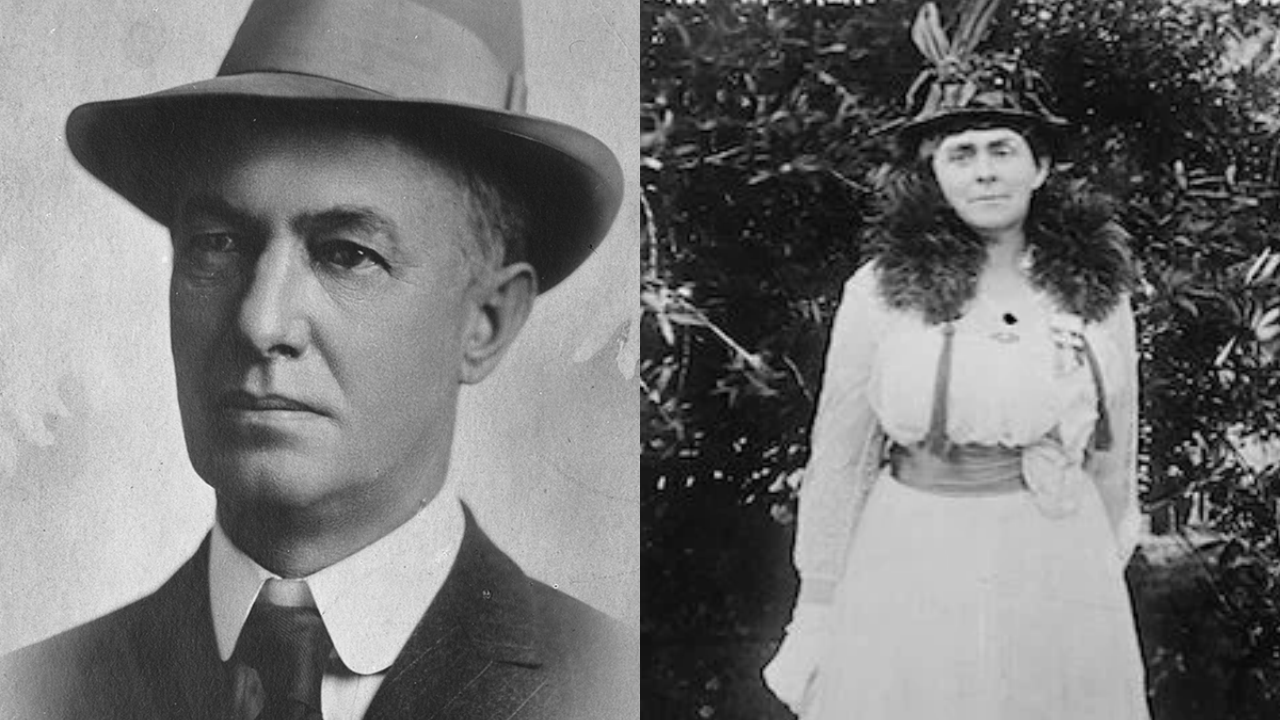
Most people assume that anyone who played a vital role in cracking enemy ciphers during the Second World War would spend the rest of their lives bragging about it. They picture old men at veterans' halls trading stories over warm beer, eager to claim their piece of history. Reality looks entirely different. When you sign the Official Secrets Act at twenty years old, you take that promise seriously. Harry Billinge took it so seriously that his own wife didn't know the full extent of what he did at Bletchley Park until decades later.
Living to 103 gives you a strange vantage point on history. You watch the world forget things that cost millions of lives, and you stay silent because the rules you swore to follow never technically expired. When the story finally broke, people acted surprised. They shouldn't have been. Thousands of young men and women walked through those gates in Buckinghamshire, did math that saved the free world, and went home to work in banks, factories, and schools without ever uttering a single word about it. Read more on a connected subject: this related article.
The Weight of Bletchley Park
Picture a damp, crowded mansion where codebreaking was less like a Hollywood movie and more like the most tedious accounting job imaginable. Harry Billinge wasn't sitting in a sleek room with flashing lights. He worked in the Hutts, surrounded by paper scraps, clicking teleprinters, and the constant hum of electromechanical machines. The work required an almost pathological level of patience. You stared at intercepted enemy radio transmissions until your eyes watered, looking for repeating patterns in a sea of randomized German signals.
The pressure was suffocating. If you missed a single indicator, a convoy in the Atlantic took a torpedo. If you spotted the pattern, dozens of lives survived. Nobody got a medal while the bombs fell. Nobody received a pat on the back during the midnight shift. You just kept pencil moving across paper, hoping the next message made sense. Further analysis by Wall Street Journal highlights related perspectives on this issue.
Veterans often talk about the silence after the war ended. You couldn't tell your parents. You couldn't tell your girlfriend. You couldn't write it in a memoir. The government classified everything, locking the cabinets and swallowing the keys. For Harry, keeping that secret wasn't a burden so much as a condition of breathing. You did your job, you won the war, and then you pretended you spent six years filing paperwork.
Why the Silence Lasted So Long
People often wonder how entire generations managed to keep secrets of this magnitude. We live in an era where every mundane lunch gets broadcast instantly to millions of strangers. Privacy feels like an antique concept. Back then, discretion was a cultural reflex. The people who built the Bombe machines and cracked the Lorenz cipher viewed their silence as an extension of the uniform.
Governments maintained the ban on talking for decades. Even after the restrictions loosened in the nineteen seventies and eighties, the institutional habit remained ironclad. Harry and his peers didn't keep quiet because they wanted drama or mystery. They stayed quiet because breaking a wartime oath felt dirty.
When historians finally peeled back the curtain on Bletchley Park in the late twentieth century, the public discovered an industrial-scale intelligence operation driven mostly by quiet, unassuming people. Harry watched from the sidelines as the academic papers piled up and the documentaries rolled out. Still, he didn't rush to cash in on his biography. He lived his quiet life in Cornwall, fundraising for veterans and tending to his community.
The Reality of Aging Through History
Crossing the century mark changes your relationship with memory. By the time Harry reached his hundredth year, the friends who stood beside him in those freezing wooden huts were long gone. He was left as a solitary archive of a vanished world. When journalists finally caught up with him, they found a man who was sharper than people half his age, yet entirely unimpressed by his own myth.
Society treats centenarians like museum exhibits. We want neat, inspirational soundbites about resilience and the good old days. Harry gave straightforward answers instead. He didn't romanticize the stress. He remembered the cold, the exhaustion, and the profound grief of losing friends while knowing you couldn't even explain what you were fighting for.
That authenticity is precisely why his story resonates now. We are starved for people who did hard things without demanding a standing ovation.
What We Miss About the Greatest Generation
We tend to flatten historical figures into cardboard cutouts of patriotism. We forget that the people who defeated fascism were just ordinary kids plucked from normal lives, handed impossible tasks, and told to figure it out. Harry Billinge didn't think of himself as a hero. He thought of himself as a survivor who happened to be good with numbers and terrible at breaking promises.
Next time you look at a vintage photograph of someone who lived through the twentieth century, remember that you are likely looking at an unexploded vault of secrets. Most of them took those stories to the grave. The ones who let slip a tiny piece of the puzzle late in life give us a rare glimpse into the machinery that kept the lights on in Europe.
Honor their memory by skipping the cheesy platitudes. Recognize that the price of freedom was often decades of crushing, lonely silence.