For four months, Kenji Sato did not look at the sky. He looked at the rust.
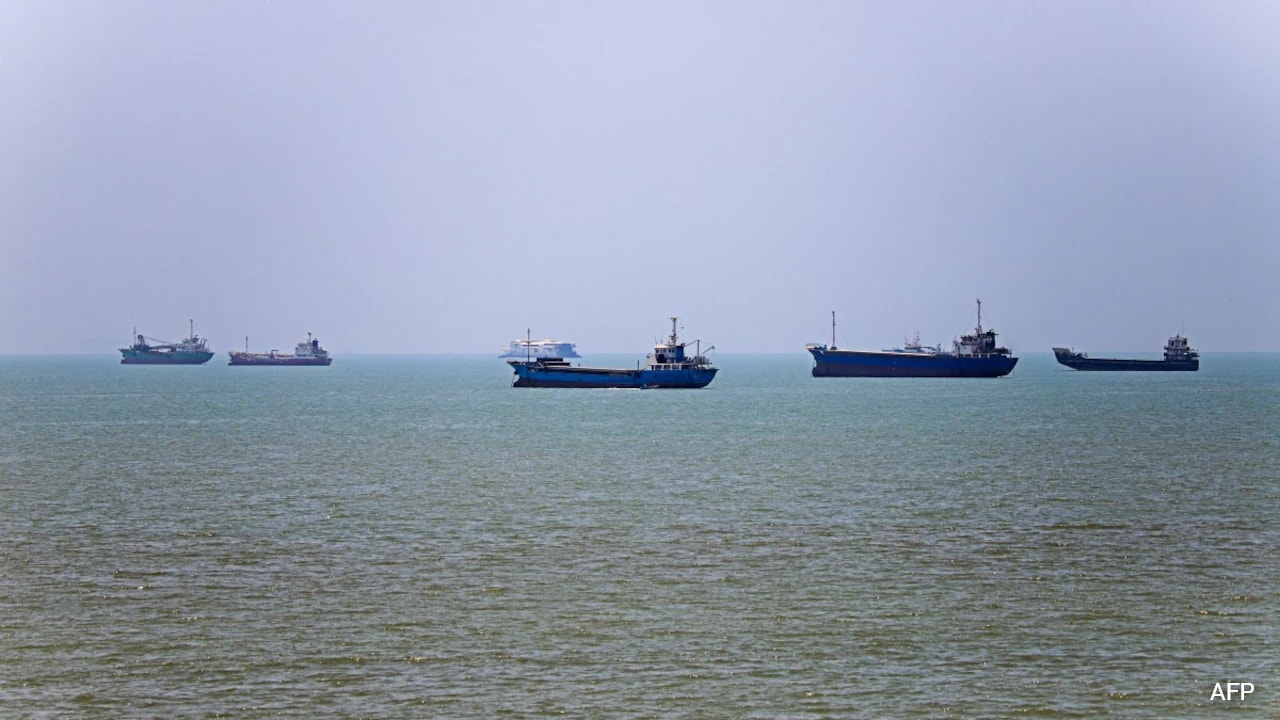
He looked at the blistering paint on the deck of a 1,100-foot Very Large Crude Carrier (VLCC) floating aimlessly in the suffocating heat of the Persian Gulf. To the rest of the world, Kenji’s ship was a minor data point on a London Stock Exchange Group shipping ledger. It was a line item in a macro-economic forecast about energy crudes from Saudi Arabia, Qatar, and the United Arab Emirates. But to Kenji, a senior engineer who had spent twenty-two years on the water, the ship was a floating steel cage holding two million barrels of oil—and thirty human souls.
They were stranded. Held hostage not by pirates, but by the terrifying, invisible gravity of the war with Iran.
Every morning since early March, the ritual was the same. The crew woke up to the hum of generators, the heavy smell of stagnant sea salt, and the agonizing knowledge that they were sitting on a massive tinderbox. Just a few miles away lay the Strait of Hormuz, a narrow, 21-mile-wide choke point through which a fifth of the world’s petroleum must pass. To cross it meant risking a drone strike or a naval seizure. To stay meant melting under the Arabian sun, waiting for a diplomatic breakthrough that felt like it would never arrive.
Then, on a Monday morning in July, the engines hummed a different tune.
The Weight of Static Water
It is easy to forget how the modern world actually functions. We tap our phones, buy our groceries, and start our cars, entirely blind to the vast, mechanical circulatory system that keeps civilization alive. When a blockage occurs in that system, the consequences are immediate, deep, and terrifying.
Consider what happened when the maritime traffic through Hormuz ground to a halt last spring. Japan relies on the Middle East for over 90 percent of its crude oil. When the war effectively blockaded the gulf, it didn't just stop ships; it froze time.
For the shipping giant Mitsui O.S.K. Lines, the dilemma was agonizing. Do you risk the lives of hundreds of seafarers to deliver cargo, or do you leave billions of dollars in infrastructure to bob helplessly in a combat zone? They chose survival. They chose to wait.
But waiting has its own cost.
Imagine being trapped on a vessel where the ambient temperature routinely hits 110 degrees Fahrenheit. The water around you is dead calm. Your food is rationed, your internet connection is a spotty, expensive luxury used only to tell your family back in Yokohama or Manila that you are still alive, still waiting. The cargo beneath your feet—12 million barrels across the fleet—is worth nearly a billion dollars, but out here, it is just an anchor keeping you tied to danger.
It wasn't just one ship. It was a phantom armada. Ten Japan-linked vessels in total were frozen in place: six supertankers, two chemical carriers, a vehicle transport, and a container ship. Together, they formed a silent monument to geopolitical paralysis.
The Break in the Horizon
The shift happened without warning.
Geopolitical negotiations are usually conducted in air-conditioned rooms in Switzerland or Doha, far from the glare of the Persian Gulf. For months, diplomats bickered while the crews on the water watched the horizon for missile smoke. But over the weekend, the digital trackers on the LSEG platform blinked.
A South Korean-bound supertanker, the Long Wind, loaded with two million barrels of Saudi crude, quietly fired up its propulsion systems. It slipped through the strait over the weekend, charting a course for Onsan, South Korea, where it is expected to arrive on July 26.
It was the signal the Japanese fleet had been praying for.
The departure of ten massive ships is not a subtle event. It is a slow-motion migration of steel. One by one, the six VLCCs and their companion vessels turned their bows toward the narrow gap between Iran and Oman. For the crews on board, the transition from dead stop to active transit was a masterclass in controlled terror. Everyone wore flak jackets and helmets. The lookouts scanned the water for the telltale wake of fast-attack craft or the low buzz of loitering munitions.
The real problem with modern warfare is that it turns ordinary trade into an act of supreme courage. The men and women navigating these waters aren't soldiers. They are mariners, mechanics, and cooks. Yet, for a few hours on Monday, they were running a gauntlet that held the economic stability of East Asia in the balance.
The Hidden Ripple
When these ten ships finally cleared the Strait of Hormuz and entered the open blue of the Gulf of Oman, a collective breath was released across the shipping world. But the crisis is far from over. The trauma of a four-month blockade leaves deep scars on global supply chains.
Take a look at the broader picture. Because of this exact conflict, QatarEnergy had to slash its scheduled liquefied natural gas deliveries to Bangladesh by half this year. While Tokyo breathes a sigh of relief as its oil finally moves across the Indian Ocean, families in Dhaka are facing rolling blackouts. A disruption in one corner of the ocean invariably creates a tragedy in another.
The ocean has a way of erasing human drama. From a satellite, these ten tankers look like tiny toys sliding across a blue mirror. They leave a white wake that disappears within minutes.
But for Kenji and the 900 mariners who spent the last four months wondering if they would ever see their homes again, the voyage is far from abstract. As the coast of Iran faded into the haze behind them, the crew did something they hadn't done since March.
They gathered on the mess deck, turned off the emergency radio broadcasts, and shared a meal without looking at the radar screen. The world will get its oil, the factories will keep humming, and the markets will stabilize. But the ghosts of those four months in the gulf will remain in the minds of the people who actually had to steer the world back from the brink.