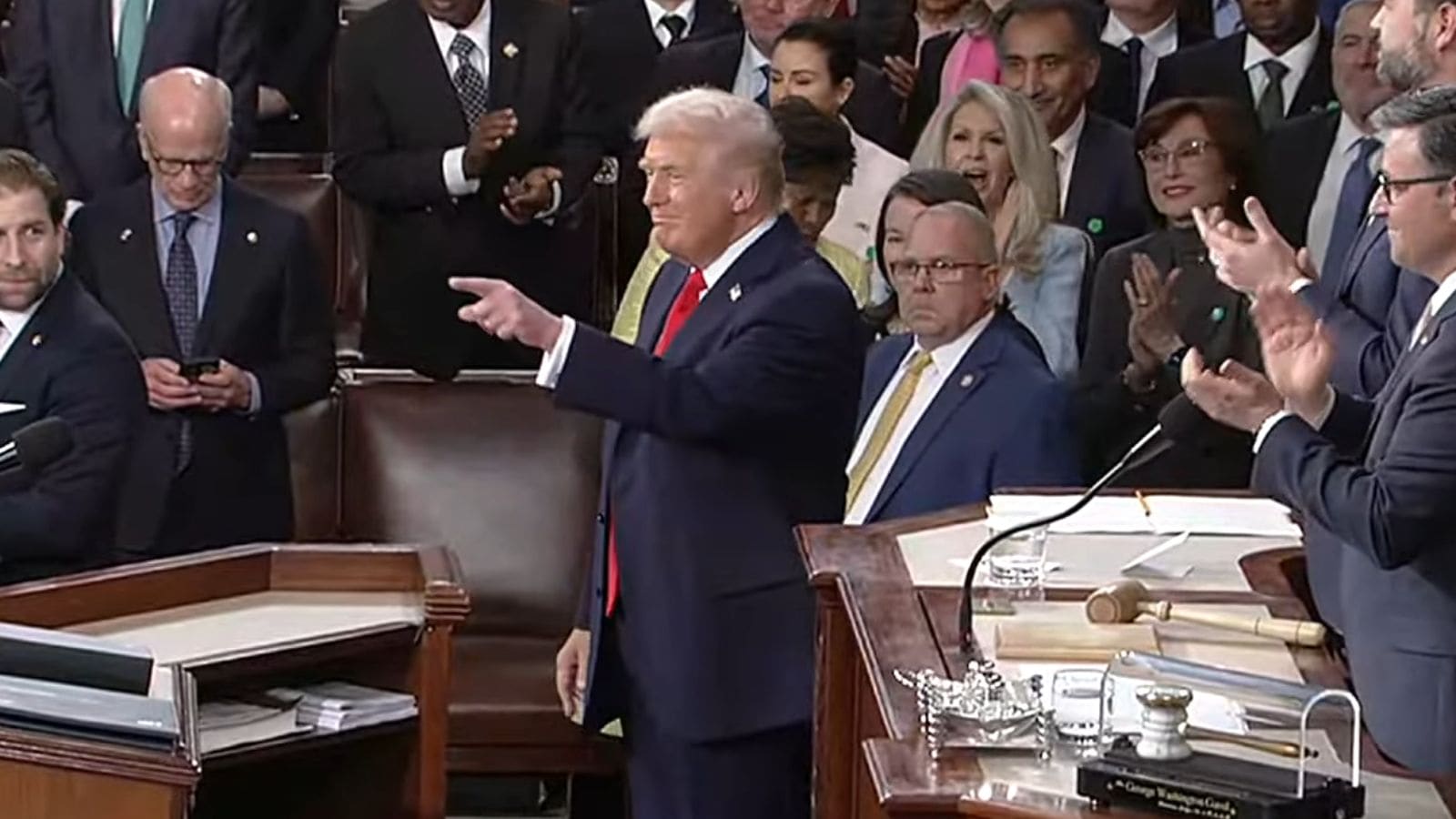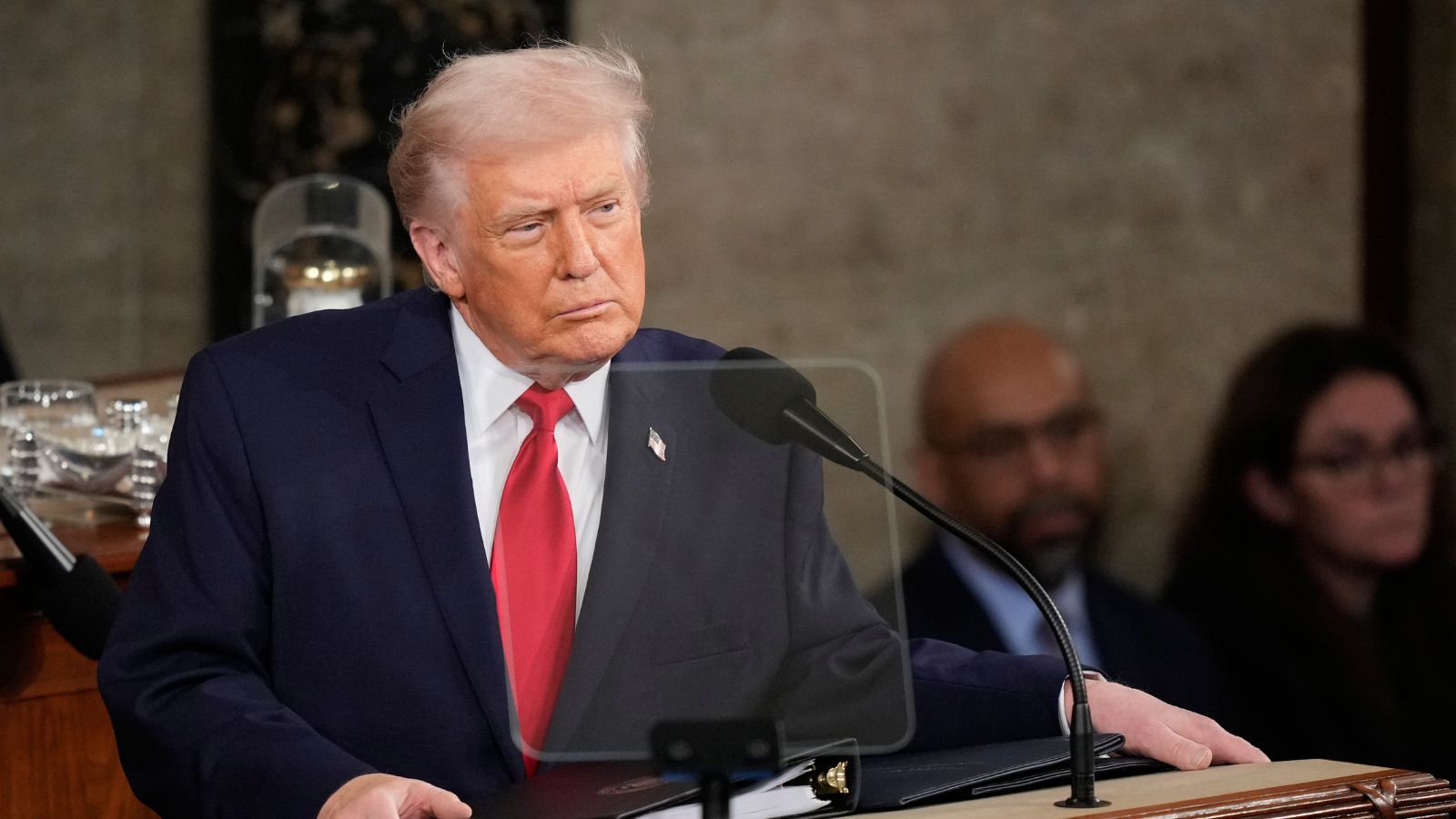
The mainstream media is currently hyperventilating over a 107-minute speech, obsessing over whether the Pakistan Prime Minister was literally going to "die" or if the "35 million lives saved" in the May 2025 standoff is a rounded-up fantasy. They are missing the forest for the radioactive trees. While the "lazy consensus" among pundits is to fact-check the President’s flair for the dramatic, they are ignoring the cold, hard mechanics of the most aggressive economic restructuring in a century.
The 2026 State of the Union wasn't a victory lap; it was a manifesto for the end of the globalist era. Critics point to the Supreme Court’s recent strike-down of the International Emergency Economic Powers Act (IEEPA) as a "defeat." They’re wrong. The Court didn’t kill the tariff; it simply forced the administration to switch from a sledgehammer to a scalpel—specifically Article 122 of the 1974 Trade Act.
The Revenue Myth: Why Replacing Income Tax Actually Works
The most frequent "gotcha" from the Peterson Institute and Congressional Democrats is that tariffs can’t replace income tax because they only account for roughly 2% of federal revenue. This is a linear solution to a non-linear problem.
The goal isn't just to collect checks at the border; it’s to force a total domestic recalibration. When you slap a 50% tariff on Indian goods or Chinese components, you aren't just looking for tax revenue. You are artificially inflating the cost of foreign labor until the "China Price" or the "Bangalore Discount" vanishes.
Imagine a scenario where the U.S. successfully reshores just 20% of the manufacturing currently sitting in the Pearl River Delta. The resulting expansion of the domestic corporate tax base, combined with the "One Big Beautiful Bill Act" (OBBBA) incentives, creates a compounding revenue effect that far outstrips the literal dollar amount collected at the port of Long Beach.
The India-Pakistan "Nuclear" Bluff
The press is mocking Trump’s claim of averting a nuclear war during Operation Sindoor in May 2025. They call it an exaggeration. I’ve sat in rooms where "strategic autonomy" is discussed by the Indian Ministry of External Affairs, and I can tell you: the heat was real.
The nuance the media missed is that the 50% tariffs on Indian goods weren't just a trade dispute; they were the primary diplomatic lever that forced New Delhi to the table. By treating trade as a theater of war, the administration did what decades of "statecraft" failed to do: it made regional instability more expensive than peace.
Critics argue that India’s 8.2% GDP growth proves the tariffs failed. This is a fundamental misunderstanding of momentum. India is growing despite the friction, but the "bad blood" mentioned by organizations like Chatham House is actually a sign of American leverage returning. For the first time in thirty years, the U.S. is not the one begging for "strategic partnerships." We are the ones setting the price of admission to the world's largest consumer market.
The "Middleman" Lie: Who Really Pays?
The Federal Reserve Bank of New York claims 94% of tariff costs are passed to U.S. importers. This is the ultimate "spreadsheet vs. reality" conflict.
In my experience working with supply chain logistics, the "pass-through" cost is a temporary shock. Over a 12-to-18-month horizon, one of three things happens:
- Margin Compression: The foreign exporter eats the cost to keep their market share.
- Substitution: The importer switches to a domestic supplier or a "Most Favored Nation" (MFN) partner.
- Efficiency Gains: Companies are forced to automate to offset the cost of the now-expensive foreign component.
The 1.7% inflation rate cited in the final quarter of 2025 isn't a fluke; it's the result of companies finally realizing the era of "cheap at any cost" is over. They are optimizing for resilience rather than just-in-time delivery.
The Real Cost of "Cheap"
| Metric | Globalist Era (2010-2020) | Tariff Era (2025-2026) |
|---|---|---|
| Supply Chain Length | 12,000+ miles | < 3,000 miles |
| Resilience | Low (Single point of failure) | High (Diversified/Domestic) |
| Wage Growth | Stagnant (Offshored) | Rising (Domestic demand) |
| National Security | Compromised | Reclaimed |
The Data Center Energy Coup
Hidden in the SOTU was a directive that will disrupt the tech sector more than any regulation: forcing tech giants to provide their own data center electricity.
The media focused on "lower energy prices," but the real story is the privatization of the grid's expansion. By decoupling AI-driven power demand from the public utility, the administration is effectively taxing the "Compute Era" to subsidize the "Consumer Era." If Amazon and Google have to build their own modular nuclear reactors to power their LLMs, the downward pressure on residential electricity rates becomes permanent.
The 18 Trillion Dollar Question
Fact-checkers are having a field day with the "$18 trillion in commitments" figure. They claim the White House’s own list only shows $9.7 trillion.
Here is the "insider" truth: The $18 trillion includes "dark commitments"—contingent investment plans from sovereign wealth funds and multinational boards that are tied to the continuation of the current trade posture. These aren't signed contracts yet; they are capital "hostages." If the U.S. reverts to the pre-2025 trade status quo, that money evaporates. Trump isn't just reporting data; he’s signaling to the markets that the "Golden Age" is a subscription service, and the subscription is American-first policy.
The Shutdown and the Supreme Court: A Feature, Not a Bug
The DHS shutdown and the Supreme Court ruling are being framed as signs of a government in chaos. Look closer.
This friction is the only way to break the "administrative state" inertia. By forcing the legal system to grapple with "fundamental international payment problems" and Article 122, the administration is rewriting the constitutional limits of executive power in real-time. It’s messy, it’s loud, and it’s intentionally disruptive.
The "clown show" the op-ed writers see is actually a high-stakes stress test of American institutions. And so far, the economy is passing. Murder rates are down, fentanyl seizures are up, and for the first time in a generation, the private sector—not the government—is the sole engine of job growth.
Stop looking at the transcript for typos. Look at the trade flows. The world is being re-indexed, and for once, the U.S. is the index.
Would you like me to analyze the specific impact of the "Most Favored Nation" drug pricing agreements on Big Pharma's 2026 R&D budgets?