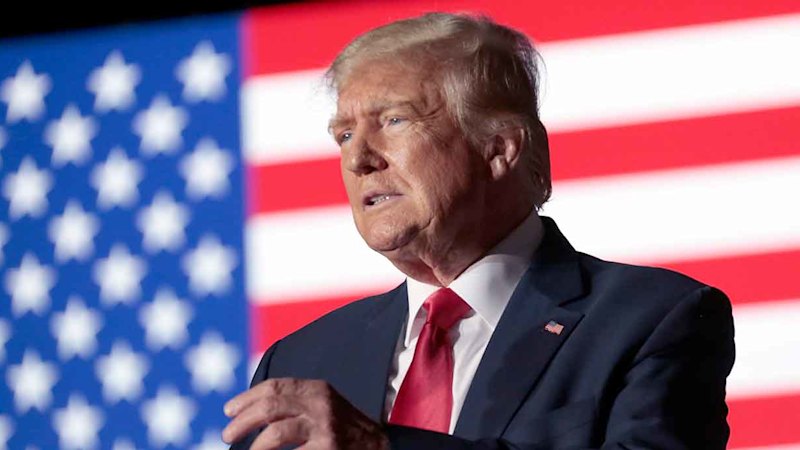
Voters didn't just send a message on election night. They blew up the entire Republican governing coalition in Washington.
When the dust settled on the 2026 US midterm results, Democrats hadn't merely squeaked out a narrow win. They swept control of both the House of Representatives and the Senate in what political analysts are already calling a blue tsunami. For President Donald Trump, the sudden loss of unified Republican control forced an immediate, dramatic pivot in tone. Within hours of the networks calling the majorities, Trump publicly committed to working across the aisle with congressional Democrats—a sharp departure from his combative campaign trail rhetoric. You might also find this similar story useful: How 1994 Broke the Texas Democratic Machine Forever.
Meanwhile, Vice President JD Vance took a very different approach to explaining the wipeout. Instead of pointing fingers at domestic inflation, campaign strategy, or local candidate quality, Vance blamed the ongoing war in Iran for dragging down GOP turnout and alienating independent voters.
If you're trying to make sense of how we got here—and what happens when a populist White House collides with a newly empowered Democratic Congress—you have to look past the cable news shouting matches. I've covered enough midterm cycles to know that wave elections are rarely about just one thing, even when the Vice President tries to pin the blame on a single foreign conflict. As discussed in detailed coverage by NBC News, the results are widespread.
Why the 2026 Blue Tsunami Happened So Fast
Midterm elections almost always punish the party in the White House. That's historical gravity. Since World War II, the sitting president's party has lost House seats in nearly every midterm cycle, with only a couple of rare exceptions like 1998 and 2002.
Still, losing both chambers at once is brutal. Republicans entered the 2026 cycle defending a razor-thin House majority and a Senate map that looked favorable on paper. Six months ago, most GOP strategists thought they'd easily hold the Senate even if they dropped a dozen House seats.
They were dead wrong.
Suburban swing districts that broke narrowly for Republicans in 2024 snapped back toward Democrats with double-digit margins. Independents, who had given Trump the benefit of the doubt on the economy two years ago, turned sharply against the administration. When you lose independent voters by wide margins in states like Pennsylvania, Michigan, and Arizona, no amount of base turnout can save your Senate majority.
The Breaking Point Over Iran
JD Vance's post-election diagnosis isn't entirely off base, even if it's politically convenient. The escalating military conflict with Iran became the defining issue of the final weeks of the campaign.
For years, Trump and Vance built their political brand on an "America First" foreign policy that promised an end to endless Middle Eastern wars. That promise was a massive selling point for working-class voters in the Rust Belt and younger men who felt burned by past administrations. When the administration found itself bogged down in a widening conflict with Iran—complete with rising global oil prices, disrupted shipping lanes, and American troops in harm's way—that anti-interventionist coalition fractured.
Vance knows this better than anyone. His entire political identity is tied to skepticism of foreign entanglements. By blaming the Iran war for the Republican wipeout, he's doing two things at once: giving a plausible explanation for why anti-war conservatives stayed home, and subtly positioning himself against the more hawkish voices inside the White House cabinet.
Economic Anxiety Didn't Go Away
Blaming Iran alone lets Republican lawmakers off the hook too easily. Voters don't separate foreign policy from their bank accounts.
When conflict flares up in the Persian Gulf, gas prices spike at home. Grocery bills stay stubbornly high because shipping and diesel costs rise. In exit interviews and post-election polling, voters repeatedly cited the cost of living as their top frustration. They didn't care about macroeconomic charts showing steady GDP growth or low unemployment. They cared that filling up a pickup truck cost twenty dollars more than it did in the spring, and that mortgage rates hadn't dropped enough to make buying a house realistic.
Democrats hammered that exact disconnect. Instead of running purely on social issues or abstract defenses of democracy, Democratic challengers in purple districts ran relentless, kitchen-table ads tying Republican incumbents to higher energy costs and tariff-driven price hikes. It worked.
Trump's Sudden Pivot to Working With Democrats
If you expected Donald Trump to spend the morning after the election threatening vetoes and declaring war on the incoming Democratic leadership, his actual response probably caught you off guard.
Trump stepped in front of the cameras and struck a remarkably pragmatic tone. He acknowledged the Democratic victories in the House and Senate and stated clearly that he's ready to work with Democratic leaders to pass legislation on infrastructure, domestic energy production, and lowering healthcare costs.
Is this a permanent transformation? Of course not. Trump is a transactional dealmaker at heart. Throughout his career in New York real estate and Washington politics, he has never cared much for rigid ideological orthodoxy when it gets in the way of a win he can put his name on.
Right now, Trump faces a stark reality. Without the House or the Senate, his judicial nominations will grind to a halt unless they can clear a Democratic Senate Judiciary Committee. His legislative agenda—including extending key tax provisions and passing federal budgets—cannot happen without Democratic votes. Rather than spending the final two years of his presidency paralyzed by government shutdowns and endless congressional subpoenas, Trump is testing whether he can cut deals directly with Democratic leaders, just as Bill Clinton did after the 1994 Republican revolution or Barack Obama attempted after 2010.
What Democrats Actually Want From the White House
Democratic leaders in the House and Senate aren't naive about Trump's olive branch. They know full well that a president who talks about bipartisanship on Wednesday can easily attack them on social media by Friday afternoon.
Still, incoming Democratic committee chairs hold immense leverage now. Here is what they'll likely push for in early negotiations with the White House:
- Strict war powers oversight on Iran: Expect immediate hearings in both the House Foreign Affairs Committee and the Senate Armed Services Committee, alongside legislative efforts to restrict unauthorized military escalation in the Middle East.
- Targeted cost-of-living relief: Democrats will force votes on prescription drug price caps, childcare tax credits, and anti-price-gouging measures, daring Trump to sign them and claim partial credit.
- Protection of federal agencies: With subpoena power back in Democratic hands, cabinet secretaries will face intense scrutiny over civil service reorganizations and regulatory rollbacks.
The Rift Inside the Republican Party
While Trump talks about making deals with Democrats, a brutal civil war is brewing inside the GOP. JD Vance's comments blaming the Iran conflict for the midterm losses aren't just casual commentary—they're the opening salvo in the battle for the party's post-2028 future.
For the past decade, the Republican Party has held together an uneasy alliance between traditional defense hawks—who favor aggressive American military posture abroad—and populist nationalists who view foreign wars as a betrayal of the American working class. As long as Republicans were winning elections, that tension stayed mostly behind closed doors.
Losing both chambers of Congress blows the doors wide open.
Traditional Republicans in the Senate are already arguing that the administration looked weak and indecisive in its handling of Tehran, which they claim hurt the party with national security voters. Vance and the populist wing counter that the war itself was the mistake, arguing that voters elected Trump specifically to avoid new military quagmires.
You can't bridge that gap with a press release. Over the next two years, every foreign policy vote in Congress will force Republicans to choose sides between the hawkish establishment and the populist base. And since Vance is widely viewed as the frontrunner for the 2028 Republican presidential nomination, his willingness to publicly pin the midterm defeat on the Iran war shows exactly where he plans to lead the party.
What Divided Government Means for Your Wallet and Daily Life
When Washington flips to divided government after a wave election, cable news pundits love to talk about total gridlock. Honestly, gridlock isn't always bad news for regular people.
In fact, markets often breathe a sigh of relief when one party loses total control of Washington. Why? Because extreme policy swings become nearly impossible. Massive new partisan spending bills won't pass. Radical tax overhauls stall out. Regulatory agencies slow down because cabinet officials spend half their week preparing for congressional oversight hearings instead of writing new rules.
If you're watching how the 2026 midterm results will affect your finances, business, or investments over the next 24 months, keep your eye on three specific areas:
- Debt ceiling and government funding showdowns: With a Democratic Congress and a Republican White House, budget deadlines will get messy again. Expect brinkmanship around government shutdowns every time a continuing resolution expires, which can cause short-term volatility in Treasury yields and defense contractor stocks.
- Energy and defense policy shifts: If Democratic lawmakers successfully push for diplomatic de-escalation in Iran, global oil markets could eventually cool down, easing pressure at the gas pump. On the flip side, traditional defense spending increases will face much tougher scrutiny from progressive House Democrats.
- Bipartisan low-hanging fruit: Watch for quiet compromise on issues neither party wants to campaign against—things like domestic semiconductor manufacturing, rural broadband expansion, and pharmacy benefit manager reform. Those are the exact areas where Trump will look to cut deals with Democratic leaders to prove he can still govern.
How to Track What Happens Next in Congress
Don't get distracted by the daily theatrical outrage on social media over the next few weeks. The real story of the post-2026 landscape won't be written in press conferences; it will happen in committee assignments and leadership elections on Capitol Hill.
Pay close attention to who Democrats tap to lead the House Ways and Means Committee, the House Appropriations Committee, and the Senate Foreign Relations Committee. Those chairs decide which bills actually reach the floor and which administration officials get hauled in under oath. At the same time, watch whether Senate Republicans rally around Vance's anti-interventionist message on Iran or push back to defend traditional hawkish foreign policy.
If you want to stay ahead of how these shifts impact tax policy, energy prices, and federal regulations, start following the official legislative calendars on Congress.gov and tracking nonpartisan budget scoring from the Congressional Budget Office rather than relying on partisan commentary. The headlines will stay loud, but the actual power in Washington just shifted dramatically—and how Trump navigates a Democratic Congress will define the rest of his presidency.


