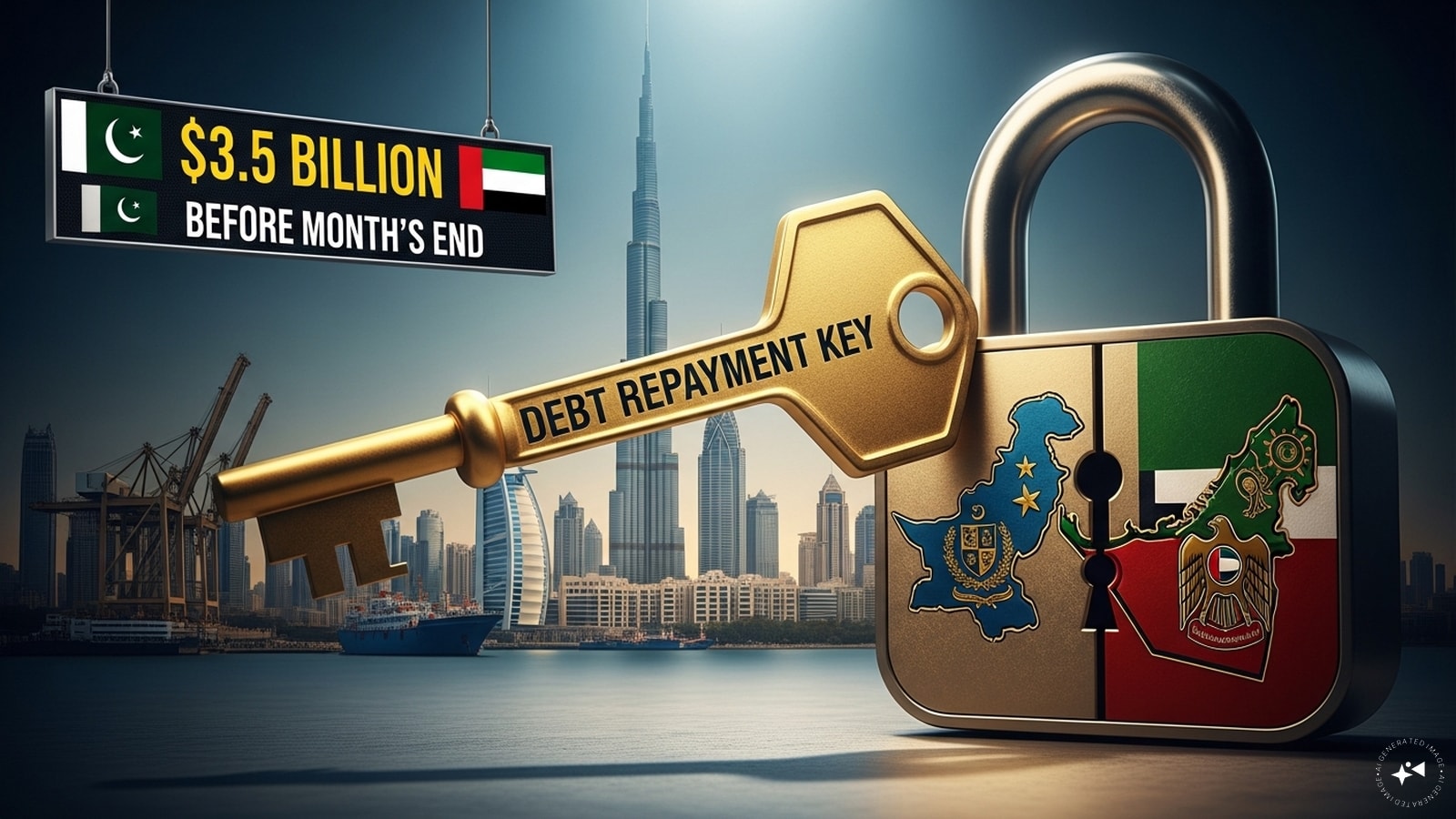
Pakistan is preparing to drain $3.5 billion from its foreign exchange reserves by the end of April 2026 to settle maturing debts with the United Arab Emirates. This decision, described by senior officials in Islamabad as a matter of "national dignity," marks a sharp departure from the years-long cycle of rollovers that previously kept the country’s balance of payments from collapsing. It is a desperate play. By returning these funds—originally part of a 2019 stabilization package—Pakistan will see its central bank buffers shrink by nearly 20 percent in a single month.
The immediate impact is a mathematical nightmare for the State Bank of Pakistan. With current reserves sitting at approximately $16.3 billion, an outflow of this magnitude slashes the nation’s import cover and threatens the stability of the rupee. The move follows months of increasingly friction-heavy negotiations, where the UAE reportedly shifted from long-term extensions to restrictive, month-to-month rollovers.
The Death of the Rollover Era
For over half a decade, Pakistan’s economic survival strategy has relied on a "revolving door" of deposits from Gulf allies and China. These are not traditional investments; they are balance-sheet placeholders intended to satisfy the International Monetary Fund (IMF) requirements for external financing.
The UAE’s demand for immediate settlement signals that the patience of Abu Dhabi has finally run thin. Sources indicate that the relationship is suffering under the weight of regional geopolitical shifts, specifically Pakistan's refusal to distance itself from Tehran during the escalating conflict involving Iran, Israel, and the United States. In the cold language of central banking, "national dignity" is often the phrase used when a borrower is told their credit line is closed.
This is not a voluntary "repayment" driven by a surplus of cash. It is a forced exit from a dependency. The UAE had recently agreed to a mere 60-day extension on $2 billion of this debt at a 6.5 percent interest rate—a far cry from the multi-year, low-interest terms Islamabad had requested.
The IMF Trapdoor
The timing could not be worse. Pakistan is currently navigating a $7 billion IMF Extended Fund Facility that mandates a minimum reserve level of roughly $12.5 billion. Slicing $3.5 billion off the top of the current $16.3 billion reserve pile leaves virtually zero margin for error.
If the government cannot secure immediate replacement financing, it risks a breach of IMF covenants. This would jeopardize the next tranche of the bailout, potentially triggering a default sequence. The Ministry of Finance has attempted to project a facade of control, stating it is "continuously monitoring" flows, but the reality on the ground suggests a scramble for liquidity.
The $3.5 billion figure is broken down into three tranches:
- $450 million due in the first week of April.
- $2 billion due mid-month.
- $1 billion due before May.
The Geopolitical Price of Neutrality
Finance and foreign policy are currently indistinguishable in Islamabad. The UAE's pivot toward a harder line coincides with Pakistan's attempts to mediate—or at least remain neutral—in the US-Iran tension. Abu Dhabi, which has normalized ties with Israel and maintains a strategic partnership with Washington, appears less inclined to provide unconditional financial cushions to a neighbor that won't align its regional priorities.
There are whispers in the Finance Division of a "plan B" involving the conversion of some debt into equity—selling stakes in state-owned enterprises like Pakistan International Airlines (PIA) or the country's major airports. However, "national dignity" is a hard sell when you are liquidating core infrastructure to pay back a deposit that was never supposed to leave the bank.
The Rupee Under Pressure
Currency markets have already begun to react. The rupee is braced for a volatile month. When a central bank loses $3.5 billion in liquid assets, its ability to intervene in the interbank market evaporates. Without the shield of these UAE deposits, the rupee is exposed to speculative attacks and the fundamental pressure of a massive trade deficit.
Economic analysts are pointing to a looming "dollar drought." If the government prioritizes debt repayment over essential imports—fuel, medicine, and industrial raw materials—the domestic economy will contract further. Conversely, if it tries to maintain imports, the reserves will plummet toward the "danger zone" of less than two months of cover.
A Precarious Path to May
The government’s gamble hinges on the hope that this show of "dignity" will eventually unlock new, more structured investment from the Gulf. It is a high-stakes poker game where the chips belong to the taxpayers, and the house—the UAE—has already started collecting.
The strategy of living on borrowed time has reached its natural conclusion. If Islamabad survives April without a currency crash or an IMF fallout, it will be by the thinnest of margins. The era of easy rollovers is dead, replaced by a transactional reality where every dollar returned is a blow to the country's immediate stability.
Pakistan must now find a way to replace $3.5 billion in liquidity without a clear lender of last resort waiting in the wings. This is no longer just a budget problem; it is a test of whether the state can function without the constant life support of its neighbors.