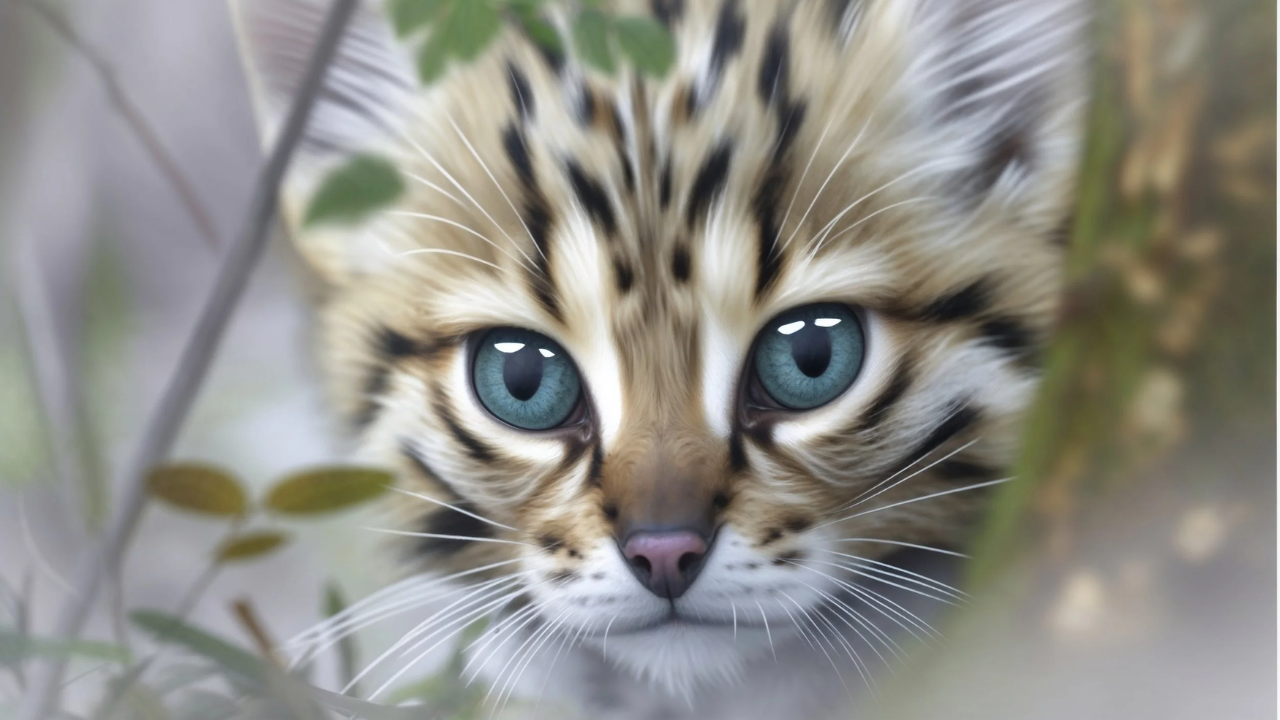
Think your local domestic cat is small? Imagine a fully grown, prehistoric wild feline that could easily curl up and sleep in the palm of your hand. That isn't a fantasy scenario. It's exactly what a team of paleontologists found trapped in the deep layers of a cave in eastern China.
For decades, the search for ancient felines focused on the giants. We've obsessed over saber-toothed tigers, massive cave lions, and fierce predators that hunted early hominins. But a tiny, fossilized jaw fragment found at the Hualongdong site in Anhui Province turns that massive narrative completely on its head. Dating back roughly 300,000 years to the late Middle Pleistocene, this micro-predator represents the smallest fossil cat ever recorded in scientific history.
This discovery isn't just a neat piece of trivia for animal lovers. It solves a massive evolutionary puzzle that has frustrated biologists for years.
The Secret Evolution Hidden in a Tiny Jaw
Scientists named this pocket-sized predator Prionailurus kurteni. Lead researcher Qigao Jiangzuo from the Chinese Academy of Sciences confirmed that this creature weighed right around one single kilogram. That's a mere 2.2 pounds. It makes your average house cat look like an absolute unit.
To put that into perspective, look at the absolute smallest cats walking the Earth right now:
- The rusty-spotted cat (Prionailurus rubiginosus), native to India and Sri Lanka.
- The black-footed cat (Felis nigripes), a fierce nocturnal hunter found in Southern Africa.
Prionailurus kurteni was just as small, if not smaller, than these modern record-holders, measuring between 13.7 and 19.7 inches long.
Historically, researchers had a bad habit of dumping almost every small prehistoric cat fossil into the generic genus Felis without digging too deep into the specific anatomy. The discovery of P. kurteni breaks that trend. By analyzing the unique shape and the specific, telltale incline of the first molar on the jaw fragment, the research team proved that this cat belongs to the genus Prionailurus, which encompasses modern Asian leopard cats.
This tooth structure does something incredible. For years, molecular biology and DNA mapping suggested that modern leopard cats, domestic cats, and the wonderfully grumpy-looking Pallas’s cats all split from a common ancestor way back in the evolutionary tree. The problem? We had zero physical proof. Forest environments—where these tiny cats lived and hunted—are notorious for destroying bones. Acidic soil, high humidity, and scavenging animals usually break down fragile, bird-like cat bones before they can ever fossilize.
The protected, stable environment of the Hualongdong Cave acted like a time capsule. This single piece of jawbone provides the crucial missing structural link that bridges the gap between ancient wild lineages and the cats sitting on our couches today.
Commensalism or Cat Food
The context of where scientists dug up this fossil tells an even bigger story about our own ancestors. The Hualongdong site is a massive deal for human anthropology. Archaeologists have previously recovered around 20 archaic human fossils there, including a stunningly preserved 300,000-year-old skull that represents a crucial transitional phase toward modern Homo sapiens.
These ancient humans left behind a messy trail. Excavations uncovered hundreds of stone tools and scores of animal bones covered in butchery marks, chops, and cuts. Our ancestors were hunting, butchering, and eating a massive variety of local wildlife, including giant pandas, brown bears, and plenty of small rodents.
So, how did the world's smallest cat end up in a cave full of hungry, tool-wielding hominins?
Take a look at the lack of butchery marks on the P. kurteni fossil. If humans were eating these mini felines, we'd see clear signposts of processing on the bone. Instead, the jaw is clean. This points toward an early, accidental partnership called commensalism.
Think about how wild animals interact with human camps. The archaic humans brought meat back to the cave, processed it, and left piles of organic scrap material rotting in dark corners. Those food scraps inevitably created a paradise for prehistoric rats, voles, and mice. Prionailurus kurteni likely wasn't living with humans as a pet, but it absolutely used them as a meal ticket. These tiny cats probably slipped into the shadows of the cave at night, hunting the rodents attracted by human trash. It's the exact same ecological dynamic that eventually led to the full domestication of cats thousands of years later.
How to Apply These Paleontology Insights Today
If you're a biology student, a conservationist, or just someone fascinated by how ecosystems develop, this discovery offers a blueprint for how we evaluate ancient wildlife.
First, stop looking only at the apex predators. The temptation in paleontology is to focus on the biggest, loudest animals in the fossil record. Yet, small mammals like P. kurteni serve as far better indicators of past climates and local micro-environments. The presence of this tiny cat, alongside specific rodent species found in the cave, proves the region was much cooler and more heavily forested than similar sites in southern China during the Middle Pleistocene.
Second, it's time to re-examine existing museum archives. This discovery proved that many small cat fossils have been mislabeled for decades under generic classifications. If you work in curation or taxonomy, the success of the P. kurteni study shows that applying modern dental analysis to overlooked, fragmented specimens can completely rewrite a lineage.
The research team is already moving forward with a systematic global survey of small fossil cats. Expect to see more revisions to the feline family tree soon. For now, keep your eyes on the small details; they usually hold the biggest secrets.


