The air in the Gulf of Oman is a thick, salty soup that clings to the skin of every deckhand from Fujairah to Bandar Abbas. It is quiet out there, despite the thousands of tons of steel churning through the water. But that silence is deceptive. For the global economy, the Strait of Hormuz is a jugular vein. If it twitches, the world feels a spasm. Right now, it is doing more than twitching, and the beneficiary is sitting thousands of miles away in a cold office in the Kremlin.
Consider a man we will call Elias. He is a tanker captain, a veteran of these waters for thirty years. He remembers the Tanker War of the 1980s, and he knows that when regional tensions spike, the insurance premiums on his hull rise faster than the morning sun. Normally, chaos in the Middle East is a universal headache. It makes shipping expensive, it makes oil scarce, and it makes everyone nervous.
Except this time, the chaos has carved out a very specific, very profitable loophole for Russia.
While the world watches the geopolitical friction points in the Strait, a strange mathematical inversion is happening. For months, Western powers have tried to keep Russian oil under a $60-a-barrel price cap. It was a financial leash, designed to let the oil flow so the world wouldn't starve for energy, while ensuring the profits wouldn't fund a war chest. It was a delicate balance. A tightrope walk.
Then the rope snapped.
The Arithmetic of Conflict
As instability ripples through the Middle East, the global price of crude naturally climbs. It’s a reflex. When traders see a risk of a chokepoint like Hormuz being restricted—where roughly a fifth of the world’s daily oil consumption passes—they bid up the price of every drop of oil on the planet. This includes the Urals blend, the flagship export of the Russian Federation.
Suddenly, that $60 ceiling didn't just look ambitious. It looked irrelevant.
The "shadow fleet"—a ragtag collection of aging tankers with opaque ownership and questionable insurance—doesn't care about G7 price caps. They operate in the peripheral vision of global regulators. As the Brent benchmark rose, Russian Urals followed suit, recently hitting an average of $62.22 per barrel at the point of export.
Two dollars and twenty-two cents.
It sounds like pocket change. It sounds like the price of a cheap coffee. But when you multiply that by millions of barrels per day, you aren't looking at coffee money. You are looking at the renovation of a national economy. You are looking at the difference between a budget deficit that hurts and a surplus that empowers.
The Invisible Bridge
To understand why this matters to someone sitting in a suburb in Ohio or a flat in London, you have to look at the plumbing of the global market. We like to think of oil as a transparent commodity, but it is actually a series of interconnected pools. When the Strait of Hormuz becomes "hot," the pools in the West become more expensive to fill.
Elias, our hypothetical captain, sees the shift firsthand. He sees the Greek tankers pulling away from Russian contracts to avoid the legal scrutiny of the price cap, only to be replaced by ships that have no names on their hulls, or names that were painted on just last week. These ships don't use Western banks. They don't use Western insurance.
They are the "Ghost Ships."
These vessels are the bridge between the frozen Siberian oil fields and the thirsty refineries of India and China. Because the Strait of Hormuz is under such pressure, the logistical premium of moving oil has shifted. Buyers who used to be wary of Russian oil because of the "stigma" are suddenly finding that $62 is still a bargain compared to the skyrocketing costs of Brent or West Texas Intermediate.
Russia is no longer the pariah of the energy market. In the eyes of a budget-conscious refinery in Gujarat, Russia is the discount provider in an increasingly expensive neighborhood.
The Kremlin’s Ledger
Inside the Russian Ministry of Finance, the mood has shifted from defensive to opportunistic. The goal of the price cap was "attrition." The West wanted to bleed the Russian economy slowly, making every tank and every missile an agonizingly expensive choice.
But oil revenue is the lifeblood of the Russian state. About a third of their total budget comes from these sales. When the price stays above the cap, the "attrition" stops. The blood starts pumping again.
The numbers are stark. In the first few months of this year, Russia's oil and gas revenues jumped by over 70% compared to the previous year. This isn't just because they are selling more; it's because they are selling it for more, and the "Strait of Hormuz premium" is the primary driver.
Conflict is often seen as a drain on resources. For the Kremlin, this specific conflict acts as a subsidy.
The irony is thick enough to choke on. The very volatility that Western nations fear—the kind that threatens to send gas prices at the pump to $4 or $5 a gallon—is the same volatility that is providing a windfall for the very entity they are trying to sanction. It is a feedback loop where the cure for the energy crisis (more supply) is being funded by the crisis itself.
The Risk of the Old and the Rusty
There is a human cost to this financial maneuvering that goes beyond the battlefield. It’s found in the hulls of those shadow fleet tankers.
Imagine a ship that should have been scrapped ten years ago. It’s rusted. Its engines groan under the slightest pressure. It’s carrying a million barrels of oil through some of the most sensitive ecological corridors in the world. Because these ships operate outside the price cap, they also operate outside the standard safety audits.
If one of these tankers breaks up in the Strait, or off the coast of an island nation, there is no insurance policy to call. There is no corporate headquarters to sue.
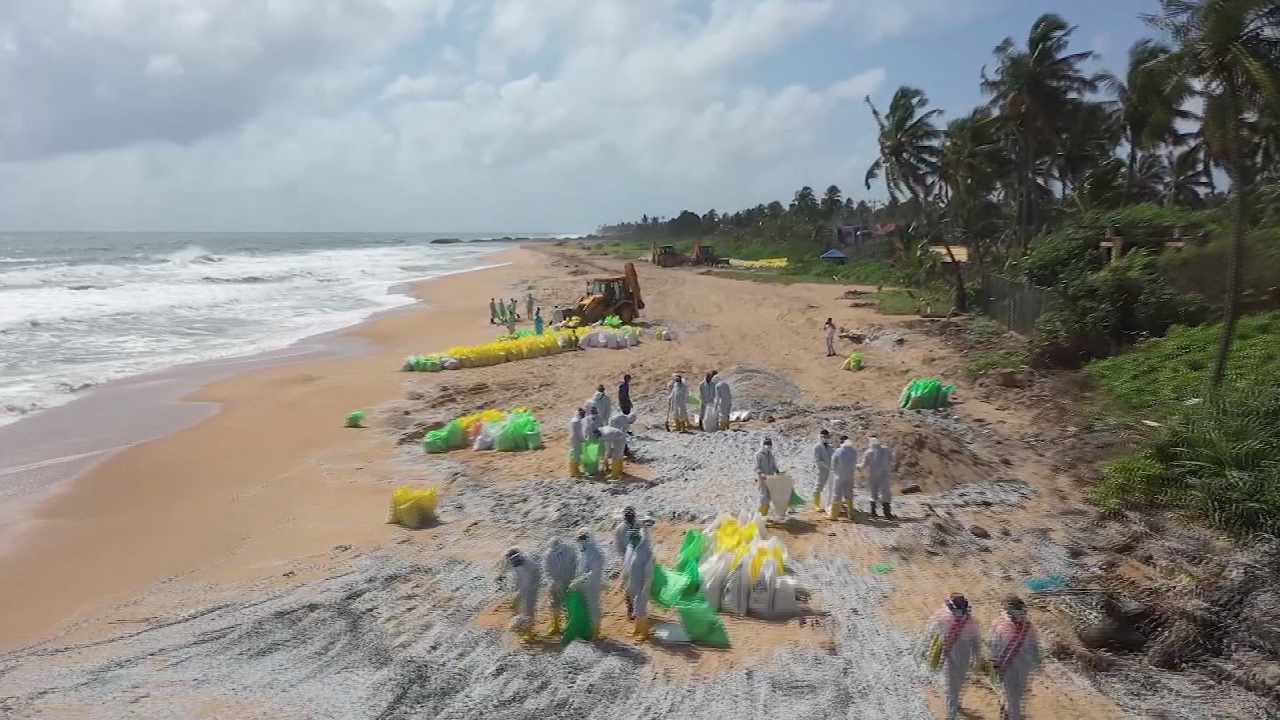
We are trading financial stability for environmental catastrophe. The $62 price point isn't just a win for a government; it’s a gamble with the ocean. Every time a barrel of Russian oil moves at that price through a shadow vessel, the risk of a massive, un-cleanable oil spill increases.
The sailors on these ships know this. They work for cash, often under-the-table, knowing that if something goes wrong, they are as invisible as the owners of the vessels they navigate. They are the human ghosts in the machine of global energy.
The Friction of Reality
The G7 and its allies find themselves in a corner. To lower the price of Russian oil, they would need to flood the market with other oil. But with the Middle East on edge, no one is willing to turn the taps that wide. To enforce the price cap more strictly, they would need to sanction the shadow fleet, but doing so would take those millions of barrels off the market entirely.
If those barrels disappear, the price of oil doesn't stay at $70 or $80. It rockets to $120.
At $120, the global economy hits a wall. Inflation, which has been a nagging toothache for the last two years, would become a shattered jaw. Governments would fall. People wouldn't be able to heat their homes.
So, the West waits. They allow the $62 price to stand because the alternative—true enforcement—is too painful to contemplate.
It is a silent concession. A recognition that in the theater of global power, the map of the sea is more powerful than the ink on a Sanctions Act.
The Shifting Horizon
The Strait of Hormuz will eventually settle. The tides always do. But the infrastructure of this "new" economy—the shadow fleet, the non-Western banking loops, the $62 benchmark—is hardening into something permanent.
We are watching the birth of a bifurcated world. On one side is the regulated, transparent, and increasingly expensive Western market. On the other is the grey market: opportunistic, risky, and currently, very, very wealthy.
Elias stands on the bridge of his ship, watching the radar. He sees the blips of the shadow tankers passing him in the night. They don't broadcast their positions. They don't answer the radio. They are just shapes in the dark, carrying the wealth of a nation that was supposed to be broke, fueled by a conflict that was supposed to be its undoing.
The $62 barrel is more than a statistic. It is a testament to the stubbornness of the physical world. You can sanction a bank. You can sanction a politician. But as long as the world needs to move, and as long as the water in the Strait remains the only way through, the price will always find a way to rise.
The shadow over the Strait isn't cast by the mountains or the ships. It's cast by the realization that in the game of global energy, the house doesn't always win—sometimes, the house just changes addresses.
Would you like me to analyze how specific shifts in shipping insurance laws might further impact these "shadow fleet" operations?