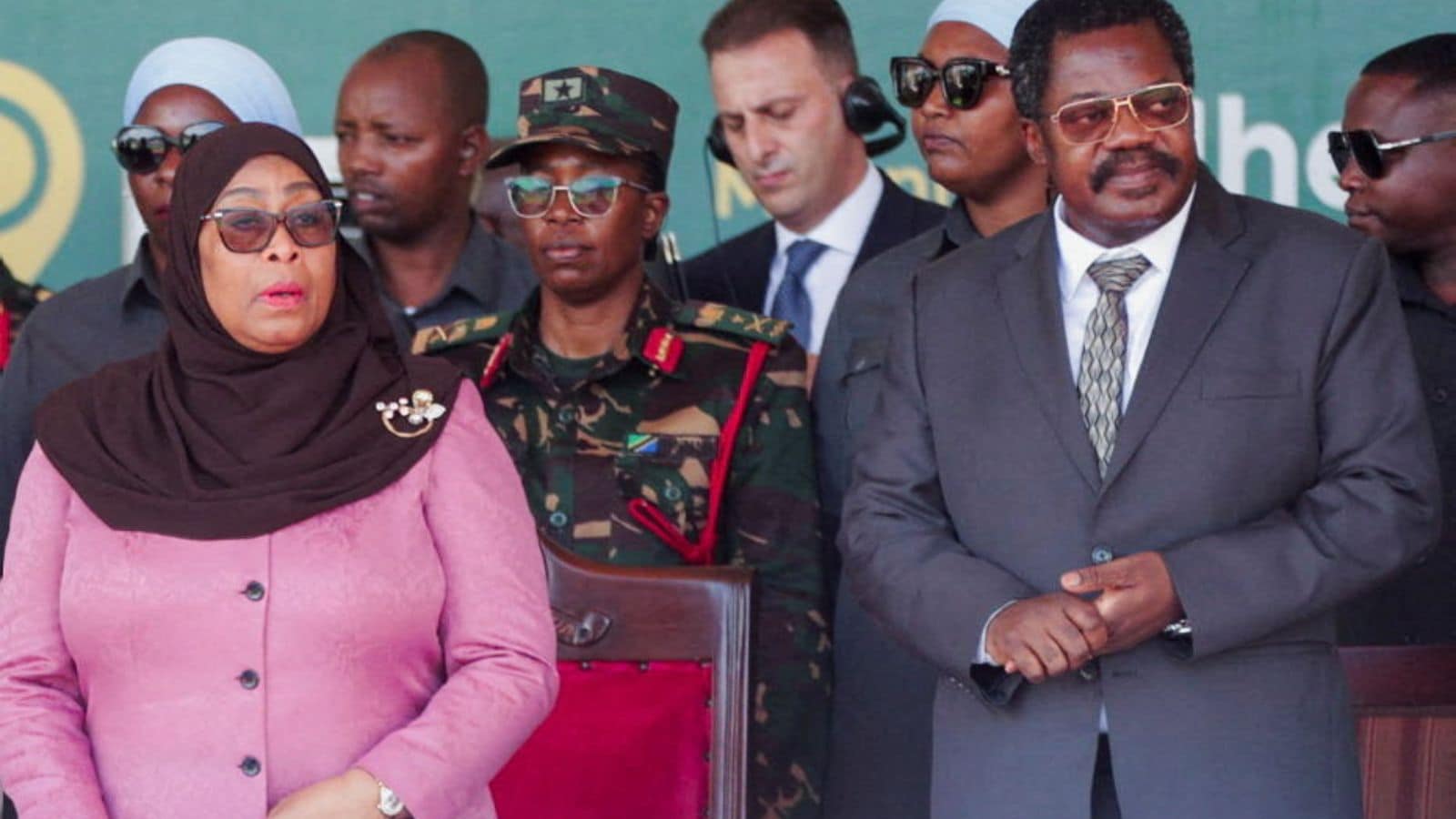
Tanzania Vice President Emmanuel Nchimbi announced his resignation from office and retirement from public service, bringing an abrupt end to a tenure that lasted less than a year. Stepping down less than three hundred days after taking the oath of office, Nchimbi stated he had become convinced that President Samia Suluhu Hassan desired a different deputy, fulfilling a private pledge made when he joined the ticket. Yet this abrupt exit under Articles 50(2)(c) and 149(2) of the Constitution masks a deeper political fracture within the ruling Chama Cha Mapinduzi party. The resignation arrives mere weeks after Nchimbi publicly broke ranks to champion structural legal overhauls, exposing long-standing friction over the future of the East African nation's governance.
The Weight of an Untimely Departure
Statehouse exits rarely happen in a vacuum. When a high-ranking official relinquishes power citing presidential preference, seasoned observers look past the polite rhetoric of voluntary stepping-aside. Nchimbi assumed office on November 3, 2025, following a general election victory alongside President Hassan. To dismantle one's own career after fewer than twelve months on the job points to an untenable working relationship at the apex of power. You might also find this related coverage useful: The Map That Stopped at the Water.
The mechanics of the announcement followed a carefully managed script, yet the underlying pressures were unmistakably raw. Days prior to the formal declaration, local media outlets reported mounting pressure on the vice president, a sequence that reportedly triggered administrative crackdowns on independent reporting. Power struggles in Dodoma rarely play out in open public forums, making Nchimbi's acknowledgement of executive alienation a striking departure from political convention.
The Catalyst of Constitutional Reform
To understand why this partnership imploded so swiftly, one must examine the events of late July 2026. Speaking before the Tanzania Human Rights Defenders Coalition in Dar es Salaam, Nchimbi delivered remarks that broke sharply with cautious party orthodoxy. He urged citizens to fight for a new constitution, framing structural legal reform as the single mandatory prerequisite for addressing broader national grievances. As highlighted in recent coverage by The Washington Post, the implications are widespread.
"If I were given the chance to tell Tanzanians just one thing, I would tell them: Fight to get a new constitution."
— Dr. Emmanuel Nchimbi, July 2026
That public call exposed a profound fault line. Tanzania's broader constitutional reform trajectory has stalled for over a decade, frozen since the collapse of the constitutional assembly process in 2014 under former President Jakaya Kikwete. While the ruling party manifesto acknowledges the file, President Hassan has historically favored a measured, incremental approach to institutional change. By injecting a sense of urgency and militant civic engagement into the debate, Nchimbi positioned himself ahead of the administration's comfort zone. In a centralized political ecosystem like Tanzania's, independent momentum from a sitting vice president on foundational state architecture is rarely tolerated.
Navigating the Succession Maze
The departure leaves President Hassan with the task of nominating a replacement under constitutional oversight, forcing a recalibration of the ruling party power dynamics ahead of future electoral cycles. Nchimbi's background as a former secretary-general of the ruling party gave him deep institutional roots, meaning his exit removes a heavyweight operator from the executive branch.
Appointing a successor requires balancing regional representation, factional loyalties within the party, and ideological alignment with the president's reform timeline. The speed at which the transition must occur leaves little room for hesitation. As the September 4 effective date approaches, the administration must project internal stability while managing the fallout from a high-stakes executive divorce.
The machinery of the state moves forward, but the questions raised by Nchimbi's departure remain unresolved. A nation waits to see whether his sudden silence will quiet the debate over fundamental legal reform, or if the vacuum he leaves behind will only amplify the pressure for change.