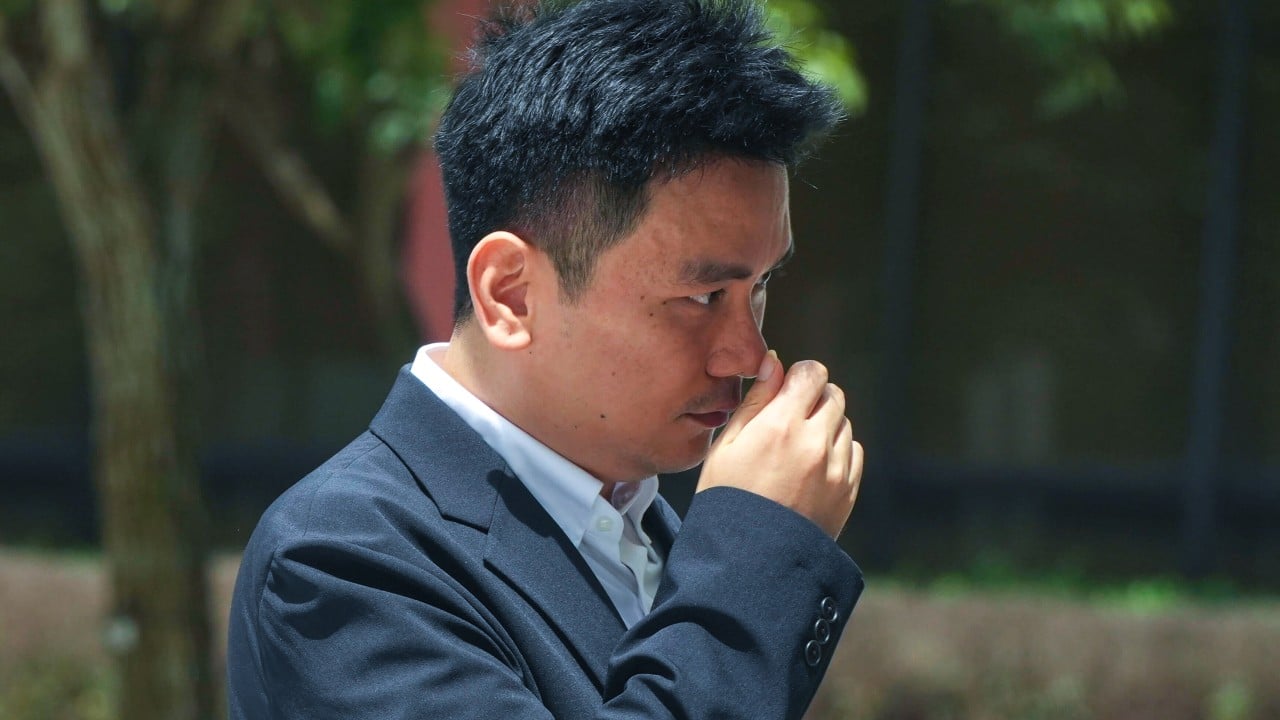
The recent acquittal of a Chinese University of Hong Kong academic who faced charges of indecent assault while simultaneously concealing his marital status exposes the structural fissures where criminal justice and institutional morality collide. When criminal courts hand down a not-guilty verdict, the public often assumes total absolution. That assumption is a dangerous misreading of how elite educational institutions handle profound behavioral breaches. Courts operate on the narrow, uncompromising threshold of reasonable doubt. Universities operate on self-preservation, bureaucratic obfuscation, and reputational damage control.
Understanding this fracture requires looking past the courtroom doors and examining the mechanics of modern institutional defense. Academic scandals do not end when a judge bangs a gavel. They morph into quiet, protracted internal maneuvers that rarely make the evening news.
The Evidentiary Chasm
Criminal trials rely on physical evidence, unambiguous testimony, and strict standards of proof. In cases involving interpersonal misconduct behind closed doors, absolute proof is rare. Memories blur under stress. Timelines fracture. When a magistrate clears a defendant, it rarely means the alleged behavior never occurred. It means the prosecution failed to cross the high legal bar required to deprive a citizen of their liberty.
This distinction gets lost in translation when filtered through headline-driven media coverage. The public reads "acquitted" and substitutes it with "innocent of all wrongdoing." Yet an academic hiding a marital status while pursuing romantic or sexual entanglements within or adjacent to the university sphere engages in a distinct category of deception. Deception is not always a statutory crime. Often, it remains a purely ethical violation, floating in a regulatory no-man's-land where university handbooks offer vague warnings rather than sharp teeth.
Decades of observing campus tribunals reveal a consistent pattern. Administrators dread criminal trials because the spotlight strips away their control. When a professor walks into a courtroom, the university's PR machinery goes into a defensive crouch. Once the legal system spits out an acquittal, administrators experience collective relief. They use that legal verdict as a convenient shield to restore the status quo, pretending that ethical collapse and criminal liability are interchangeable terms.
The Anatomy of Institutional Silence
Why do elite universities routinely fail to address the gray areas of professional misconduct? The answer lies in institutional brand management. High-ranking researchers and professors bring in grant money, elevate global rankings, and attract graduate students. A public scandal damages that ecosystem.
When an instructor is accused of misconduct, internal committees often move with glacial slowness. They wait for the police investigation to conclude. They wait for court dates to pass. By outsourcing their internal moral judgment to the criminal justice system, university leaders abdicate their primary duty of care toward students and junior staff. If a court fails to convict, the administration treats the matter as closed, ignoring whether the individual's conduct violated professional codes of ethics regarding conflicts of interest or honesty in personal disclosures.
Concealing marital status while engaging in campus relationships introduces a toxic power dynamic. Academia is built on radical asymmetry. A professor holds immense sway over a student's thesis, funding, and future career prospects. When personal deception enters that equation, the subordinate party loses the ability to grant meaningful consent based on reality. Yet, most university codes of conduct treat marital deception as a private matter, drawing an artificial line between the lecture hall and the bedroom that defies common sense.
Consider a hypothetical scenario to illustrate this bureaucratic blind spot. A tenured professor initiates a relationship with a graduate researcher under his supervision, explicitly stating he is single while maintaining a household elsewhere. When the truth surfaces alongside allegations of forced physical contact, the matter splits into two tracks. The criminal track focuses strictly on the physical touch and whether consent was explicitly denied and proven beyond doubt. The professional track, meanwhile, should focus on the abuse of authority and fraudulent misrepresentation. Instead, the institution simply waits for the criminal court to drop the charges, then pretends the ethical rot underneath never existed.
The Cost of Legalistic Minimalism
Relying strictly on statutory law to govern campus morality creates a race to the bottom. If behavior is not explicitly illegal, institutions act as though it is permissible. This minimalist approach ignores the unique social contract binding an educational institution to its community. Universities are not mere corporations selling degrees. They are supposed to be crucibles of ethical development and intellectual integrity.
When professors beat criminal charges on technicalities and return to teaching as if nothing happened, student trust fractures. Junior researchers learn a cynical lesson. They observe that power protects its own, and that institutional rhetoric about respect and equality vanishes the moment a high-profile staff member faces serious allegations. The system prioritizes the protection of elite tenure over the psychological safety of the broader campus community.
Bridging this gap requires dismantling the firewall between legal outcomes and administrative accountability. Universities must stop treating criminal acquittals as blanket clearances for professional fitness. Hiding material facts about one's personal life to manipulate interpersonal dynamics within an academic hierarchy should trigger independent, rigorous internal reviews regardless of what a magistrate decides about a specific criminal charge.
Until university leadership finds the institutional courage to decouple internal ethics from external court verdicts, these controversies will continue to erupt. Every acquittal that results in a silent reinstatement chips away a little more of the institution's legitimacy. The gavel falls, the cameras pack up, and the underlying rot remains untouched, festering quietly beneath the polished veneer of academic prestige.


