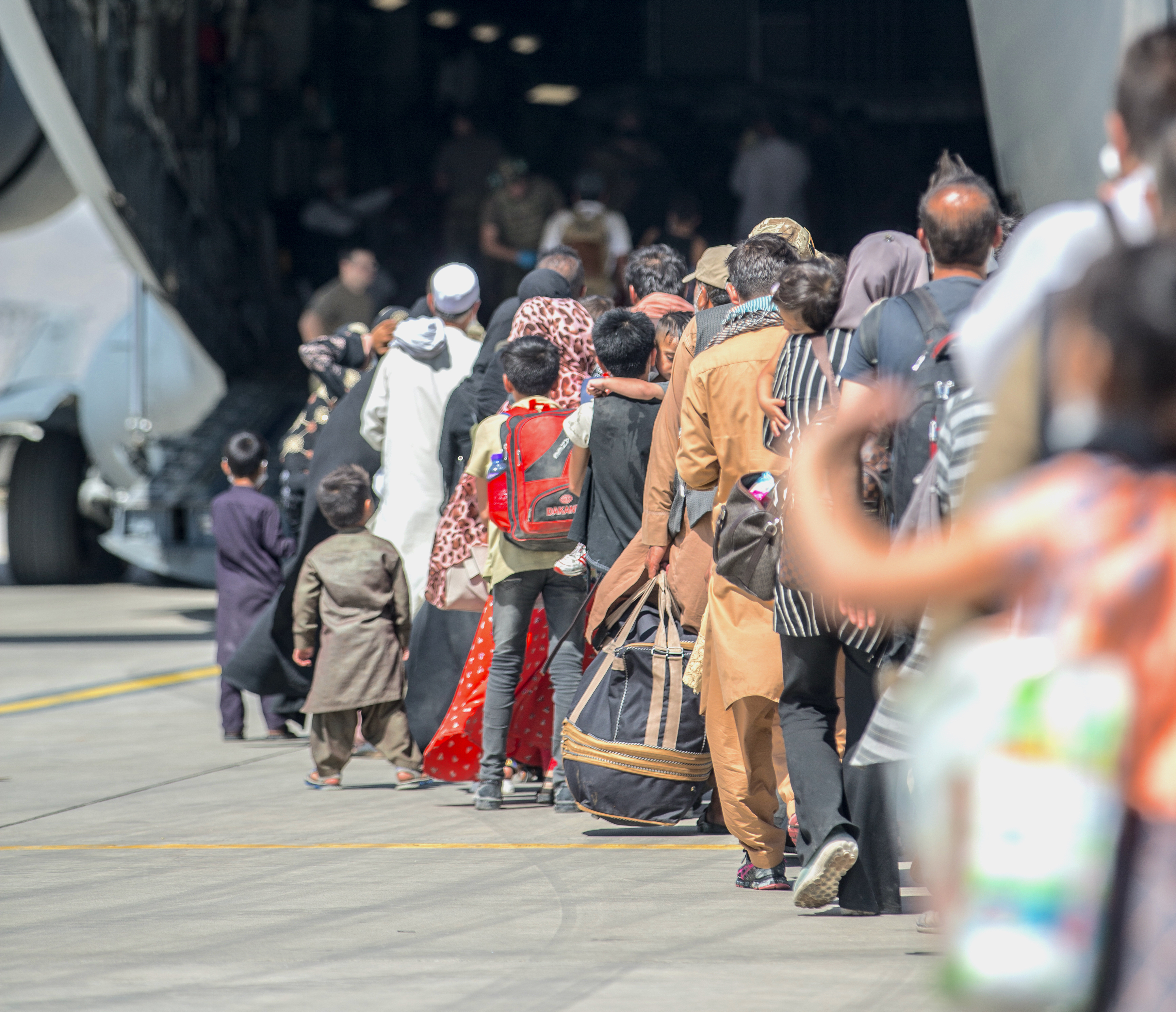
The forced mass exodus of Afghan nationals from Pakistan has shifted from a localized border dispute into a full-scale regional catastrophe. Since late 2023, Islamabad has pushed hundreds of thousands of undocumented Afghans back across the Durand Line, citing national security and economic strain. These people are not returning to homes or jobs; they are being dumped into a vacuum where the humanitarian infrastructure is nonexistent and the political will to support them has evaporated. The tent camps lining the border represent a total failure of diplomacy and a looming security nightmare for the entire region.
The Policy of Mass Displacement
Pakistan’s decision to deport nearly 1.7 million "illegal foreigners" targeted Afghans who had lived in the country for decades. Some were born in Peshawar or Quetta and had never seen Kabul. The stated reason was a spike in militant attacks, which Islamabad blames on groups operating from Afghan soil. However, the data suggests a more complex geopolitical play. By weaponizing the refugee population, Pakistan attempted to pressure the Taliban government into tightening border controls. Recently making headlines lately: The Brutal Truth Behind Trump’s Brinkmanship in Islamabad.
The result was a logistical disaster. Families were given weeks to pack their lives. Many sold their household goods for pennies on the dollar because they could not carry furniture or livestock across the Torkham or Chaman crossings. When they arrived on the other side, they found a country already reeling from a collapsed economy and a multi-year drought.
Economic Strangulation at the Frontier
The border is the lifeblood of both nations, yet it has become a choke point. The transit of goods—fruit, coal, and textiles—is frequently halted by sudden gate closures. For a displaced family living in a nylon tent, these closures mean the price of flour and fuel doubles overnight. Additional insights into this topic are covered by NPR.
The Taliban administration, while welcoming the returnees in their rhetoric, lacks the treasury to house them. They have relied on international NGOs that are already stretched thin by funding cuts and restrictive operational environments. The "camps" are often nothing more than collections of sticks and plastic sheeting on dusty plains, lacking basic sanitation or clean water.
The Failure of the International Safety Net
Western donors have largely moved their attention to conflicts in Europe and the Middle East, leaving the Afghan border crisis in a funding graveyard. The United Nations and other agencies are operating on a fraction of the budget required to sustain a population of this size. It is a slow-motion collapse.
In many of these camps, the primary source of heat is burning trash or dried dung. Respiratory infections are rampant. The medical clinics that do exist are often mobile units that visit once a week, unable to treat chronic conditions or the severe malnutrition seen in children born during the trek across the mountains.
Security Implications of the Vacuum
Empty stomachs and a lack of prospects are the most effective recruiting tools for extremist groups. By forcing hundreds of thousands of young, desperate men into a lawless border zone with no way to earn a living, the deportation policy may actually create the very security threats it claimed to mitigate.
The Islamic State-Khorasan (IS-K) and other splinter groups watch these camps with interest. When a father cannot buy bread for his children, the promise of a monthly stipend from a militant group becomes an existential necessity rather than an ideological choice. The "buffer zone" Pakistan hoped to create is instead becoming a fertile ground for radicalization.
The Myth of Voluntary Return
There is a persistent narrative in official briefings that many Afghans are leaving Pakistan voluntarily. This is a fabrication. While some moved before the official deadline to avoid arrest, the "choice" was made under the threat of police harassment, confiscation of property, and indefinite detention in holding centers.
Journalists on the ground have documented consistent patterns of abuse. Night raids on Afghan neighborhoods in Karachi and Islamabad became common, with families reporting that their valid documentation was ignored or destroyed by local authorities. This forced movement constitutes one of the largest and swiftest displacements of people in recent South Asian history, yet it has been met with a muted response from the global community.
The Role of Domestic Pakistani Politics
Internal pressure within Pakistan played a significant role in the timing of the deportations. With an economy in freefall and inflation reaching record highs, the government needed a scapegoat. Blaming "aliens" for the drain on public resources and the rise in crime is an old political tactic, but rarely is it executed on such a massive scale.
The economic reality is that many of these Afghans were the backbone of the informal labor market. They worked in construction, waste management, and agriculture—jobs that many locals avoided. Their sudden removal has left gaps in the supply chain in cities like Peshawar, further complicating the economic recovery the government claims to be pursuing.
Infrastructure of Despair
To understand the scale of the crisis, one must look at the geography of the camps. Most are located in "no-man’s land" or on the outskirts of cities like Jalalabad and Kandahar. These areas were never intended for permanent habitation. The soil is hard-packed and saline, making agriculture impossible. There are no power lines.
Water and Sanitation Realities
In a typical camp near the Torkham border, a single borehole might serve three hundred families. Women and children spend hours queuing for water that is often contaminated. The lack of latrines has led to outbreaks of cholera and other waterborne diseases, which spread rapidly in the cramped conditions of the tents.
Public health officials warn that a major epidemic in these camps would not stay confined to the displaced population. It would migrate back across the border via the very traders and truck drivers who keep the regional economy limping along.
The Gendered Impact of Displacement
For Afghan women and girls, the deportation is a double blow. In Pakistan, many girls were able to attend schools or at least move more freely than they can under the current restrictions in Afghanistan. Upon being forced back, they enter a society where their rights to education and employment are severely curtailed.
Many displaced families are headed by widows who lost husbands during the decades of war. These women face insurmountable hurdles in providing for their children. Without a male guardian, they struggle to even access the aid distributed in the camps, as cultural norms and official decrees often require men to interface with aid workers.
The Loss of Generationally Built Assets
The tragedy is not just the physical movement, but the total erasure of wealth. A family that spent thirty years building a small tailoring business or a grocery stall in Pakistan has seen that intergenerational progress wiped out in a single afternoon. They arrive in the camps with nothing but the clothes on their backs and perhaps a few bundles of bedding. This is a reset to zero for millions of people.
Regional Stability and the Long Game
The Taliban's response has been one of managed anger. They are overwhelmed by the influx and have set up a temporary commission to handle the returnees, but they lack the administrative capacity to integrate them into the national economy. There is no plan for long-term housing, no plan for job creation, and no plan for land redistribution.
The geopolitical fallout is equally grim. The relationship between Kabul and Islamabad is at an all-time low. The border, once a porous frontier of shared culture and commerce, is being hardened with fences and high-tech surveillance. This militarization does little to stop militants, who know the mountain passes better than any border guard, but it is highly effective at strangling the lives of civilians.
The Reality of the Camps
Life in the camps is a cycle of waiting. Waiting for food distributions that are often late. Waiting for a change in policy that never comes. Waiting for the weather to turn. In the winter, the cold is the primary killer. In the summer, the heat in the plastic tents becomes unbearable, with temperatures regularly exceeding 40 degrees Celsius.
There is no "back to normal" for these people. The homes they left in Pakistan are gone, occupied by others or demolished. The villages they originated from in Afghanistan are often unrecognizable, destroyed by years of fighting or rendered uninhabitable by drought. They are a people without a place, caught between a country that no longer wants them and a country that cannot sustain them.
The immediate need is for a total halt to forced deportations during the winter months and a massive infusion of direct cash assistance to the families in the camps. Anything less is merely managing the optics of a catastrophe while the human cost continues to climb. The international community must move beyond statements of "concern" and address the fact that a major regional ally is violating the principle of non-refoulement on a systemic level.
The focus must shift to the creation of permanent housing and the restoration of legal identities for those born in exile. Without a clear path to citizenship or legal residency, the cycle of displacement will simply repeat itself in another decade, with even more disastrous consequences for the stability of Central Asia. The tents will eventually rot away, but the resentment and desperation being bred beneath them will last for generations. Provide the necessary resources now or prepare for the inevitable fallout of a failed state within a failed state.