The Ordinary Tuesday
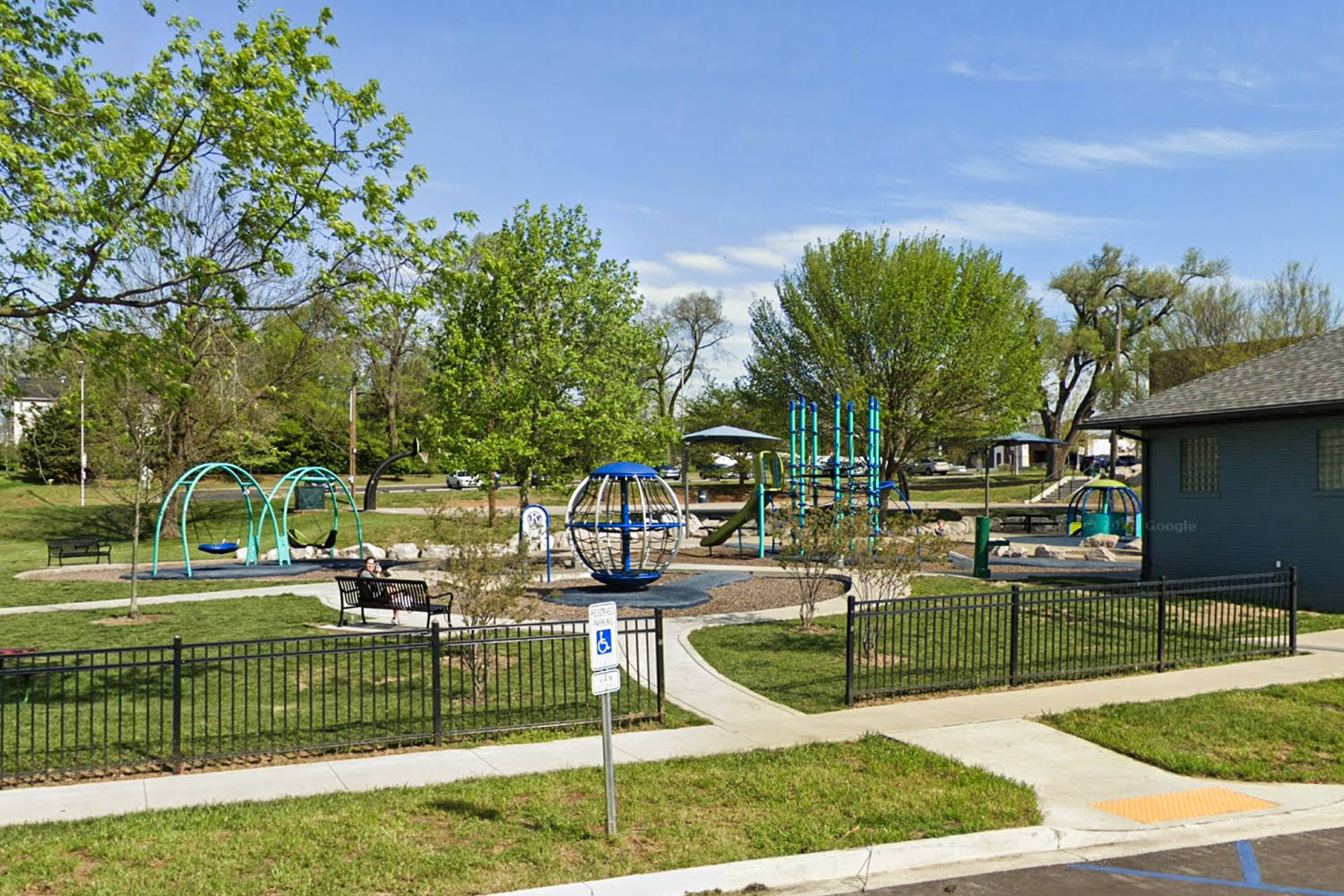
The grass in Cool Spring Park is usually a specific shade of bright, stubborn green that refuses to quit even when the July heat bakes the Kentucky soil. It smells like crushed clover and wet dirt after an early morning sprinkler cycle. Children drag their sneakers through it. Dogs pull hard on their leashes toward the shade of the maples.
On a Tuesday, it is a living room without walls.
Then the rhythm snaps.
It starts with a sound people always misidentify at first. A string of sharp cracks, like heavy timber breaking under sudden weight or dry branches snapping in a fire. The human brain resists the worst conclusion. It looks for mundane explanations. Construction. Backfire. Fireworks left over from the weekend.
Reality arrives too fast to dodge.
Five people dropped to that green grass in a matter of seconds. One of them, a twenty-two-year-old whose name would soon fill local broadcasts and cold digital feeds, would not get back up. The park did not empty all at once. Panic is a strange, stuttering thing. First, there is absolute stillness, a collective holding of breath where the world stops spinning. Then, the scramble. Strollers tipped over. Phones clutched in shaking hands. Shouts tearing through the humid air, begging for someone, anyone, to help.
The Geography of Grief
Lexington is a city built on rhythms. The slow clop of horses on surrounding farms, the steady hum of traffic down Richmond Road, the predictable pulse of neighborhood life where people wave from porches and kids ride their bikes until the streetlights blink awake.
Violence of this magnitude does not belong here. Or at least, that is the lie we tell ourselves to sleep at night.
We draw imaginary lines around safety. We tell ourselves that certain zip codes are sanctuaries, that open spaces under a wide Kentucky sky are inherently immune to the jagged edges of human fury. When five people are shot in a public park in broad daylight, those lines dissolve.
I know the weight of that dissolution. I have stood behind police tape when the yellow plastic was the only bright thing left in a gray afternoon. I have watched the neighbors gather behind the perimeter, their faces tight with a terrifying realization: It could have been my porch. It could have been my kid kicking the soccer ball.
The dry news reports call it an "active shooter situation" or a "dispute that escalated." Those phrases are armor. They protect us from feeling the raw, unfiltered terror of a mother hearing gunfire while her daughter is on the swings three blocks away. Statistics reduce human beings to tallies. Five shot. One dead. Case numbers assigned to a file drawer.
Behind those numbers are shattered coffee mugs left on kitchen counters. Car keys sitting in bowls by the front door, waiting for owners who are never coming home to turn the ignition again.
The Anatomy of a Snap
Why do we keep ending up here?
It is the question asked by people staring at television screens in living rooms from Danville to Louisville. We look for a grand design, a neat narrative arc that explains how an ordinary afternoon becomes a massacre.
Human beings are fragile vessels under pressure. Modern life grinds against the psyche in ways our evolutionary wiring was never meant to endure. We isolate ourselves behind privacy fences while living inches away from strangers. We carry grievances like hot coals in our pockets, nursing them until the heat becomes unbearable.
(Note: This next part is a hypothetical scenario designed to illustrate a behavioral pattern, not a report of the specific shooter's mindset.)
Imagine sitting in a hot car on a Tuesday afternoon. Your chest feels tight. The rent is due, the job is a dead end, and every minor slight you have suffered over the past decade is playing on an endless, looping reel inside your skull. You have a heavy piece of metal sitting within arm's reach. It whispers a dangerous promise: Power. Control. An end to the noise.
When that internal pressure meets an accessible trigger, the dam breaks. A verbal argument over a parking spot, a lingering grudge from a past encounter, a sudden flash of humiliation—and a firearm turns a petty human failure into an irreversible tragedy.
The weapon is the accelerant. It takes a fleeting moment of blinding rage and makes it permanent.
The Aftermath on the Asphalt
The sirens came howling down the avenues within minutes, their red and blue lights painting the brick facades of nearby homes in erratic strokes. Police cruisers blocked intersections. Yellow tape went up, fluttering like a warning flag against the wind.
For the survivors, the trauma is not a single event; it is an echo chamber. Every loud noise outside the window triggers a spike of adrenaline. Every time a car backfires on the bypass, the stomach drops back into freefall. The park itself becomes haunted. Months from now, people will walk past those trees and feel a cold draft that has nothing to do with the weather.
This is the hidden tax of living in a society awash in casual violence. We pay it in hypervigilance. We pay it in the way our eyes automatically scan crowded rooms for exits. We pay it in the gradual erosion of trust in the very spaces that were built to bring us together.
Cool Spring Park will eventually heal its turf. Crews will mow the grass. New green blades will push through the soil, oblivious to the blood that soaked into the roots. Families will return, because human beings are stubborn creatures who refuse to surrender their public squares to fear.
They will sit on blankets. They will unpack sandwiches.
And somewhere in the back of their minds, just beneath the laughter of children and the barking of dogs, they will listen for the snap of a broken branch.