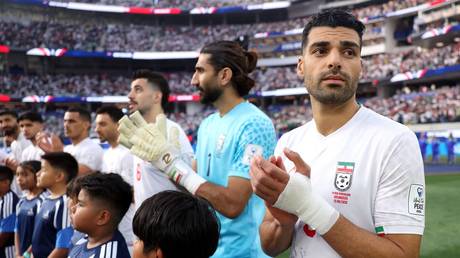
The stadium is a pressure cooker of sound. Tens of thousands of voices melt into a singular, deafening roar that rattles the plastic seats and vibrates right through the soles of your shoes. If you stand near the pitch, the air smells of crushed grass, stale beer, and the sharp, metallic tang of pure anxiety.
For a goalkeeper, this isn't just a football match. It is an isolation chamber.
When a striker misses a shot, they get a clap of encouragement from the manager. When a midfielder misplaces a pass, they track back and try again. But when a goalkeeper makes a mistake? The net ripples. The scoreboard changes. A nation groans. You are the last line of defense, a solitary figure stranded on an island of chalk lines, tasked with stopping a leather sphere traveling at eighty miles per hour.
Most men break under that kind of weight. Then there is Josimar Dias.
To the football world, and to the millions of fans watching the 2026 World Cup cycle, he is known simply as Vozinha. He is thirty-nine years old. In a sport that increasingly treats anyone over thirty like a relic of a bygone era, Vozinha stands as a towering, defiant contradiction. He is not just surviving at the highest level of international football; he is the beating heart of a Cape Verde national team that refuses to bow to giants.
To understand the miracle of Cape Verde, you have to look at a map. It is a tiny volcanic archipelago scattered off the coast of West Africa. The entire population of the country could fit into a couple of major European cities. By all the cold, calculated metrics of modern sports science and scouting infrastructure, Cape Verde should not be here. They should not be going toe-to-toe with footballing superpowers.
Yet, there they are. And at the back of it all, wearing the gloves and organizing a defense with the calm authority of a chess grandmaster, is a man who debuted for his country when some of his current teammates were still in primary school.
Consider the sheer physical toll of playing this position for nearly two decades. Every dive requires an explosive burst of power from knees that have hit the hard turf thousands of times. Every collision with an oncoming forward leaves a lingering ache in the ribs. The reflexes must remain razor-sharp, even as the biological clock ticks relentlessly forward.
Most people assume that sports are strictly a young man’s game, a realm where raw speed and youthful exuberance conquer all. We are conditioned to look for the next teenage prodigy, the shiny new transfer, the viral TikTok highlight. But youth has a fatal flaw: it lacks memory.
A twenty-year-old goalkeeper relies on instinct. A veteran like Vozinha relies on foresight. He doesn't just react to the ball; he reads the striker’s hips. He watches the angle of the approach. He remembers a similar situation from a match played a decade ago in a completely different stadium, and he positions himself three inches to the left before the shot is even taken. Those three inches are the difference between a spectacular save and a crushing defeat.
The journey to this global stage was never guaranteed. Vozinha’s career is a masterclass in resilience, spanning clubs across Europe and the Middle East, from the pressure-filled environments of Portuguese football to the gritty reality of lower-tier leagues. There were times when the spotlight faded, when the pundits questioned whether it was time for Cape Verde to transition to a younger model, to invest in the future.
But the future can wait when the present is this commanding.
Every time Vozinha steps onto the pitch, he carries the hopes of an entire diaspora. Cape Verdeans are scattered across the globe—in Boston, in Rotterdam, in Lisbon—bound together by a deep, aching sense of cultural identity known as sodade. It is a feeling of longing, of connection to a homeland that is small in geography but massive in spirit. When the national team plays, the diaspora stops. The radio dials are tuned. The television screens flicker to life in living rooms thousands of miles away.
Imagine a young kid watching from a cramped apartment in New England, seeing a man from Mindelo standing tall against the best strikers in the world. Vozinha isn't just stopping soccer balls. He is validating a culture. He is proving that size, resources, and pedigree mean nothing when stacked against sheer willpower and decades of accumulated wisdom.
The beauty of his story lies in its lack of vanity. In an era dominated by hyper-marketed athletes who care as much about their personal branding as their performance, Vozinha belongs to a different breed. He is a quiet leader. He doesn't beat his chest or court controversy. Watch him closely during a match after he pulls off a miraculous, fingertip save that defies the laws of gravity. He doesn’t celebrate wildly. He gets up, dusts off his jersey, and immediately yells at his center-backs to lock down the space. The job is never done until the final whistle blows.
There is a profound vulnerability in watching an older athlete compete at the absolute limit of human capability. You find yourself holding your breath during every corner kick, praying that the body holds up, that the reflexes don't betray him just this once. It makes every clean sheet feel like a minor miracle, a triumph of the human spirit over the inevitable march of time.
As the tournament presses on, the matches will only get harder. The strikers will get faster, the pressure will intensify, and the margin for error will shrink to zero. The spreadsheets and data analysts will continue to predict their downfall, pointing out the age gaps and the market values of the opposing squads.
But spreadsheets cannot measure the depth of a man's resolve. They cannot quantify the quiet confidence that comes from surviving hundreds of footballing battles. When the stadium lights beat down and the entire world is watching, Cape Verde does not fear the storm. They have an island of their own in the penalty box, and his name is Vozinha.