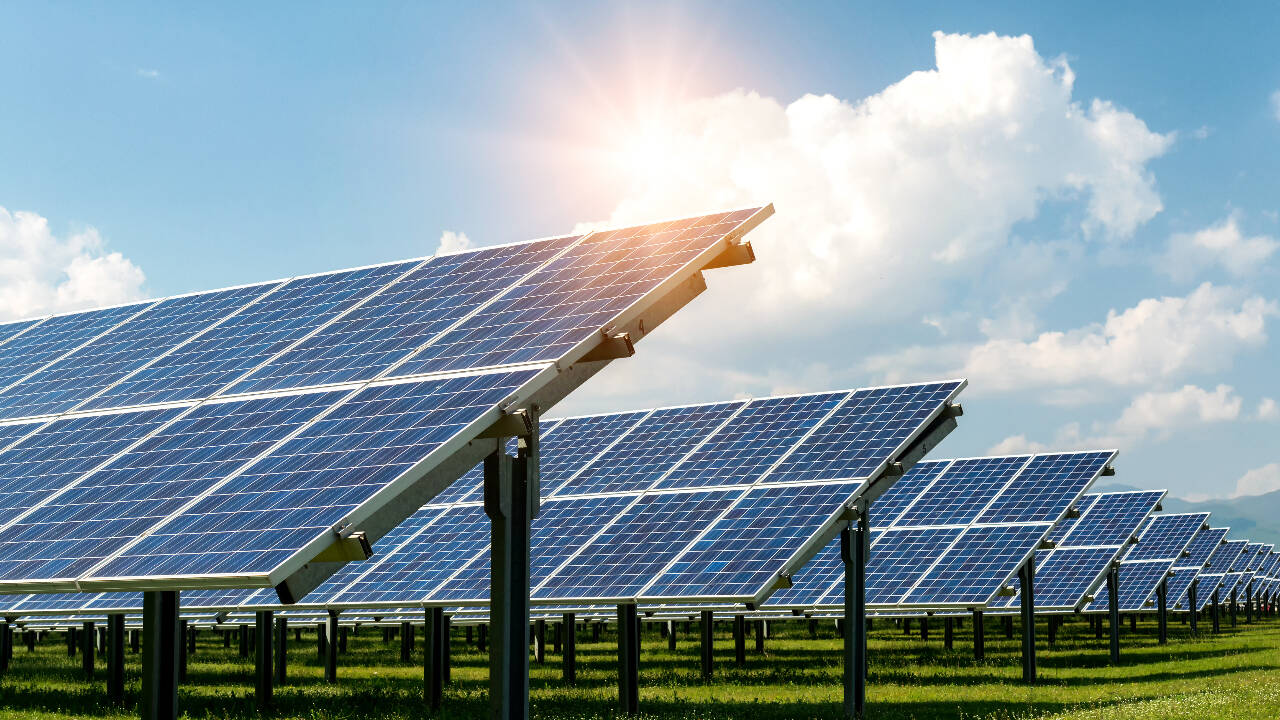
Every farm magazine and tech blog loves a feel-good story. The current darling of rural journalism is agrivoltaics, the marriage of crop production and photovoltaic panels. The lazy consensus goes something like this: scatter 832 solar panels across a sleepy pasture, let the sheep graze beneath the aluminum racks, grow some shade-tolerant lettuce, and watch the cash roll in while saving the planet.
It sounds wonderful. It also ignores every harsh economic and operational reality of modern agriculture. Meanwhile, you can explore similar stories here: Why Wall Street Is Paying Six Figures a Month for Presidential Social Media Posts.
I have watched mid-sized farming operations blow millions of dollars chasing this exact hybrid daydream, only to realize too late that combining two low-margin, high-capital industries does not double your success. It squares your risk.
Let us dismantle the romantic illusion of dual-use solar farms. To understand the full picture, we recommend the detailed analysis by Investopedia.
The Margin Myth of Dual-Income Land
The primary pitch for agrivoltaics relies on land-use efficiency. Proponents argue that getting two revenue streams from a single acre—crops and electricity—must inherently yield a superior return on investment.
Basic corporate finance exposes the flaw in this logic.
Farming is a high-volume, low-margin business dictated by commodity prices, weather whims, and supply chain bottlenecks. Utility-scale solar generation is a capital-intensive infrastructure play dictated by interconnection queues, grid capacity, and long-term power purchase agreements. When you force these two completely distinct business models onto the exact same piece of dirt, you create an administrative and operational nightmare.
Combining two low-margin, high-capital industries does not double your success. It squares your risk.
Consider the equipment constraints. Modern agricultural machinery is massive. Combine harvesters, sprayers, and tractors require wide turning radiuses and unobstructed vertical clearance. Drive a multi-million-dollar John Deere combine through a field peppered with steel pilings and low-hanging DC wiring, and you are playing a high-stakes game of operational roulette.
When a component fails, you face a agonizing choice. Do you call an electrician to service the inverter while your crop rots in the field waiting for harvest? Or do you call a agronomist while your solar array sits throttled down because a tractor clipped a conduit?
You cannot optimize for maximum agricultural yield and maximum solar capture simultaneously. One always cannibalizes the other.
The Maintenance Realities Nobody Mentions
Walk onto a standard solar installation and you will find pristine rows of glass and silicon tilted toward the sun. Now, walk onto that same installation where a farmer is attempting to raise livestock or specialty crops.
Dust, pollen, and mud are the sworn enemies of photovoltaic efficiency. In a traditional desert or open-field solar farm, cleaning crews run automated robotic scrubbers or bring in water trucks to clear the panels.
Now introduce agriculture.
When you till soil, you kick up particulate matter that cakes onto nearby glass panels within hours. When you graze sheep beneath the arrays, dust from hooves settles on the lower modules. If you irrigate crops overhead, mineral-heavy well water splashes directly onto the glass, baking hard water spots under the midday sun and instantly tanking your energy generation.
I have seen operations lose fifteen percent of their expected power output in a single growing season simply because the agricultural activity created a localized particulate storm that standard cleaning schedules could not combat. The added labor cost to keep those panels clean eats away at the extra income from the crop yield, leaving the farm in a financial dead zone.
The Capital Expenditure Trap
Let us talk about upfront costs. Installing a standard commercial solar array is expensive enough. You are paying for steel racking, DC-to-AC inverters, trenching, permitting, and grid interconnection studies that can take years to clear.
When you convert that installation into an agrivoltaic system, your CapEx balloons.
You cannot use standard driven-pile mounting systems if you plan to run specialized equipment or manage certain livestock beneath them. You need elevated racking systems to clear machinery, specialized foundations to handle uneven soil loading, and reinforced cabling that won't get chewed by rodents or clipped by cultivators.
Banks and private equity lenders look at these custom engineering requirements and see risk. Higher perceived risk translates directly to higher interest rates on equipment loans. Many farmers find themselves locked into long-term debt structures where the guaranteed debt service payment eclipses any marginal gains from selling dual-use electricity back to a reluctant utility grid.
The Interconnection Bottleneck
Even if you manage the agronomy, master the cleaning schedules, and secure financing, you run into the ultimate brick wall: the local electrical grid.
The mainstream narrative treats electricity generation as a simple open tap. You make power, you put it on the wire, you get a check.
In reality, rural distribution lines are often at or near maximum capacity. Local substations cannot handle sudden influxes of distributed generation without massive, multi-million-dollar upgrades.
When a farmer installs a few hundred panels, they often discover that the local utility company requires an interconnection study that takes eighteen months and a grid upgrade fee that costs more than the solar hardware itself. If the local grid cannot take your power, your panels sit there as expensive lawn ornaments, generating zero revenue while your debt accrues interest.
What to Do Instead
If your goal is financial resilience and long-term land stewardship, stop trying to turn your acreage into a hybrid power plant.
Focus on true operational excellence within a single domain. If you want to farm, invest in regenerative soil management, direct-to-consumer distribution models, or high-value specialty crops that command pricing power. If you want to generate energy, lease your marginal, non-arable land to a utility-scale developer, take the predictable lease payments, and let specialized engineers handle the headaches of grid maintenance and inverter repairs.
Separating your revenue streams is safer than tangling them together on the same acreage.
Do not let the green aesthetic blind you to the math. Agrivoltaics is a niche solution for very specific, highly capitalized corporate entities with deep engineering benches—not a universal lifeline for the independent farmer trying to survive the next harvest cycle.
Put down the solar catalog, look at your soil, and focus on the business you actually know how to run.