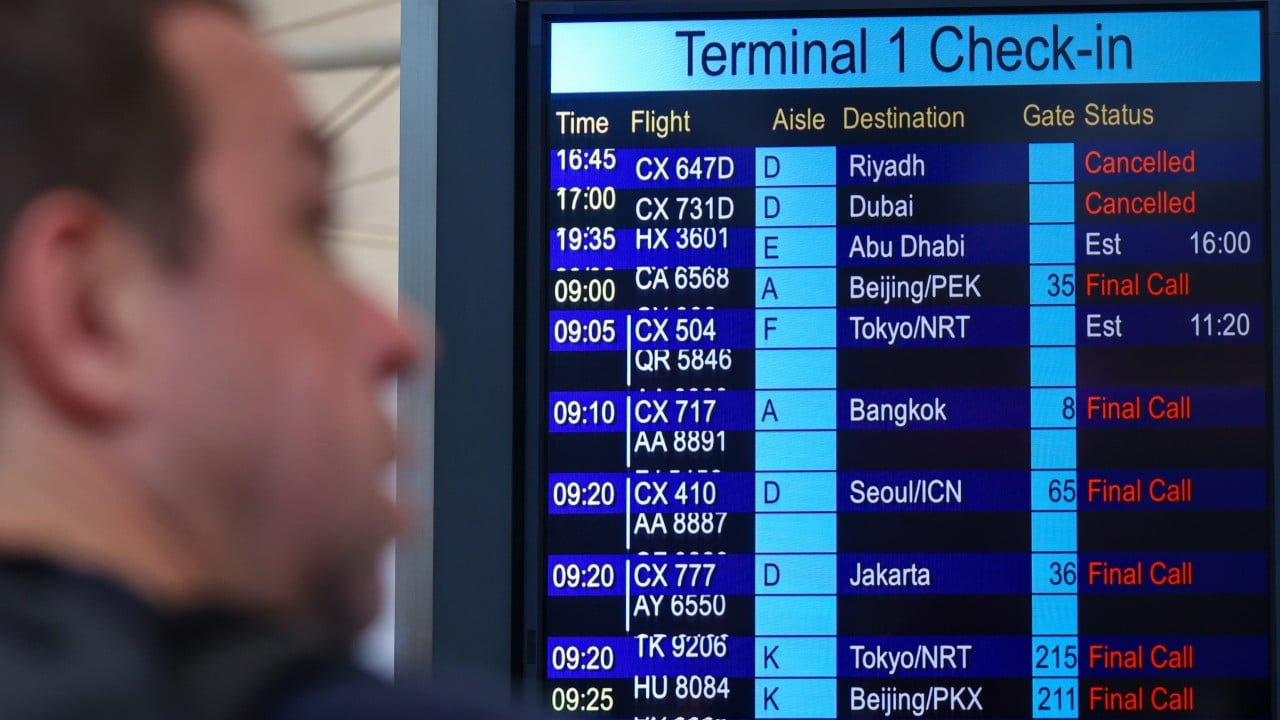
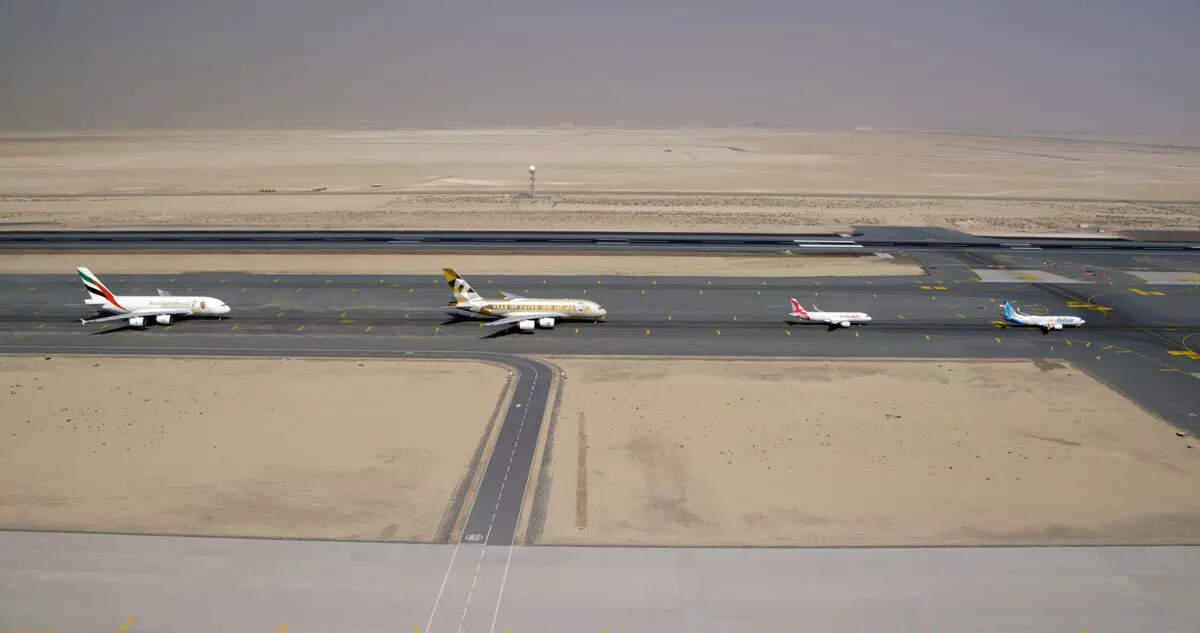
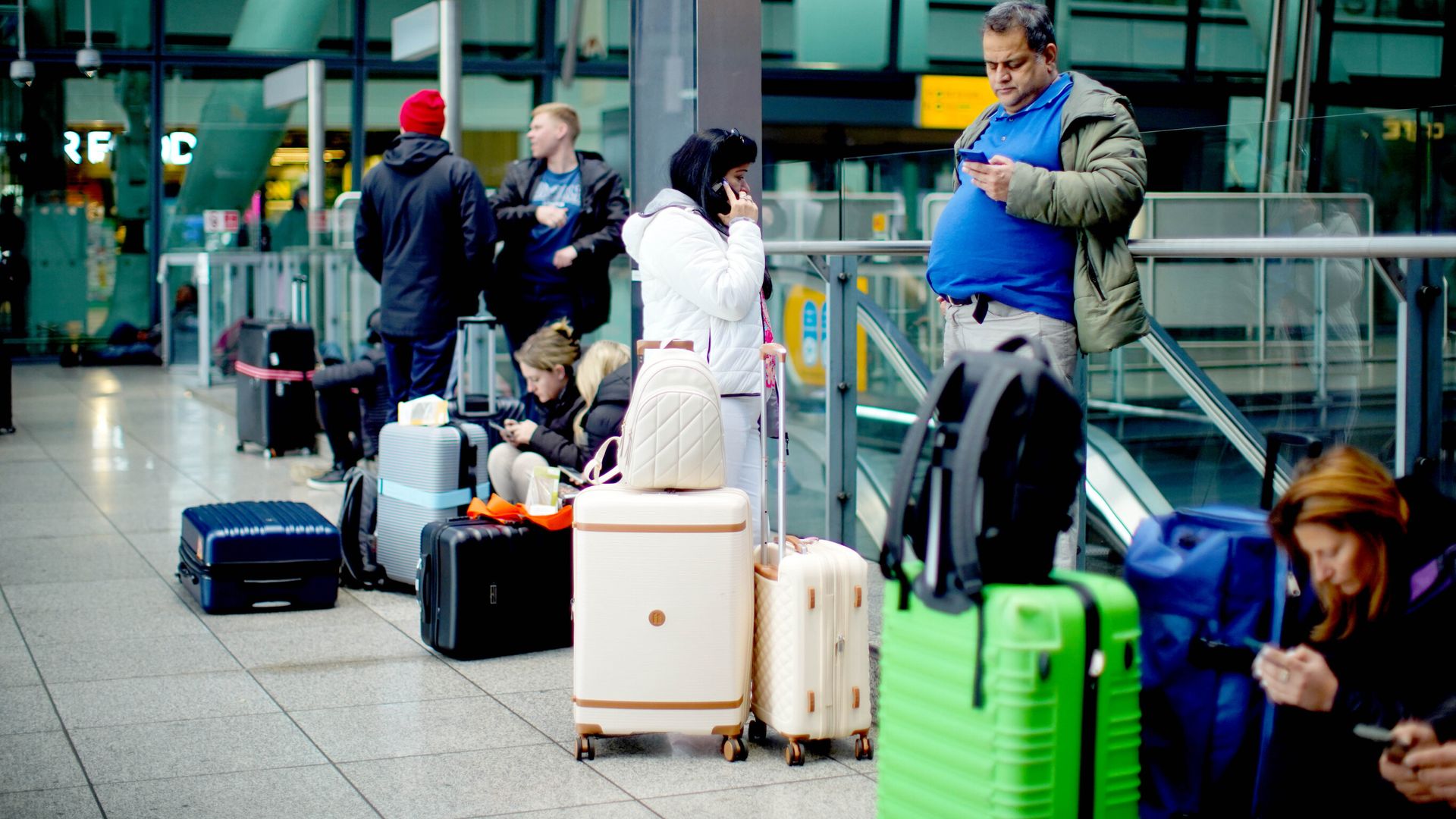
Airlines don’t issue directives to save you. They issue them to save themselves.
The standard industry reporting on the recent Middle East airspace closures follows a tired, predictable script. You’ve read it a dozen times: "Airlines scramble to assist passengers," or "Directives issued to mitigate travel chaos." It paints a picture of frantic executives in wood-panneled war rooms trying to solve a logistics puzzle for the sake of the weary traveler. For a more detailed analysis into similar topics, we recommend: this related article.
It is a lie.
The "directives" being blasted across your newsfeed are not rescue plans. They are liability shields. When a carrier cancels a flight due to regional instability, they aren't "prioritizing safety" out of some moral obligation. They are managing an insurance spreadsheet. If they fly into a known conflict zone and lose a $250 million airframe, their underwriters will walk away. If they strand you in a terminal for three days, the cost to them is a few vouchers and a PR headache. For broader context on the matter, comprehensive reporting is available on Travel + Leisure.
Stop looking at these headlines as news. Start looking at them as risk management.
The Lazy Consensus of Safety First
The media loves the "Safety First" narrative because it’s impossible to argue with. Who wants to be the person demanding their flight take off into a swarm of drones? But the reality of flight operations is far more cynical.
In the airline business, there is a concept known as Expected Value ($EV$). An airline calculates the risk of an event ($P$) multiplied by the cost of that event ($C$).
$$EV = P \times C$$
In a stable environment, $P$ is near zero. In a geopolitical flashpoint, $C$ stays the same—hundreds of lives and a massive asset—but $P$ spikes. The moment the $EV$ exceeds the projected revenue of the flight path, the "directive" is issued. It has nothing to do with the "thousands stranded" mentioned in the headlines. Those passengers are simply the rounding error in a corporate survival calculation.
I’ve sat in operations meetings where "passenger welfare" wasn't mentioned once. We talked about fuel burn for diversions. We talked about crew duty limits and the astronomical cost of "out-of-base" hotel stays for pilots. The passenger is a self-loading cargo unit that occasionally complains. The directives you see are designed to stop the bleeding of the balance sheet, not the frustration of the person in Seat 24B.
Why "Rebooking" is a Mathematical Trap
The competitor articles tell you to "contact your airline immediately for rebooking." This is the worst advice you can give a stranded traveler.
When an airline issues a mass directive, they are essentially triggering a "Thundering Herd" problem in computer science. Ten thousand people trying to access a database that can only process a hundred requests a minute. If you call the airline, you are entering a queue where the algorithm is already biased against you.
Modern Global Distribution Systems (GDS) use a hierarchy of value. If you aren't a top-tier frequent flyer or holding a full-fare business class ticket, the "directive" ensures you are at the bottom of the pile. The airline isn't trying to get everyone home; they are trying to get the most profitable people home.
The Illusion of Choice
Airlines offer "flexible rebooking" during these crises. This is a brilliant bit of psychological warfare. By giving you the "choice" to rebook for free, they often trick you into waiving your rights to mandatory compensation under regulations like EU 261 or similar regional mandates. Once you "voluntarily" accept a flight three days later, the airline has successfully converted a massive operational failure into a "customer service accommodation."
They didn't fix your problem. They convinced you to accept it.
The Hidden Geography of Airspace Arbitrage
Most people think of the sky as an open road. It’s actually a series of expensive toll booths.
When the Middle East airspace tightens, airlines don't just stop flying; they start Airspace Arbitrage. They look for the cheapest possible detour that doesn't trigger a union-mandated crew rest period.
If a flight from London to Dubai has to detour around a conflict zone, it might add two hours to the trip. Those two hours can cost an airline upwards of $40,000 in fuel and labor. If the airline cancels the flight instead, claiming "Force Majeure," they save that $40k.
The directive isn't an update; it's a financial instrument. Carriers frequently cancel flights that could have flown safely via a longer route simply because the longer route would destroy the profit margin of the flight. They blame "safety" because you can't sue for safety. You can sue for greed.
Stop Asking "When Can I Leave?"
If you are stranded, you are asking the wrong question. The premise of your frustration is that the airline owes you a timely arrival. They don't. Read the Contract of Carriage. It’s a document designed to prove they owe you nothing but a seat... eventually.
Instead of following the "directives," you need to exploit the gaps in their logic.
- Ignore the App: The app is programmed to give you the cheapest solution for the airline. It will never show you a partner airline's flight that costs them a $1,200 interline fee.
- The "Interline" Leverage: Use a tool like ExpertFlyer to find seats on competing airlines. Then, demand the gate agent "FIM" (Flight Interruption Manifest) your ticket over to that carrier. They will tell you they can't. They are lying. They just don't want to pay the competitor.
- The Credit Card Shield: Your airline’s directive is garbage. Your high-end credit card's Trip Interruption Insurance is your only real friend. Use it to book a hotel and a flight on a different carrier immediately. Stop waiting for the "official" solution.
The Brutal Truth About "Duty of Care"
The industry talks a big game about "Duty of Care." In reality, this is a legal floor, not a service ceiling.
Airlines know that if they provide the bare minimum—a $15 meal voucher for a 12-hour delay—most passengers will be too exhausted to fight for more. They count on your fatigue. The directives are timed to keep you in a state of perpetual "almost-information."
- "We will update you in two hours."
- "Check back at 6:00 PM."
- "The situation is evolving."
This is a tactic to prevent you from leaving the airport and booking a room elsewhere. If you stay in the terminal, you are "contained." If you leave, you become a variable they can't control.
I’ve watched ground staff deliberately delay "cancellation" announcements until after the last local train has left or the nearby hotels have spiked their prices. It’s a cost-containment strategy. If you can't find a hotel, the airline doesn't have to reimburse you for one.
The Logistics of the Lie
Let's look at the "Scramble" for aircraft. Headlines suggest airlines are moving mountains to find spare planes.
They aren't.
The global fleet is running at near 100% capacity. There are no "spare" long-haul jets sitting around waiting for a crisis in the Middle East. When a flight is cancelled due to a directive, that plane is simply moved to a more profitable route or sent to maintenance early.
The "directives" are a way to reset the board. By cancelling a block of flights, the airline can "re-sync" their schedule. It's like rebooting a frozen computer. They don't care about the data you lost (your vacation, your business meeting); they just want the system running again.
Abandon the Status Quo
The next time you see a headline about "Airlines issuing directives," don't feel relieved that someone is "handling it." Feel a sense of urgency to handle it yourself.
The airline's interests and your interests are diametrically opposed. They want to minimize expenditure; you want to minimize time lost. In a crisis, their primary tool is the delay. Your primary tool is the exit.
Stop being a "stranded passenger." Start being a "liquidated asset." Take the refund, fire the airline, and find your own way home. The directive is not a map; it's a fence.
Break it.