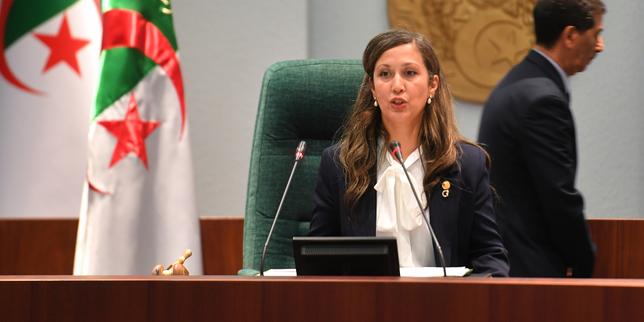
The election of Khalida Boufedeche as the president of the Assemblée populaire nationale (APN) marks a singular moment in Algerian political history. On July 28, 2026, the chamber voted to place a woman at its helm for the first time since its inception in 1977. This appointment is ostensibly a triumph for gender representation. Beneath the surface, however, the numbers tell a story of systemic contraction rather than expansion.
Boufedeche, an allergist and representative from Algiers, secured the position following legislative elections that saw the Front de libération nationale (FLN) maintain its grip on power. While her rise is a historic milestone, the environment in which she operates is increasingly hollowed out. Meanwhile, you can find similar developments here: The Anatomy of Ballistic Interception Systems and Regional Escalation.
The Illusion of Progress
The appointment of a woman to the third or fourth highest office in the state creates a powerful visual, yet it obscures a stark decline in the actual influence of women in the legislature. The data provides a sobering corrective to the optics of this achievement. In the current 407-seat assembly, only 25 women hold seats. That is roughly six percent of the total chamber.
Compare this to the 2017 elections. At that time, 118 women were elected to the APN. This previous surge was not the result of organic cultural shifts but the product of a mandatory quota system. When that system was dismantled, the participation of women in the political process did not merely plateau; it collapsed. The current reality is a parliament where the presence of women is more decorative than representative, functioning within a system that has largely discarded the mechanisms once used to ensure their participation. To understand the complete picture, check out the detailed analysis by BBC News.
A Parliament of Declining Mandates
The broader issue is not limited to gender representation. It is an issue of legitimacy. The July 2026 elections, which paved the way for the current composition of the APN, recorded a voter turnout of approximately 21 percent. This is the lowest participation rate in the history of the country.
When a legislative body is populated by representatives elected by a diminishing fraction of the population, the structural integrity of the entire institution comes into question. The election of a new speaker, regardless of the candidate's personal qualifications or gender, occurs within a vacuum of public engagement. The citizens of Algeria have, through their absence at the ballot box, signaled a profound disconnect from the national political project.
The Mechanism of Power
The APN functions as the lower house of the Algerian parliament. Its role is to debate and pass legislation, yet the concentration of executive authority in Algiers often relegates such bodies to a secondary tier of influence.
Boufedeche, a member of the FLN central committee, enters this space with significant backing from the governing apparatus. The election result—302 votes in her favor against limited opposition from other factions—confirms that the internal dynamics of the assembly remain firmly controlled by the dominant party. Her role is to manage this assembly, but she inherits a body that has lost much of its former prestige and social anchoring.
The challenge for the new speaker is not just the glass ceiling she has broken. It is the widening chasm between the seat of government and the street.
The Future of the Institution
History is rarely moved by symbolism alone. For the change in leadership to signify anything more than a temporary shift in personnel, the institution must find a way to re-engage an electorate that has largely checked out. The decline in women’s representation is a symptom of this broader fatigue. When parties no longer feel the pressure to include women through quotas, and when voters no longer feel compelled to participate in the legislative process, the institution begins to resemble a static display rather than a dynamic engine of change.
The career of Khalida Boufedeche, from her medical practice in Beni Messous to the chair of the parliament, reflects a personal ascent. Whether that ascent can translate into a meaningful strengthening of the APN depends on how the leadership addresses the structural rot of disengagement.
The silence of the electorate is the loudest factor in this new chapter of Algerian governance. Unless the parliamentary process can demonstrate tangible relevance to the daily lives of the population, the first female speaker will be leading an empty house. The gavel falls, but the halls remain quiet.