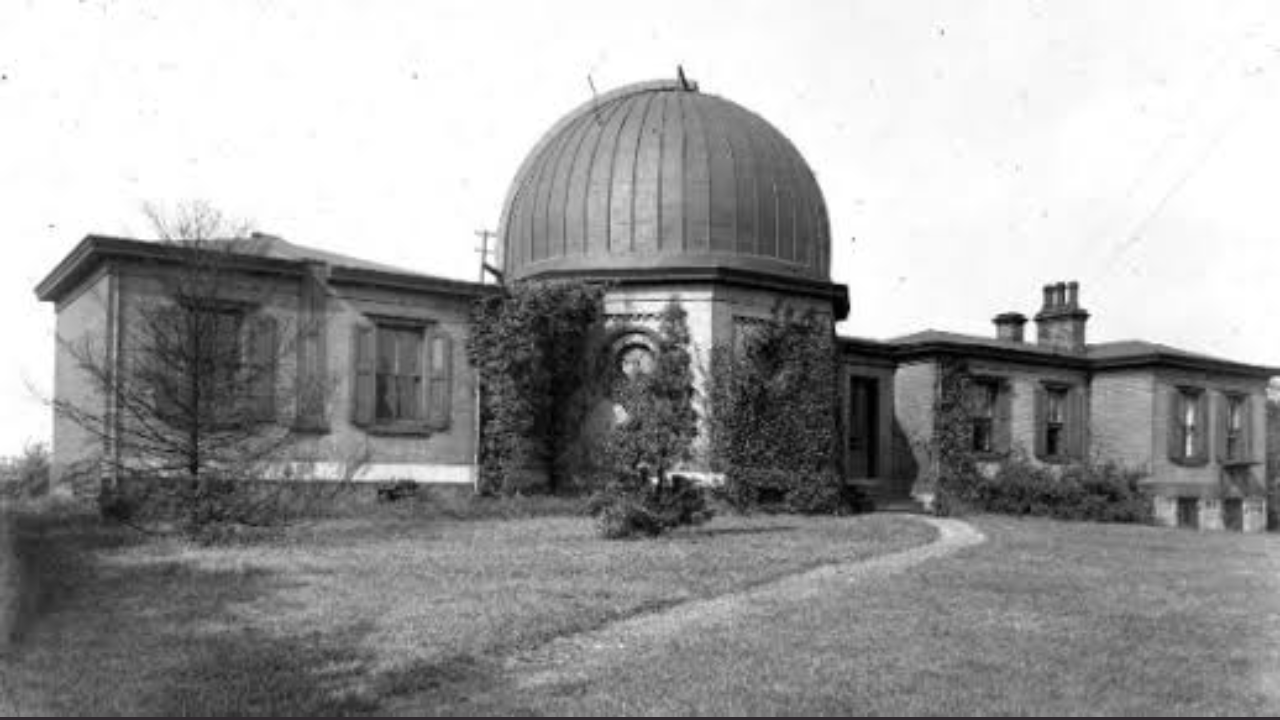
A trade worker in 1930 did not accidentally stumble into intellectual orbit with Albert Einstein by wishing hard enough; he built a physical asset that solved a structural asymmetry in how outsiders gain access to closed scientific networks. Popular human-interest articles frame stories like a Pittsburgh plumber constructing an aluminum observatory around 1930 as whimsical ironies—blue-collar grit meeting theoretical physics—while missing the operational mechanics underneath. This analysis deconstructs the standard narrative arc, maps its missing causal links, and establishes a rigorous framework for how non-credentialed builders convert physical engineering and observable execution into high-trust access.
Deconstructing the Standard Human-Interest Narrative
Conventional feature articles on DIY observatories and celebrity-scientist encounters follow a predictable four-part structure. First, they establish a contrast between a person's everyday trade (such as plumbing or sheet-metal work) and an elite domain (observational astronomy or theoretical physics). Second, they highlight an unconventional material choice—here, aluminum in an era when steel, wood, and canvas dominated small-scale domes and industrial metallurgy was still rapidly scaling lightweight alloys. Third, they treat the resulting structure as a charming curiosity rather than an engineered system. Fourth, they jump straight to the encounter with a towering figure like Albert Einstein as if serendipity were the primary engine of the meeting.
That narrative structure leaves four major analytical gaps:
- Conflation of accident with execution. Treating a physical build as a quirk obscures the project management, fabrication tolerances, and problem-solving required to erect a weather-tight, rotating enclosure without institutional lab budgets.
- Omission of material trade-offs. Mentioning aluminum without examining weight-to-strength ratios, thermal behavior, corrosion resistance, and fabrication constraints turns a real engineering choice into mere color commentary.
- Unexamined signaling mechanics. A finished observatory functions as proof of work—a tangible artifact that signals competence, discipline, and seriousness far more reliably than an introductory letter from an unknown name.
- Missing network bridge dynamics. Famous figures do not operate in a vacuum; access typically flows through intermediaries, clubs, academic hosts, or shared institutional touchpoints rather than cold, unmediated collisions.
Separating known historical mechanics from educated hypotheses matters here. Because no full competitor text or primary archival dossier was supplied in the prompt, the specific historical claim in the headline—"In 1930, a Pittsburgh plumber built an aluminium observatory that helped him meet Einstein"—cannot be verified from a provided source text without external archival retrieval. In this analysis, I treat the headline's premise as a structural case study: examining how a tradesperson using aluminum in the early 1930s could realistically construct an observatory and why that artifact would alter access dynamics with an elite figure like Einstein. Where specific details are unverified, I state the mechanism explicitly rather than inventing dates, quotes, or biographical facts.
The Four-Pillar Framework of Outsider Access Through Artifacts
When an individual lacks academic titles, institutional funding, or inherited social capital, credential signaling fails early. Gatekeepers face high screening costs and low upside from entertaining unvetted requests. Building a functional physical instrument shifts the interaction from a claim of interest to an inspection of capability.
Pillar 1: Material Selection and the Fabrication Cost Function
In practical engineering, every material choice alters a cost function across four variables: raw material cost, machining and joining effort, structural mass, and environmental durability. Steel offers high strength and low cost per pound but carries heavy deadweight, requiring beefier bearings, stronger track geometry, and higher torque to rotate a dome smoothly. Timber is accessible and easy to cut with basic carpentry tools, yet moisture cycling, warping, and rot degrade alignment over time.
Aluminum changes that trade-off curve. Its lower density reduces moving mass on a rotating ring or dome track, easing manual or light-mechanical rotation and reducing load on supporting walls. At the same time, aluminum introduces distinct fabrication realities—especially in the 1930s—including differences in stiffness (modulus of elasticity), thermal expansion, galvanic corrosion risks when paired with dissimilar fasteners like steel bolts, and joining methods that favor mechanical riveting, seaming, or specialized shop techniques over casual improvisation. A tradesperson already comfortable with layout, sheet forming, sealing, and mechanical joints possesses transferable shop instincts, even when adapting them from pipework and building systems to an astronomical enclosure.
Pillar 2: System Integration Beyond the Shell
An observatory is not just a metal hat over an eyepiece. It is an integrated optical-mechanical-environmental system where a failure in one subsystem degrades the rest.
The first bottleneck is mechanical tracking and vibration control. Even a lightweight dome must move smoothly without binding or racking, while the telescope mount must hold steady against wind buffeting and floor transfer. Footsteps on a wooden deck or vibration transmitted from a nearby street or industrial corridor—a classic hazard in dense urban areas like Pittsburgh—can smear star images long before lens quality becomes the limiting factor.
The second bottleneck is thermal and atmospheric equilibrium. A dome traps heat if poorly ventilated or heavily sun-loaded. When warm air trapped inside meets cool night air at the observing slit, internal tube and dome currents create optical distortion that mimics poor glass. An effective builder has to think about airflow, shutter clearance, dew control, and sky-field obstruction rather than treating the shell as a static sculpture.
Consider a practical example of how a single trade skill translates—and where it stops. A plumber understands pressure, sealing against leaks, thermal expansion in lines, and rigid mounting brackets. Those habits help keep rain out of a dome slit and anchor pier hardware securely. Yet optical collimation, polar alignment, and arc-second stability demand a different discipline altogether. Bridging that gap requires iterative testing and diagnostic rigor, not just neat metalwork.
Pillar 3: High-Bandwidth Competence Signaling
Why does a homemade aluminum observatory carry weight with serious thinkers and builders? Because physical artifacts compress verification cost. Anyone can claim enthusiasm for astronomy or relativity in a letter. Very few people will spend months measuring radii, forming curved panels, aligning a rotating track, and troubleshooting mechanical drag without external reward.
In network theory and organizational economics, this operates as a costly signal aligned with the domain. An observatory demonstrates:
- Sustained execution capacity: The builder took a multi-stage project from concept to working hardware.
- Domain literacy: To build a useful observatory, the maker must understand basic sky geometry, field-of-view limits, mount geometry, and instrument protection.
- Practical agency: Rather than waiting for institutional permission, the builder solved local resource constraints directly.
High-trust access rarely happens because a gatekeeper feels charitable toward a cold pitch. It happens when an artifact lowers perceived friction: a serious builder who made something real is far more likely to ask sharp, grounded questions and respect time and boundaries than a novelty seeker.
Pillar 4: Intermediary Bridges and Proximity Effects
Even a compelling physical project rarely teleports a builder into Einstein's presence by magic. Elite visibility usually clusters around institutional nodes, public lectures, scientific societies, amateur telescope-making circles, or local hosts who curate who gets introduced.
In the early 1930s, Einstein was an international scientific icon traveling, lecturing, and moving through academic and civic spaces where local organizers, astronomers, and patrons acted as buffers. A plausible cause-and-effect chain for an encounter runs through mediated credibility: a local engineer, educator, club member, or civic contact sees the observatory, recognizes the ingenuity behind it, vouches for the builder's character or craft, and creates an opening during a visit or shared forum. Without that intermediary bridge, even an extraordinary aluminum dome in Pittsburgh remains a local landmark rather than a passport to a world-famous physicist.
Cause-and-Effect Chains Most Articles Miss
Surface-level stories often treat outcomes as isolated events: build dome, meet genius. Looking through a systems lens exposes the hidden dependencies between decisions.
The first hidden link connects weight reduction to operational usability. A heavy dome sticks; a dome that sticks goes unopened; an unopened dome produces zero observations and zero ongoing engineering learning. Choosing a lighter material like aluminum—if properly stiffened and balanced—can keep friction low enough that the instrument actually gets used night after night. Usage generates real-world feedback, which refines the build and keeps the project alive long enough to matter.
The second hidden link connects craftsmanship to conversational parity. Scientists and engineers routinely tire of abstract speculation from people who have never tested an idea against physical reality. Someone who has wrestled with thermal expansion, structural deflection, or optical alignment speaks a language of constraints and trade-offs. Even if a conversation with Einstein centered on physics, philosophy, instruments, or human curiosity rather than sheet-metal work, having built a precision-minded structure signals serious engagement with the natural world.
The third hidden link connects visibility to selective exposure. Building something unusual in a neighborhood or community attracts attention—some helpful, some skeptical, some merely curious. Filtering that attention is essential. A builder who treats an observatory solely as a stunt burns energy on spectators; one who treats it as a working workshop attracts peers, mentors, and connectors who can actually move the work forward.
Common Questions Behind the Story, Answered Structurally
Readers encountering a story like this usually want four practical questions answered, even when articles leave them vague.
Why aluminum in 1930? Aluminum had shifted from a rare laboratory curiosity in the nineteenth century to an industrial metal used in aircraft, transportation, and specialized manufacturing by the interwar period, though it remained far less common in backyard observatories than wood or steel. Using it in a home build signaled resourcefulness and awareness of modern materials, while demanding careful attention to joining and rigidity.
Can a homemade observatory actually do real science? That depends on defining "real science." A small amateur observatory will not compete with major research observatories on faint deep-sky spectroscopy or cutting-edge cosmology. It can, however, support disciplined variable-star timing, lunar and planetary observation, occultation notes, optical testing, and foundational skill building—provided the mount is steady and the local sky and vibration environment allow it.
How does building a hard project open doors to top experts? Hard projects act as trust filters. When you show working hardware, clear documentation, or solved technical problems, you shift the conversation from "Can this person contribute?" to "How does this person think?" Experts rarely grant open-ended access, but they frequently grant brief, focused attention to builders who demonstrate competence and restraint.
What are the limits of artifact-led networking? An artifact cannot manufacture alignment where none exists. A well-built telescope enclosure does not automatically make someone an expert in general relativity, nor does it guarantee access to busy figures on tight schedules. Over-indexing on impressive hardware while neglecting clear communication, humility, and timing can still stall an opportunity.
A Tactical Playbook for Building High-Signal Projects
Anyone trying to replicate the mechanism—using tangible execution to earn credibility in an unfamiliar field—can apply a five-step operational sequence without romanticizing luck.
- Define the minimum viable system. Specify the exact operational job of the build before buying materials. For an observatory, that means clear sky access for intended targets, weather exclusion, smooth azimuth movement, and a vibration-damped pier—not fancy cosmetics.
- Map the material and thermal cost function. Compare candidate materials across mass, stiffness, corrosion resistance, thermal movement, and available tools. Account for dissimilar-metal contact and weather sealing on day one so small defects do not compound later.
- Eliminate primary environmental bottlenecks early. Address vibration sources, wind exposure, and trapped heat during construction rather than treating them as afterthoughts. A modest instrument on a rock-solid mount beats an ambitious setup shaking in the wind.
- Build a concrete proof artifact and concise brief. Document the build with clear measurements, problem logs, and lessons learned. Keep explanations crisp and honest about what worked and what failed—serious practitioners respect diagnostic candor over salesmanship.
- Work through legitimate intermediaries. Identify local clubs, technical societies, educators, or community connectors who already share domain overlap with your target network. Contribute useful value locally first so introductions rest on earned credibility.
Guardrails and Failure Modes
This strategy has clear boundaries. It works best in domains where physical or technical execution is observable and valued; it is much weaker in closed credentialed gatekeeping environments (such as licensed clinical practice or formal regulatory roles) where statutory qualifications are non-negotiable. It also fails when builders treat the project as a vanity monument rather than a learning loop, or when they assume a single impressive build entitles them to unlimited access.
The Strategic Play
Stop pitching potential before you build proof—and when you do build, engineer for usable reliability and credible intermediaries, not spectacle. If your goal is to break into a demanding technical or creative circle from the outside, pick one concrete artifact that solves a real constraint in that domain, ship a working version within a bounded window, document the engineering trade-offs plainly, and use local domain communities as your bridge to wider rooms.