You can have a valid visa processed by an official embassy. You can have the explicit backing of FIFA, the highest governing body in global soccer. You can be named the absolute best male referee on your continent by the Confederation of African Football.
None of it matters when you hit the border control desk at Miami International Airport.
Omar Artan, the top-tier Somali football referee who earned his spot on the final officiating roster for the 2026 FIFA World Cup, found this out the hard way. On Saturday, instead of joining his refereeing peers at their official tournament training base in Florida, Artan spent 11 grueling hours under interrogation by U.S. Customs and Border Protection (CBP). He was questioned about his documentation, his life, and his career. Then he was thrown into a holding cell and loaded onto a flight to Istanbul.
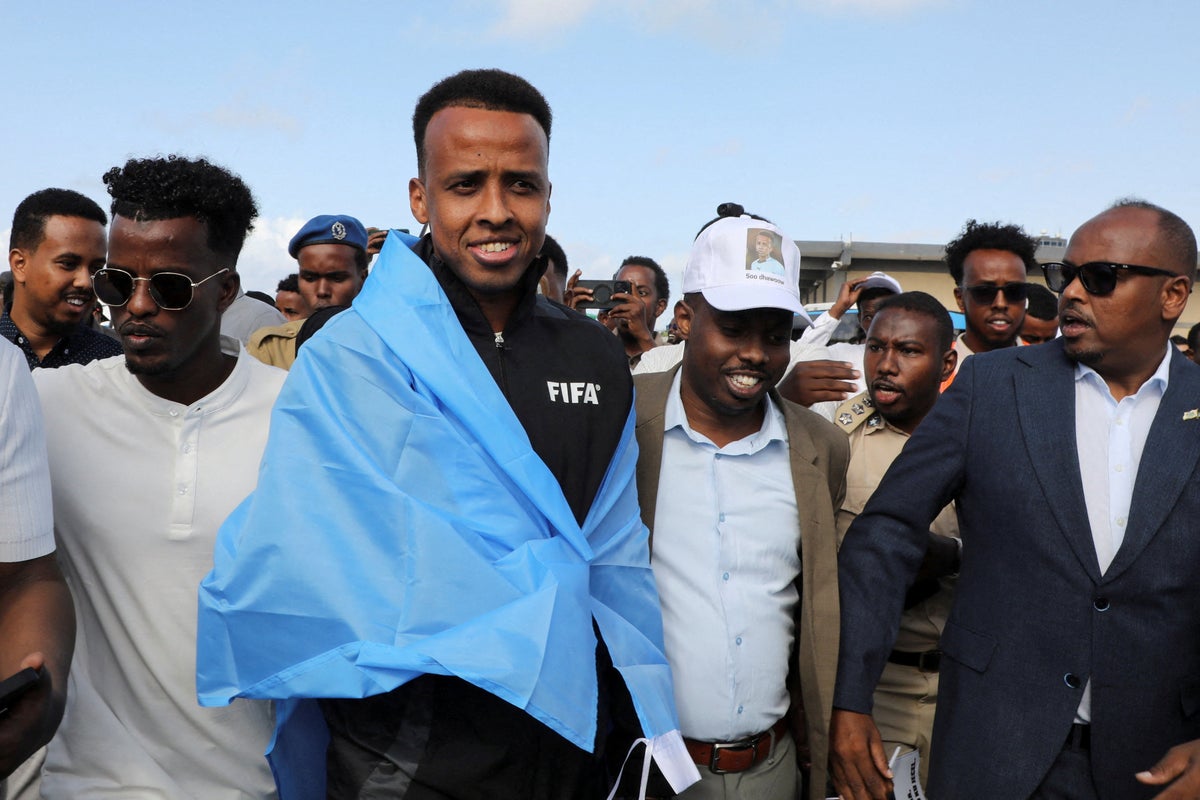
By Wednesday morning, Artan landed at Aden Adde International Airport in Mogadishu. He didn't slip back into the country quietly. Hundreds of fans, youth groups, journalists, and high-ranking government officials—including Sports Minister Mohamed Abdulkadir Ali and Defense Minister Ahmed Moalim Fiqi—swarmed the tarmac. They draped him in the blue-and-white Somali flag.
It was a hero's welcome for a man who didn't even get to whistle a single match. The crowd wasn't celebrating a victory on the pitch. They were rallying around a citizen who had reached the absolute peak of his global profession, only to be turned away at the gates of a World Cup host nation because of his passport.
The Collision of Global Sport and White House Border Policy
The United States is co-hosting the 2026 World Cup alongside Canada and Mexico. When a country wins the rights to host a global tournament of this scale, there is a gentleman's agreement with FIFA. You open your doors to the qualified teams, the fans, and the officials.
The current political reality in Washington just ripped up that agreement.
On June 4, 2025, U.S. President Donald Trump issued a sweeping presidential proclamation that fully suspended the entry of Somali nationals into the country as both immigrants and nonimmigrants. This aggressive immigration crackdown affects nearly 40 nations. Artan had his paperwork in order. The Somali Embassy in Kenya processed and issued his valid U.S. visa just last week. But at the airport, local visa approvals don't mean much if the administration's broader immigration directives tag you as inadmissible.
CBP issued a predictably vague statement, claiming Artan was turned away due to "vetting concerns" discovered during a routine additional inspection. A Trump administration official later told reporters the referee was flagged for alleged "association with suspected members of terror organizations."
No specific evidence was publicly provided. In the current security climate, the mere accusation is enough to terminate a lifelong dream. FIFA didn't fight the decision. Within hours of the border denial, soccer's governing body quietly cut Artan from the official World Cup tournament list.
Why Keeping Omar Artan Off the Pitch Matters
Artan was on track to make history as the first referee from Somalia to oversee a World Cup match. He isn't a developmental official thrown into the mix for the sake of diversity. He is arguably the finest referee in Africa, having won the continent's Best Male Referee award for 2025. Just weeks ago, on May 24, 2026, he handled the intense pressure of the CAF Champions League final between AS FAR Rabat and Mamelodi Sundowns in Morocco.
Turning away an official of this caliber sends a terrible message to the global football community. World Health Organization Director-General Tedros Adhanom Ghebreyesus summed it up on social media, noting that Artan reached the summit of his profession and inspired an entire generation back home. Being kept off the pitch doesn't change what he achieved to get there.
But the international uproar is growing. Football fans across social media are calling for tournament boycotts. The situation has exposed a massive logistical vulnerability for future global sporting events hosted in the United States. If a top-rated, FIFA-vetted official with a valid visa can be detained for 11 hours and deported, what does that mean for players, coaches, and fans from the other dozens of nations currently facing strict U.S. travel restrictions? Reports are already emerging from the Washington Post that other international players and officials are facing detentions or entry barriers at U.S. airports.
Defending the Name in Mogadishu
Instead of showing defeat, Artan used his arrival press conference in Mogadishu to strike a defiant, deeply patriotic tone. He didn't complain about the holding cell or the lost opportunity.
"It is up to all of us to defend the Somali name," Artan told the packed VIP terminal at the airport. "Somalia belongs to us, whether it is in a bad state or a good state. That flag belongs to us, and that passport belongs to us."
The Somali Football Federation officially labeled his journey a major source of pride for Somalia, the Council of East and Central Africa Football Associations (CECAFA), and the broader African football landscape.
Artan is already looking toward the 2030 tournament cycle. He publicly promised the crowd that he will officiate at the next FIFA World Cup, urging the Somali public to remain confident in the country's sporting talent.
For international sports federations, the immediate next step is clear. FIFA and the International Olympic Committee must rethink their hosting selection criteria. If a host nation cannot guarantee safe, predictable entry for accredited athletes and officials from every qualifying country, they shouldn't be awarded the tournament.
If you are an international sports fan tracking this tournament, look closely at who is missing from the sidelines over the coming weeks. The empty slots on the officiating crews aren't due to a lack of talent. They are the direct result of a fractured border system that views a whistle and a yellow card with immediate suspicion.