The Myth of Tactical Deterrence
The mainstream coverage of American military casualties in the Middle East follows a predictable, deeply flawed playbook. A proxy group strikes a base, service members die, official press releases name the fallen, and Washington immediately promises "proportional response." Media outlets analyze the target lists, deliberate on whether airstrikes were forceful enough, and speculate on whether regional conflict will escalate.
This entire framework is fundamentally broken. You might also find this similar story insightful: Two Distant Lands Just Quietly Bet Their Futures on Each Other.
Focusing on the immediate logistics of retaliatory strikes misses the core strategic reality: static military deployments designed as "tripwires" do not deter asymmetric proxies. They subsidize them.
When three U.S. Army reservists were killed at Tower 22—a logistics outpost near the Syria-Jordan border—the immediate public outrage centered on air defense failures and the specific proxy group responsible. Pundits debated the exact distance from the Syrian border and the velocity of the attacking drone. As highlighted in recent articles by The Guardian, the results are widespread.
That is tactical navel-gazing.
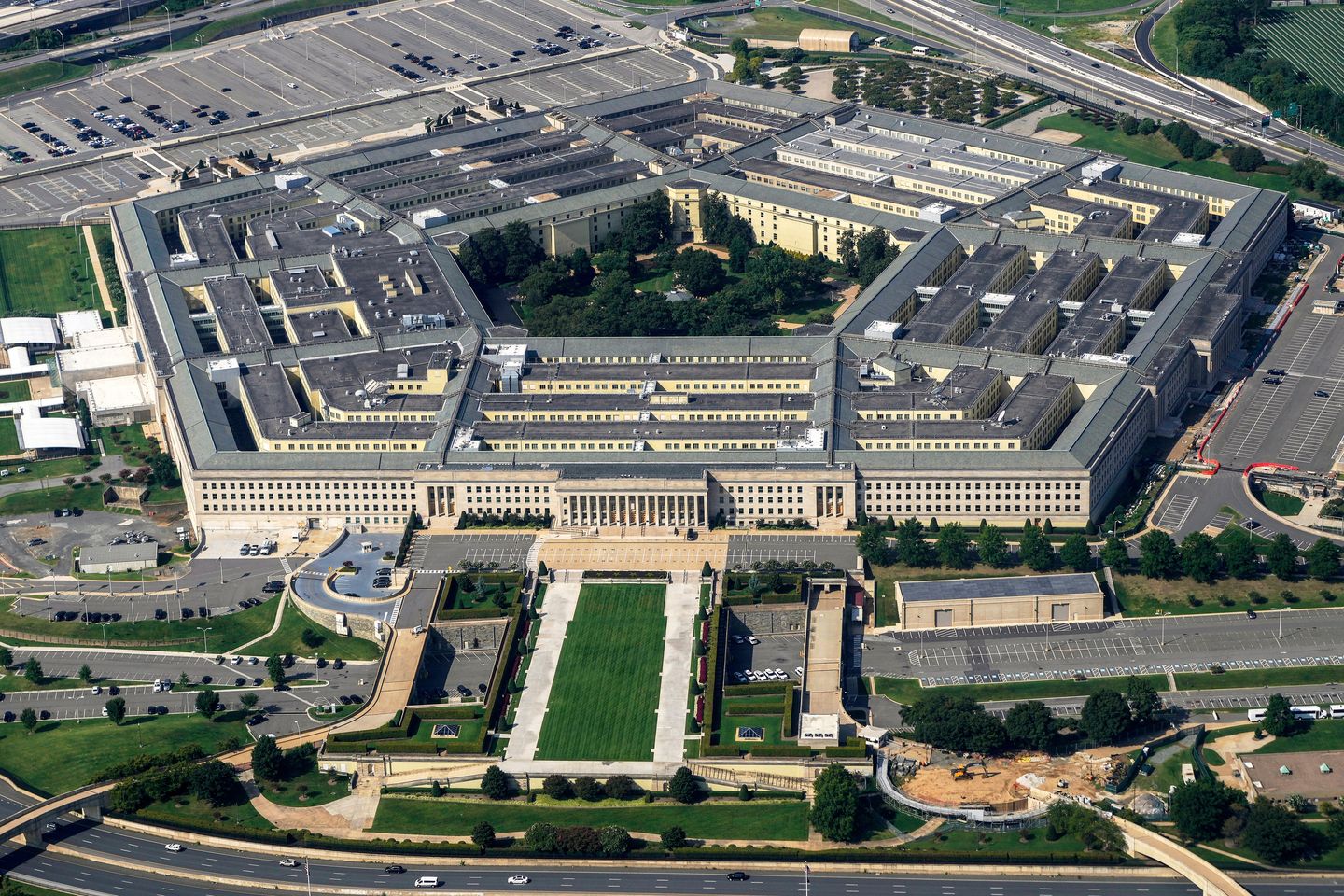
The real question nobody in the Pentagon wants to answer is why thousands of troops remain scattered across vulnerable, fixed outposts with ambiguous missions, serving as sitting targets for cheap, mass-produced technology.
The Economics of Asymmetric Attrition
Defense policy experts love to talk about posture and deterrence. Let us look at the actual balance sheet of modern attrition.
Imagine a scenario where a non-state actor equipped with a $20,000 one-way attack drone can breach a multi-billion-dollar air defense bubble and inflict fatal casualties. The target nation responds by launching multi-million-dollar precision-guided munitions from stealth aircraft operating out of distant bases to blow up empty weapons caches or low-level commanders.
That is not strategic response. That is bad math.
+-------------------------------------------------------------------+
|               THE ASYMMETRIC COST ASYMMETRY                       |
+-------------------------------------------------------------------+
| Attacker Cost: $20,000 (Cheap attack drone)                       |
| Defender Cost: $2,000,000+ (Interceptor missiles & jet sorties)   |
| Outcome: Permanent strategic exposure for static targets          |
+-------------------------------------------------------------------+
The fundamental flaw in current defense doctrine is the belief that precision strikes deter low-cost proxy operations. They do not. Proxies operating under regional sponsor networks exist precisely to absorb those strikes. To a proxy network, lost infrastructure is a temporary operational expense; to an adversary's command structure, every American casualty is a political leverage point.
The Problem With "Proportionality"
Military planners treat proportionality like a virtue. In modern asymmetric warfare, proportionality is a systemic defect.
- It hands the initiative to the adversary: A proportional framework guarantees that the defender only reacts after taking damage.
- It establishes a predictable price ceiling: Adversaries know exactly how much pain a strike will cost them and can budget their operations accordingly.
- It mistakes motion for action: Bombing empty desert compounds allows politicians to look decisive on cable news while changing zero underlying operational dynamics on the ground.
I have spent years analyzing defense procurement and regional posture decisions. The pattern is always the same: Washington confuses military activity with military strategy. Sending a fleet of bombers to strike remote warehouses after losing American lives isn't a strategy—it's a PR campaign meant to soothe domestic audiences while preserving an untenable status quo.
Dismantling the "Stability" Lie
The standard justification for maintaining small, exposed garrisons across the Levant and Middle East is "maintaining stability" and "preventing a power vacuum."
This argument collapses under the slightest scrutiny.
If a military footprint is too small to conduct comprehensive counter-offensive operations, yet large enough to present an irresistible target for localized militias, it does not create stability. It creates an endless loop of provocation and response.
[Static Outpost] ---> [Cheap Proxy Attack] ---> [U.S. Casualty]
       ^                                               |
       |                                               v
[No Strategic Change] <--- [Targeted Airstrike] <--- [Public Outrage]
These isolated forward bases do not deter hostile networks from expanding their influence. Instead, they provide those networks with a low-risk platform to demonstrate their willingness to fight global superpowers. Every drone that slips through air defenses validates the proxy's operational model, boosts their recruitment, and strains the host nation's political tolerance for an American presence.
We are operating under a 1990s counter-insurgency doctrine in an era defined by ubiquitous surveillance and autonomous strike systems.
The Flawed Questions Everyone Keeps Asking
When casualties occur, newsrooms and congressional committees focus on the wrong questions. By accepting these flawed premises, we guarantee repeat outcomes.
"Why didn't the air defense system intercept the drone?"
This question assumes that technology can achieve a 100% intercept rate against swarms or low-altitude radar-evading platforms indefinitely. No defense system on Earth operates at perfect efficiency forever. Relying on continuous tactical perfection to prevent strategic disaster is a recipe for catastrophic failure. The problem isn't that a single interceptor failed; the problem is that the outpost was placed in a position where a single defensive failure resulted in death.
"Will retaliatory strikes escalate the conflict into a broader war?"
This fear-driven question misses how proxy networks operate. Proxy sponsors utilize these groups specifically to maintain conflict below the threshold of conventional state-on-state warfare. They do not seek a traditional military engagement; they seek a prolonged campaign of friction that wears down political resolve over years. Fearing "escalation" from a tactical response misunderstands the adversary's entire operational doctrine.
"How do we secure these remote outposts?"
You don't. You cannot turn every small logistics hub or border watchpoint into an impenetrable fortress without diverting massive, irrational amounts of air defense assets, personnel, and capital away from high-priority global theaters. Trying to harden every point of exposure is the strategy of an institution that refuses to prioritize.
The Uncomfortable Real Strategy Required
Fixing this issue requires abandoning the dogma that military presence automatically equals influence. Real strategic advantage requires brutal prioritization.
First, dismantle the static "tripwire" bases. If a mission lacks a clear, achievable end-state that directly impacts core national security, maintaining a permanent target profile of service members in remote desert facilities is negligent policy.
Second, end the practice of telegraphed, proportional strikes. If an adversary network crosses a red line and kills military personnel, the counter-response should not be a scheduled bombing run against vetted, pre-cleared targets announced via press briefing. It should be asymmetric, disruptive, and focused on dismantling the economic and operational command nodes that make proxy warfare viable in the first place.
Finally, accept the reality of the modern battle space. Autonomous systems, cheap long-range strike capabilities, and ubiquitous real-time intelligence have fundamentally rendered small, fixed forward positions obsolete. Continuing to deploy forces into these exposed positions while expecting a different outcome isn't just poor strategy—it is a betrayal of the men and women wearing the uniform.
Stop measuring national resolve by how many hits our bases can take. Start measuring it by the willingness to abandon broken doctrines that trade human lives for the illusion of control.