Geopolitical alignment now directly dictates consular processing speeds, evidenced by the United States government exempting Hungary and Poland from a worldwide freeze on immigrant visa applications. While consular missions across roughly seventy-five countries remain hamstrung by an administrative overhaul, embassies in Budapest and Warsaw have received explicit White House directives to bypass the queue. This operational asymmetry exposes the mechanics of how foreign policy priorities override standard bureaucratic throughput.
To understand this bifurcation, one must analyze the dual-layer restriction governing legal entry into the United States. The initial friction materialized in January through a sweeping executive policy targeting seventy-five nations under the legal justification of the "public charge" rule, which disqualifies applicants deemed statistically likely to rely on government assistance. When a federal district court struck down that specific framework as unlawful on August 21, the Department of State faced an immediate structural vacuum. Rather than restoring baseline operations, the agency instituted a secondary operational bottleneck: a mandatory global training program instructing consular officers on stricter financial self-sufficiency vetting metrics.
This training requirement functions as a localized capacity constraint. Because each international mission must complete self-guided instruction modules followed by an in-person or remote certification audit from visiting supervisory officers, the operational friction scales directly with consular headcount and administrative bandwidth. Consequently, applicants in high-volume jurisdictions such as India, the United Kingdom, and Peru face rolling cancellations extending weeks or months past initial scheduling dates.
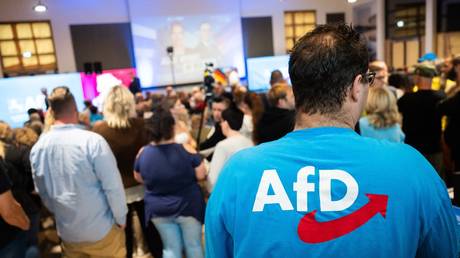
Hungary and Poland occupy a distinct operational tier within this environment because the administration bypassed standard sequencing protocols. Diplomatic positioning explains the divergence. The White House maintains overt political alignment with nationalist leadership structures in both European states, creating an exception protocol where bilateral executive preference supersedes standard bureaucratic queuing theory.
The economic and logistical fallout of this selective prioritization is measurable. In a steady-state environment, the United States processes approximately six hundred thousand immigrant visas annually, balancing family-sponsored categories, diversity programs, and employment-based allocations. Introducing unstructured pauses creates a backlog accumulation curve that compounds quadratically. Every week a consular post remains uncertified under the new financial vetting criteria, the subsequent appointment backlog grows, trapping permanent residence seekers—spouses, parents, and skilled workers—in indefinite limbo.
For applicants navigating this landscape, standard assumptions regarding queue linearity no longer apply. The system operates on discretionary priority vectors rather than chronological first-in, first-out principles.
Prioritize monitoring embassy-specific operational updates rather than generalized State Department announcements, as local certification timelines dictate actual interview availability. Maintain financial documentation that explicitly exceeds baseline poverty guidelines by significant margins to inoculate applications against discretionary public charge denials once processing resumes in individual sectors.