The total collapse of a major aquatic ecosystem is rarely the result of a single environmental anomaly. Instead, it occurs when structural resource management constraints intersect with compounding environmental stress factors. The June 2026 emergency closure of San Carlos Lake by the San Carlos Recreation and Wildlife Department—following a catastrophic 100% fish kill event—serves as a clear case study of this dynamic.
While baseline reporting focuses on the symptoms of the shutdown, an algorithmic and structural decomposition of the event reveals that the collapse was entirely predictable based on basic thermodynamic and biological feedback loops. The failure occurred because the reservoir’s primary operational function (downstream agricultural supply) runs directly counter to its ecological stability requirements.
The Structural Conflict of Managed Reservoirs
To understand the mechanics of the San Carlos Lake disaster, one must isolate the underlying resource allocation framework. San Carlos Lake is a human-made reservoir created by the Coolidge Dam along the Gila River. It operates under a strict hierarchy of resource rights where ecological preservation is secondary to downstream utility.
The Downstream Priority Mandate
The water volume within the reservoir is legally and operationally prioritized for downstream irrigation demands in agricultural hubs like Coolidge and Florence. When regional drought conditions suppress incoming water flow from the Gila River, the baseline volume of the lake declines. However, the downstream agricultural demand remains static or increases due to crop stress.
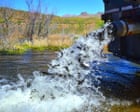
This creates a systemic volume deficit. As the Coolidge Dam releases water to meet contractual agricultural obligations during a prolonged drought, the reservoir's total surface area and depth contract rapidly. The reservoir has approached near-empty levels approximately 20 times over its century-long operational history. The 2026 event represents the critical failure point of this repeated draw-down cycle.
The Thermodynamic and Biological Feedback Loop
The mortality of the fish population—which included state-record lineages of largemouth bass, black crappie, bluegill, and flathead catfish—was not caused by chemical contamination, but by acute asphyxiation. This outcome is governed by a sequence of three compounding environmental phases.
Phase One: The Thermal Capacity Bottleneck
The relationship between water temperature and gas solubility is governed by fundamental thermodynamic laws: warmer fluids hold less dissolved gas than cooler fluids.
$$T \uparrow \implies DO_{max} \downarrow$$
As mandatory water releases drew San Carlos Lake down to a fraction of its normal capacity, the remaining water volume became exceptionally shallow. Exposed to intense desert sunlight, these isolated pools experienced rapid thermal acceleration. The baseline water temperature rose sharply, systematically lowering the maximum possible concentration of dissolved oxygen ($DO$) the water could retain.
Phase Two: Volumetric Compression and Oxygen Demand
While the available oxygen supply decreased due to rising temperatures, the demand for that oxygen escalated exponentially. As the lake's physical volume shrank across its 158-mile shoreline, millions of fish were physically compressed into hyper-dense, stagnant pockets.
This created an immediate biological supply-and-demand mismatch. The consumption rate of dissolved oxygen by the crowded fish population far outpaced the natural atmospheric diffusion rate of oxygen back into the shallow water column.
Phase Three: The Algal Bloom and Decomposition Trap
The final trigger in the ecosystem collapse was driven by nutrient concentration. The combination of low water volume, elevated temperatures, and concentrated organic waste accelerated the growth of massive algal blooms.
- The Diurnal Oxygen Swings: During daylight hours, algae produce oxygen via photosynthesis. At night, photosynthesis ceases, and the algae shift entirely to respiration, consuming massive quantities of the remaining dissolved oxygen. This creates critical oxygen deficits during the pre-dawn hours.
- The Microbial Consumption Spike: As the short-lived algae completed their lifecycle and died, they sank to the bottom. The subsequent bacterial decomposition process requires immense amounts of oxygen. This microbial respiration stripped the remaining fractions of dissolved oxygen from the water column, lowering saturation levels to near 0% and suffocating the fish population within a matter of hours.
Public Health Containment and Operational Limitations
The decision by the San Carlos Recreation and Wildlife Department to close the reservoir indefinitely is a direct response to the secondary biochemical hazards generated by a 100% biomass mortality event.
The Decomposition Hazard Profile
Millions of fish carcasses blanketing a receding shoreline in desert heat create an immediate biosecurity threat. The decay process introduces severe biological risks:
- Bacterial Proliferation: The rapid multiplication of decomposing bacteria alters the water chemistry, turning the remaining pools into vectors for waterborne pathogens.
- Avian Botulism Risks: Massive quantities of decaying organic matter create ideal conditions for Clostridium botulinum, which can trigger secondary die-offs of migratory waterfowl and local wildlife consuming the carcasses.
- Aerosolized Toxins: Runoff and stagnant air surrounding the basin carry significant respiratory and contact health risks for humans, necessitating an absolute ban on fishing, harvesting, and shoreline recreation.
Remediation Obstacles
Standard lake restoration strategies face severe limitations in this scenario. Manual biomass removal (skimming and shore collection) is logistically impossible given the vast geography of the 158-mile shoreline and the mud composition of the exposed lake bed, which prevents heavy machinery deployment.
Mechanical aeration—often used to save smaller urban ponds suffering from oxygen depletion—is completely unscalable for a reservoir system of this scale. Consequently, remediation is entirely dependent on natural hydrological cycles: specifically, the arrival of sustained, high-volume inflow from the Gila River watershed to dilute the organic load, flush the basin, and lower the baseline water temperature.
The Strategic Outlook for Reservoir Management
The complete biological liquidation of San Carlos Lake highlights a fundamental vulnerability in Western water management models that rely on static allocation rules during periods of extreme climatic volatility.
The historical precedent of the reservoir—including a similar near-total oxygen depletion event in the summer of 2018 when the lake dropped below 1% capacity—proves that treating the fishery as an incidental byproduct of an agricultural canal system guarantees recurring ecological collapse.
Mitigating future structural failures requires a shift in how multi-use reservoirs manage critical thresholds. Rather than drawing down water volumes purely based on downstream demand schedules, allocation algorithms must incorporate real-time thermodynamic modeling.
Establishing a non-negotiable "ecological floor"—a minimum pool volume calculated dynamically based on water temperature, biomass density, and projected dissolved oxygen depletion curves—is the only mechanism capable of preventing systemic biological wipeouts. Without rewriting these water-release protocols to respect thermodynamic limits, restocking efforts will remain short-term investments vulnerable to the next inevitable intersection of low volume and high heat.