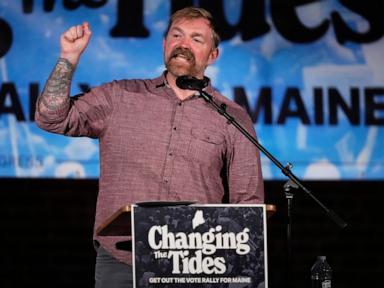
The Democratic nomination of Graham Platner in Maine represents a classic paradox in electoral strategy: the optimization of a populist economic message at the expense of extreme risk exposure in personal character valuation. In a purple state where victory requires capturing a specific subset of moderate and independent ticket-splitters, the party has selected an insurgent candidate whose baseline viability is subject to a compounding "drip dynamic" of negative disclosures.
A systemic analysis of this race reveals that national leadership and local organizers are operating under a fundamental miscalculation of electoral cost functions. By evaluating the race solely through the lens of economic populism and base mobilization, the campaign has failed to account for the asymmetric downside risk posed by Platner’s personal liabilities in a general election against a deeply entrenched incumbent like Susan Collins.
The Tri-Partite Liability Framework
The structural risk embedded in Platner’s candidacy is not a single, isolated scandal but an accumulation of discrete liabilities across three distinct thematic domains. When evaluated collectively, these domains create a reinforcing feedback loop that undermines the candidate's core narrative of working-class authenticity and moral clarity.
                  [Platner Electoral Viability]
                               |
       +-----------------------+-----------------------+
       |                       |                       |
[Behavioral/Domestic]   [Ideological Artifacts] [Interpersonal Integrity]
 - Physical allegations  - Totenkopf/Nazi tattoo - Marital infidelity
 - Volatile history      - Redslur/Online history- Extramarital texts
1. Behavioral and Domestic Conduct Liabilities
The most acute threat to the campaign's structural stability stems from allegations regarding domestic volatility. Reports detailing physical intimidation—specifically an allegation of twisting a former partner's arm and restriction of movement—introduce an existential risk to a coalition dependent on college-educated suburban women. While Platner has denied the physical nature of these claims, the mechanism of injury to the campaign occurs through the media's framing of a pattern rather than an isolated incident.
2. Ideological Artifacts and Extremism Risk
The second domain involves the exposure of past symbolic associations, primarily a since-covered tattoo identified as a Nazi SS symbol (the Totenkopf). The campaign’s defensive posture relied on a claim of historical ignorance. The viability of this defense collapsed upon the introduction of testimony from a former partner stating Platner possessed explicit awareness of the symbol's origins. This creates a dual liability: the initial association with extremist iconography, and the subsequent reputational damage resulting from an verifiably weak denial. This secondary effect directly alienates the estimated 15,000 Jewish voters in Maine and institutional donor networks that prioritize ideological vetting.
3. Interpersonal Integrity and Digital Footprints
The third pillar of risk is the documented history of extramarital communication and derogatory online discourse. The verification of sexually explicit messaging sent during his marriage introduces a recurring character defect narrative that counteracts his populist appeal. Furthermore, archival data from platforms like Reddit revealing homophobic slurs and the minimization of military sexual assault directly conflicts with the modern social tenets of the progressive coalition.
The Core Deficiencies of Base-Only Mobilization
The strategic calculation among Platner’s prominent institutional backers—such as Senators Bernie Sanders, Elizabeth Warren, and Ro Khanna—relies on a mobilization theory of change. This framework posits that a high-density, populist economic platform can generate sufficient turnout among low-propensity working-class voters to override any deficits in character valuation.
This model contains a significant structural flaw when applied to Maine's specific electoral geography. The state exhibits a high rate of ticket-splitting and independent voter density. Winning statewide requires a coalition that spans both progressive urban centers like Portland and culturally conservative, economically depressed rural districts.
The mechanism of Platner's appeal works efficiently in working-class primary environments, as evidenced by his commanding lead over former Governor Janet Mills before her campaign suspension. The presentation of an oyster farmer and Marine veteran utilizing New Deal rhetoric activates a powerful populist frame. The limits of this strategy become apparent when analyzing the general election cost function.
[Populist Economic Messaging] ---> (+) Activates Working-Class Base
[Compounding Character Scandals] --> (-) Alienates Moderate Independents
========================================================================
Net Output: A compressed voter margin highly sensitive to opposition ads.
The introduction of intense character liabilities changes the utility function for moderate voters. While an independent voter may align with Platner on housing affordability or healthcare access, the introduction of domestic violence allegations and extremist symbolism creates a high psychological barrier to voting. This barrier shifts the voter's choice from a policy-driven decision to a referendum on personal ethics, a domain where the incumbent possesses a multi-decade advantage in brand stability.
The Incumbency Advantage and Margin Compression
Susan Collins’ reelection strategy operates as an optimization engine designed to exploit precisely the type of asymmetric liabilities presented by Platner. In 2020, Collins defeated a highly funded challenger by nine percentage points ($51%$ to $42%$), demonstrating an ability to outrun the national Republican brand by capturing independent voters who simultaneously voted for a Democratic presidential candidate.
Platner’s campaign initially projected a structural advantage, maintaining an average polling lead of 7.4 percentage points between March and May. The introduction of the character data, however, initiated an immediate margin compression. Recent polling indicators show a statistical tightening, with partisan surveys shifting from comfortable advantages to a neck-and-neck distribution.
The mechanism driving this compression is the asymmetry of opposition advertising efficiency. A well-defined incumbent like Collins does not need to litigate the merits of her economic policy if she can run highly effective, low-complexity attack ads focusing on her opponent’s documented statements and behavioral history. The material for these advertisements is not speculative; it consists of admissions, covered-up tattoos, and public statements from former associates. This creates an environment where the Platner campaign must dedicate finite capital to crisis management rather than offensive policy positioning.
Structural Bottlenecks in the Nomination Substitution Mechanism
The tactical panic observable among national Democratic strategists stems from the rigid temporal constraints imposed by Maine election law. With the primary scheduled for June 9, 2026, and early voting already deeply under way, the primary outcome is functionally locked. Platner will secure the nomination due to the mathematical reality of his name recognition and the absence of an active, well-funded alternative on the ballot.
The institutional dilemma is governed by the statutory rules of the ballot access timeline:
- The Primary Election Window: Votes cast for Janet Mills operate as a protest mechanism but lack the legal capability to trigger an automatic nomination shift, given her formal suspension of activities.
- The Post-Primary Replacement Window: Under Maine election statutes, a nominated candidate can only be replaced on the general election ballot under highly specific criteria—such as death, disqualification, or voluntary withdrawal—prior to the statutory deadline in early July.
- The Leverage Bottleneck: National party leadership lacks any formal mechanism to compel a candidate's removal. The power dynamic favors the insurgent; if Platner refuses to voluntarily step aside, the party must either fund a critically flawed nominee or abandon a race essential to achieving a Senate majority.
This creates a severe bottleneck. The party cannot deployed its capital efficiently because it cannot guarantee the stability of the candidate asset. If further derogatory information emerges post-primary—a high probability event given the "drip dynamic" identified by regional observers—the party faces the prospect of an unviable candidate locked onto the ballot past the point of legal substitution.
Strategic Outlook and Defensive Deployments
The current trajectory indicates that the Platner campaign will attempt to execute a high-risk populist inoculation strategy. This approach seeks to reframe all personal liabilities as "weaponized gossip" deployed by an establishment media structure intent on suppressing an economic outsider. While this narrative maintains the cohesion of the progressive base, it does nothing to mitigate the erosion of support among suburban and moderate demographics.
To prevent an total collapse of the structural path to a Senate majority, national strategists must immediately alter their resource allocation model. Rather than attempting a full defense of the candidate's personal character—a tactic rendered unviable by the underlying factual record—investment must be directed entirely into localized, independent expenditure campaigns that suppress Collins' moderate credentials.
The optimal tactical play requires separating the choice of the candidate from the systemic choice of party control. The campaign must pivot from a personality-driven contest to a structural referendum on the legislative majority. If the race remains centered on a comparative evaluation of Graham Platner’s personal journey versus Susan Collins’ institutional tenure, the data suggests the margin will continue to decay past the point of recovery.