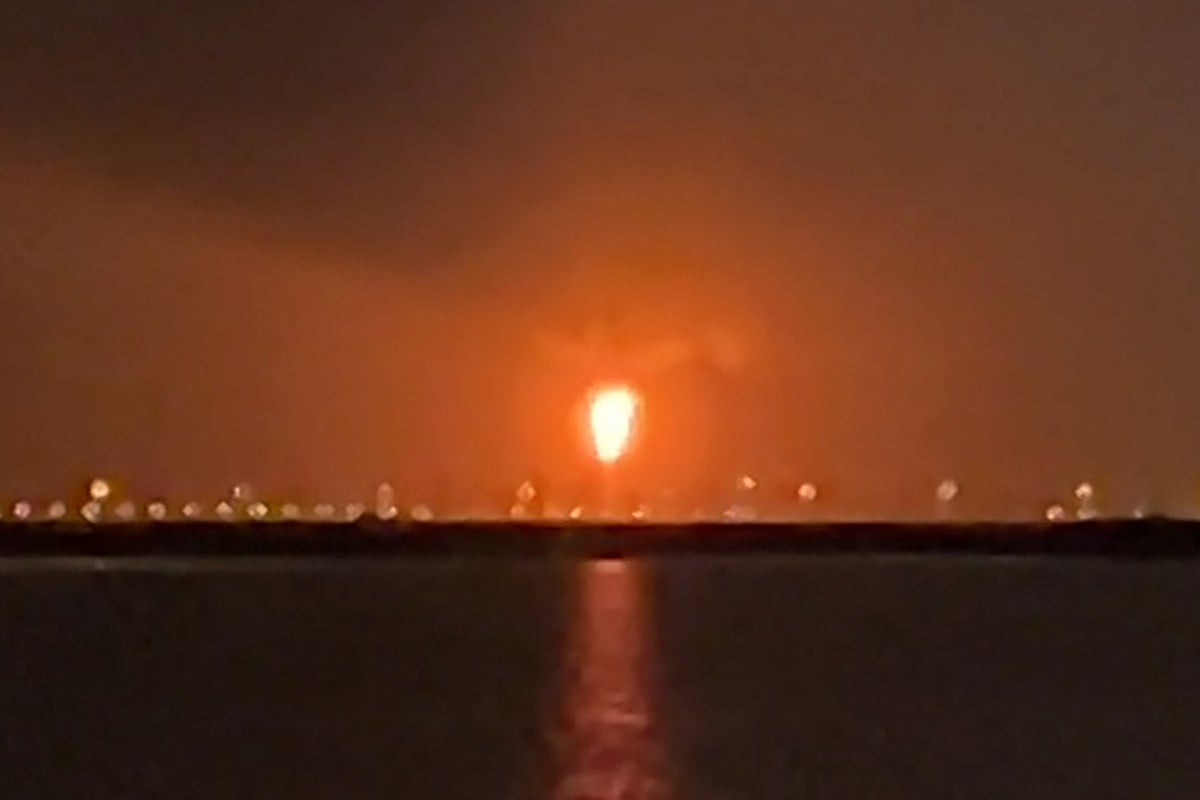
An industrial explosion at a primary liquefied natural gas (LNG) export facility does not occur in a vacuum; it represents a systemic cascade where physical safeguards, operational protocols, and risk-mitigation layers fail simultaneously. The recent incident in Qatar—resulting in 54 documented injuries and 18 missing personnel—highlights the extreme vulnerability of high-pressure cryogenic processing environments. When energy infrastructure experiences a critical breach, the immediate human toll is invariably accompanied by localized asset destruction and immediate distortions in global energy supply chains. Evaluating this event requires shifting away from sensationalist reporting toward a cold, structural decomposition of the operational failures, the physics of LNG containment loss, and the macroeconomic repercussions.
Understanding the mechanics of this disruption demands an analysis based on three distinct vectors: the thermodynamic trigger phase, the localized industrial triage, and the macro-level supply chain bottleneck. By disassembling the incident into these core components, we can isolate how a localized physical failure scales into a global market shockwave.
The Thermodynamic Cascade Loss of Containment Mechanics
An LNG export terminal functions as a massive heat exchanger, reducing the temperature of natural gas to -162 degrees Celsius (-260 degrees Fahrenheit) to shrink its volume by a factor of roughly 600, transforming it into a liquid for maritime transport. This process relies on closed-loop refrigeration cycles utilizing highly volatile mixed refrigerants—typically combinations of methane, ethane, propane, and nitrogen.
The primary hypothesis for an explosion of this scale points to a Loss of Containment (LOC) event within either the liquefaction "train" (the processing unit) or the heavy-end fractionation units.
[Mechanical Failure / Corrosion]
               │
               ▼
   [High-Pressure Gas Release]
               │
               ▼
[Rapid Phase Transition (RPT)] ──► [Immediate Physical Blast]
               │
               ▼
[Delayed Ignition of Vapor Cloud] ──► [Secondary Thermal Explosion]
When a high-pressure line carrying hydrocarbons suffers a structural breach, two distinct physical phenomena can occur:
- Rapid Phase Transition (RPT): If liquid methane rapidly contacts ambient-temperature water or unconditioned surfaces, it transitions from liquid to gas almost instantly. This phase change occurs so violently that it generates a physical shockwave without requiring chemical combustion.
- Vapor Cloud Explosion (VCE): If the released cryogenic liquid flashes into a heavier-than-air gas cloud and mixes with ambient air, it creates a highly combustible fuel-air mixture. Upon encountering an ignition source—such as an electrical spark, static discharge, or a hot mechanical surface—the cloud deflagrates, producing devastating overpressures that destroy surrounding steel structures and concrete foundations.
The reported 54 injuries and 18 missing persons correlate directly with the spatial distribution of personnel during a standard operational shift. In these facilities, the highest concentration of human capital is found in control rooms, maintenance bays, and ongoing expansion projects. The high number of missing personnel suggests that the blast occurred near active operational zones, where the overpressure wave likely caused structural collapses, rendering immediate extraction and accounting impossible.
Industrial Triage and Asset Integrity Mitigation
The immediate aftermath of an LNG infrastructure failure forces an automated and manual sequence of industrial triage designed to isolate the volatile inventory and prevent a total facility loss. Modern export hubs utilize Safety Instrumented Systems (SIS) engineered to execute Emergency Shutdown (ESD) protocols.
The secondary operational bottleneck during an active disaster is the failure or success of the facility's zoning. LNG facilities are designed using strict separation distances between processing trains, storage tanks, and marine loading berths. The fact that the explosion did not trigger a catastrophic BLEVE (Boiling Liquid Expanding Vapor Explosion) in the primary storage tanks indicates that the active deluge systems and structural fireproofing functioned as designed, containing the thermal radiation within the boundaries of the processing zone.
However, the human cost reveals a critical gap in localized blast-wall shielding and real-time personnel tracking systems. In high-risk hydrocarbon zones, the utilization of blast-resistant modular buildings is standard practice. When these systems are overwhelmed, it points to either an overpressure wave that exceeded the design envelope (typically 1 to 5 psi for standard industrial buildings) or personnel working in exposed piping racks outside protective enclosures.
Macroeconomic Supply Shock and Logistics Realignment
Qatar represents a foundational pillar of global energy security, supplying a massive percentage of total global LNG trade. A sudden halt in export capacity at a key terminal immediately alters the marginal pricing of natural gas across multiple continents.
To quantify the market impact, we must evaluate the facility's pre-incident output. A standard Qatari liquefaction train produces approximately 7.8 to 8.2 million tons per annum (MTPA). The indefinite removal of even a single train constrains the market by roughly 22,000 metric tons of LNG per day.
This supply deficit triggers an immediate sequence of logistical re-routing and pricing pressures:
- Spot Price Escalation: Deprived of contracted volumes, utilities in Europe and North Asia are forced onto the spot market to secure replacement cargoes. This drives up the Title Transfer Facility (TTF) index in Europe and the Japan Korea Marker (JKM) in Asia.
- Arbitrage Window Shifting: US Gulf Coast LNG exporters pivot their uncommitted cargoes toward the highest-bidding geography, altering maritime shipping routes and driving up spot charter rates for uncommitted LNG vessels.
- Industrial Demand Destruction: High energy prices force energy-intensive industries—such as fertilizer manufacturing, steel production, and chemical processing—to curtail operations, transforming a supply-side energy crisis into a broader manufacturing slowdown.
The limitation of global energy infrastructure is its lack of short-term elasticity. Unlike oil pipelines, which can occasionally be bypassed, or crude oil storage, which can be drawn down rapidly from global inventories, LNG relies on a tight, continuous chain of liquefaction, specialized shipping, and regasification. If the liquefaction mechanism is broken, the entire chain stalls.
Strategic Operational Recommendations
Operators of high-pressure cryogenic infrastructure must move past reactive compliance and adopt an aggressive, data-centric framework for asset integrity. The Qatari incident demonstrates that standard risk matrices frequently underestimate the escalation speed of a vapor cloud release.
Facilities must immediately implement continuous, automated optical gas imaging (OGI) networks coupled with point-line acoustic gas leak detectors. Relying on human inspection or standard catalytic bead sensors creates a dangerous latency between the initial containment breach and the execution of isolation protocols.
Furthermore, personnel placement strategies must be fundamentally altered. Digital twin modeling should be paired with real-time location tracking (RTLS) to actively minimize the "man-hours at risk" metric within high-overpressure hazard zones. Non-essential engineering, administrative, and maintenance planning tasks must be legally and physically segregated from the processing perimeter. The ultimate defense against catastrophic industrial failure is the absolute minimization of human exposure to the thermodynamic realities of high-energy hydrocarbon processing. Strategic positioning of replacement components and international repair consortiums must be established immediately to hedge against the prolonged multi-month lead times required to manufacture specialized cryogenic cold boxes and compressor strings.