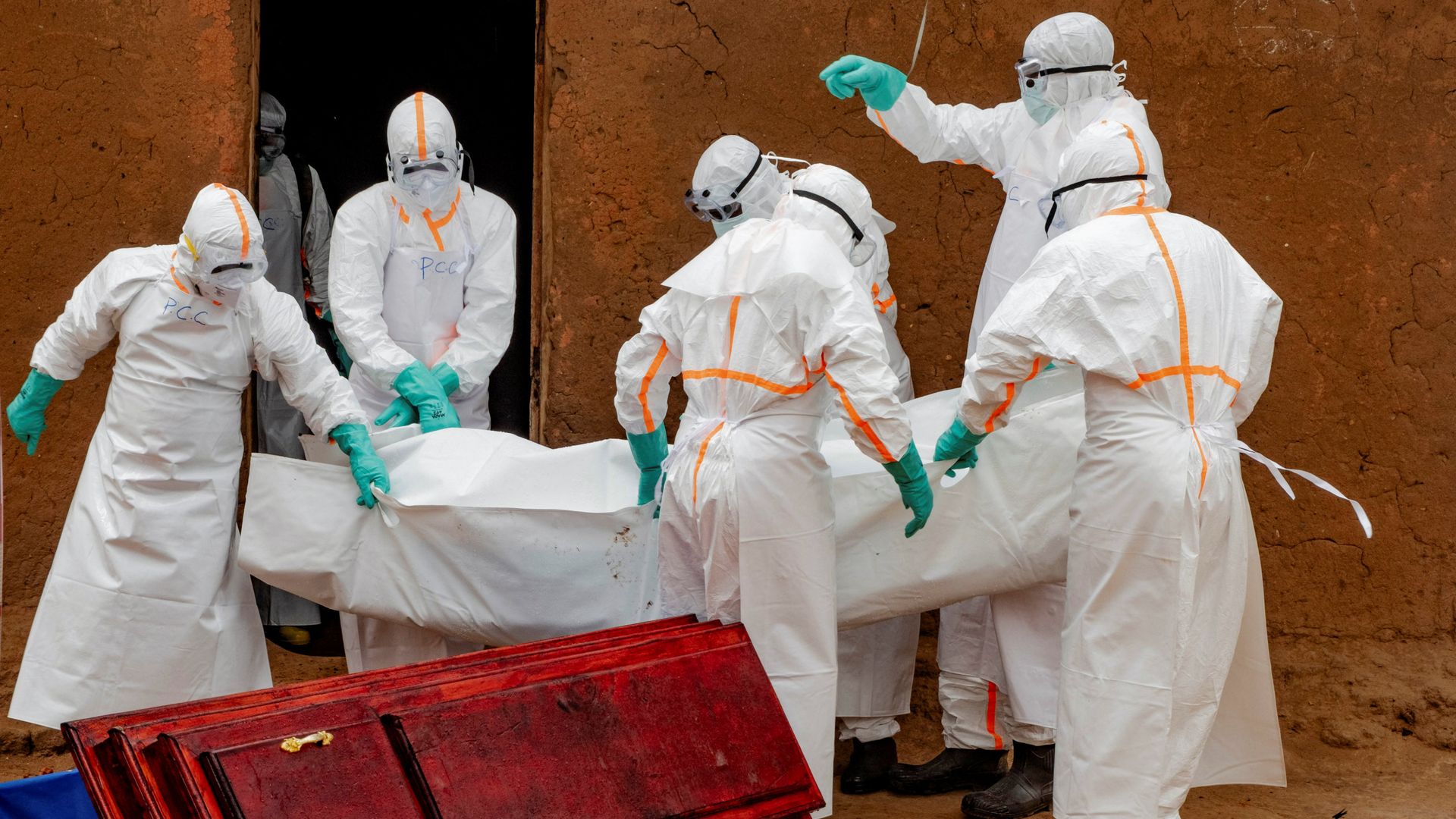
Epidemiological containment relies on a strict mathematical relationship between the reproduction number of a pathogen and the execution velocity of public health interventions. When transmission speed outpaces surveillance pipelines by a factor of three, containment failure shifts from a probability to an architectural certainty. The ongoing crisis in the Democratic Republic of Congo demonstrates this structural breakdown. Driven by the rare Bundibugyo virus, the outbreak has expanded across six provinces with an unprecedented acceleration vector, breaching the 5,000-case threshold faster than any recorded viral event in medical history. Deconstructing this trajectory requires moving past generic crisis reporting to analyze the operational variables dictating viral propagation and the systemic bottlenecks paralyzing clinical intervention.
The Triad of Acceleration Variables
To understand why traditional outbreak response models are failing in eastern Congo, we must analyze the three core variables driving viral velocity: immunological novelty, geographic fragmentation, and operational friction.
The primary driver is the specific pathogen involved. Unlike previous major events driven by the Zaire species, this outbreak is caused by the Bundibugyo virus. Historically, this strain has caused localized epidemics with distinct mortality profiles, but it enters the current population with a severe disadvantage: the complete absence of pre-existing, approved vaccines or targeted therapeutics. While the Zaire-targeted Ervebo vaccine provides a baseline for cross-protection trials, the lack of an off-the-shelf preventive for the Bundibugyo species strips response teams of their most powerful containment mechanism.
The second variable is geographic and security fragmentation. The epicenter spans provinces heavily impacted by armed conflict, population displacement, and rugged terrain. In epidemiological modeling, physical mobility acts as a multiplier for the contact network. Displaced populations crossing provincial boundaries transform localized clusters into a distributed network of transmission nodes. When insecurity restricts the physical movement of surveillance officers, the time delay between symptom onset and patient isolation expands exponentially.
The third variable is surveillance lag. Data from the World Health Organization and local ministries indicates that a substantial proportion of new cases are detected outside of established contact-tracing cohorts. This metric signals a broken surveillance feedback loop. When infected individuals bypass tracking mechanisms and present late at treatment centers—or avoid them entirely due to historical mistrust—the virus outruns the capacity of public health teams to map transmission chains.
The Cost Function of Delayed Intervention
Epidemiological control functions on a strict time-decay curve. Every day that passes between the emergence of a transmission chain and its isolation increases the final size of the outbreak non-linearly. In this specific crisis, the timeline from initial undetected spread in mining zones like Mongbwalu to formal declaration created an unbridgeable operational deficit.
[Undetected Viral Shedding] -> [Delayed Detection] -> [Surveillance Saturation] -> [CFR Escalation]
This sequence illustrates the compounding failure points:
- Initial Silent Spread: The virus circulates undetected in remote or informal economic hubs, building a baseline prevalence before official recognition.
- Detection Latency: Bureaucratic and logistical delays in confirming the specific strain postpone the deployment of specialized clinical trials.
- Surveillance Saturation: The sheer velocity of weekly case counts (surpassing hundreds of new infections per week) overwhelms local contact-tracing capacity.
- Case Fatality Ratio (CFR) Escalation: In zones where clinical infrastructure is overwhelmed, such as North Kivu, mortality rates spike significantly higher than the baseline average due to delayed care and unmanaged complications.
The Clinical Trial Bottleneck
Rushing experimental countermeasures into an active zone of hyper-transmission introduces a complex operational dilemma. Clinical trials of post-exposure prophylaxis and experimental vaccines are currently underway in Ituri province, alongside the deployment of tens of thousands of doses of cross-reactive vaccines for frontline workers. However, clinical trials demand rigorous safety monitoring, informed consent frameworks, and controlled observation protocols.
These requirements create a direct friction with the speed of an epidemic moving at three times the velocity of the 2014-2016 West African crisis. While mobile laboratories have reduced diagnostic turnaround times to roughly one hour at key border crossings, the transition from diagnostic confirmation to therapeutic administration remains constrained by institutional capacity. Clinical trial sites cannot scale instantaneously without risking protocol violations or compromising patient safety data.
Strategic Interventions for Velocity Alignment
To alter the trajectory of an outbreak moving at this scale, strategic adjustments must prioritize velocity matching over static containment. Traditional static treatment centers force patients to travel toward care, creating transit delays and expanding exposure risks along travel corridors.
The deployment strategy must shift from a centralized treatment model to a distributed, decentralized micro-intervention network. This requires embedding rapid-diagnostic and oral prophylaxis distribution points directly within high-risk community nodes rather than waiting for individuals to self-report to regional centers. Furthermore, community engagement strategies must be overhauled to address local skepticism directly by integrating community leaders into the command structure of the response, transforming passive populations into active surveillance agents.
To regain control over the Bundibugyo transmission network, international coordination bodies and local health ministries must compress the deployment cycle of clinical assets from months to weeks, treating vaccine and therapeutic distribution not as a standard regulatory process, but as an emergency logistical deployment where speed supersedes administrative friction.