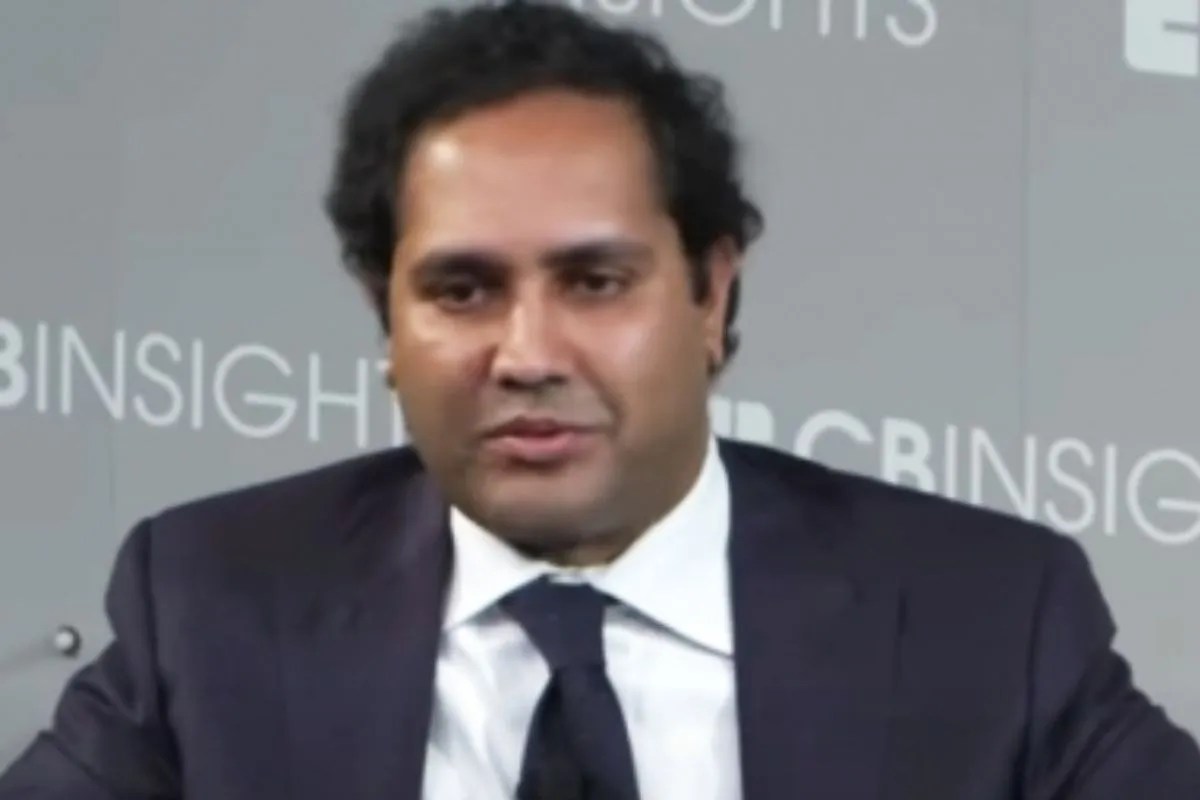
Corporate leadership survivability is governed by a strict mathematical function where accumulated capital destruction eventually supersedes founder voting control. The recent boardroom coup at Better Home and Finance, which resulted in the termination of founder and chief executive officer Vishal Garg, provides a clinical case study in executive displacement. For market observers tracking corporate governance, the ouster strips away surface-level personality narratives to reveal a structural inevitability: when cumulative losses eclipse 1.5 billion dollars and equity valuation contracts by more than 90 percent from peak pandemic levels, institutional survival mechanisms trigger automated governance intervention.
The Financial Mechanics of Value Destruction
To understand the board's unanimous vote against Garg, one must examine the cost-revenue equations that defined his tenure following the 2021 special purpose acquisition company transaction. During the macroeconomic anomaly of ultra-low interest rates, Better enjoyed a peak valuation approaching 8 billion dollars, driven by high-volume mortgage refinancing.
When monetary policy shifted and benchmark interest rates climbed toward 7 percent, the structural demand curve for mortgage refinancing collapsed. The organization's financial trajectory mapped a severe operational contraction:
- Annual sales plummeted from approximately 1.5 billion dollars in 2021 to 70 million dollars by 2023.
- Cumulative GAAP net losses surpassed 1.5 billion dollars beginning in 2022.
- Market capitalization compressed to approximately 300 million dollars.
In a revealing internal assessment cited by the board, capital allocation under Garg's stewardship performed so poorly that the enterprise would have preserved significantly more shareholder value had the raised capital simply been parked in risk-free United States Treasury securities. This metric serves as an indictment of operational deployment efficiency, proving that core asset productivity fell below the baseline cost of capital.
The Governance Coup and Boardroom Dynamics
The mechanism of Garg's removal illustrates the vulnerabilities of dual-class and concentrated shareholding structures when board friction reaches critical mass. Hedge fund manager Daniel Lewis joined the corporate board on July 27, presenting himself as a strategic advisor on cost containment and structural profitability. Within days, Lewis transitioned to interim chief executive officer, while the remaining directors voted unanimously to strip Garg of executive authority.
Garg's public assertion that he was "hoodwinked" highlights a fundamental miscalculation in stakeholder management. In corporate turnarounds, external capital partners do not enter governance structures merely to validate legacy strategies; they evaluate solvency risks and regulatory exposure. The board's formal justification cited not only historical financial depletion but explicitly targeted Garg's temperament, judgment, and credibility—alongside potential federal securities law compliance issues connected to delayed quarterly filings.
When behavioral liabilities compound financial distress, the board's fiduciary duty shifts from founder accommodation to risk mitigation.
Operational Realities Versus Turnaround Claims
Garg's defense relies heavily on forward-looking operational indicators, arguing that the enterprise reached the equivalent of the "5-yard line" of a successful recovery. Proponents of this view point to several tactical adjustments:
- Automation protocols utilizing proprietary artificial intelligence to compress mortgage processing timelines from weeks to days.
- Strategic distribution partnerships with technology platforms such as Intuit, Coinbase, and OpenAI.
- Projected revenue recovery targets scaling back toward 200 million dollars.
However, operational velocity does not automatically correct balance sheet insolvency. Even if loan origination volumes tripled from their cyclical lows, the fixed cost overhead and legacy capital structure required a wider margin of safety than the firm possessed.
Furthermore, reputational damage stemming from the infamous 2021 mass video-call layoffs established a persistent structural drag on talent acquisition and enterprise sales. Markets discount organizations burdened by high executive turnover and continuous regulatory scrutiny, regardless of technological efficiency gains.
Strategic Execution and Control Dynamics
The ongoing battle for reinstatement—marked by Garg's engagement of high-profile legal counsel Alex Spiro and an offer to work for an annual salary of one dollar—demonstrates the tenacity of founder-controlled voting blocs. Yet, institutional pushback highlights the limits of personal influence when legal and regulatory investigations intersect with financial reporting delays.
The board must now execute a dual mandate: stabilize regulatory compliance by filing overdue periodic reports while preventing operational disruption during a contested proxy and governance struggle. The incoming administration's primary operational focus cannot rely solely on top-line loan volume growth; it requires rebuilding institutional credibility to restore institutional investor trust and shield the company from liability.