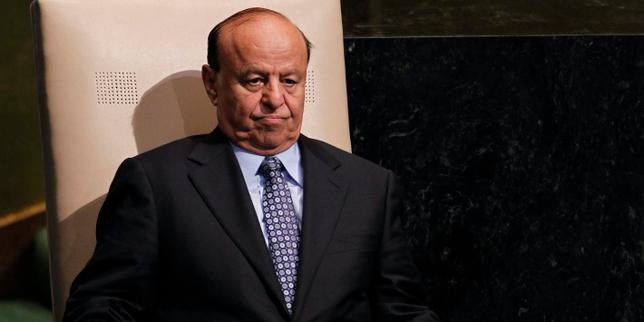
The death of former Yemeni President Abd Rabbo Mansour Hadi in Riyadh at the age of 80 marks the end of an era defined by institutional collapse and the limits of external intervention. While standard news reports frame his career through the simple lens of an exiled leader displaced by a coup, a structural analysis reveals that Hadi’s decade-long tenure serves as a case study in how a dependency model of statecraft guarantees the fragmentation of domestic legitimacy. Hadi did not merely preside over a civil war; his administration operated under a structural flaw where sovereign authority was decoupled from domestic physical control, relying entirely on external regional sponsorship to maintain a legal fiction of governance.
Understanding the trajectory of Yemen's state decay requires evaluating the specific mechanisms that transformed a consensus transitional president into an exiled executive operating under de facto house arrest in Saudi Arabia.
The Transition Framework and the Institutional Vacuum
Hadi’s ascension to power in February 2012 was engineered via the Gulf Cooperation Council (GCC) Initiative, a structural transition model designed to preserve the existing elite patronage network while removing its figurehead, Ali Abdullah Saleh. This framework contained a fundamental design flaw: it granted Hadi executive authority without a corresponding independent power base.
[GCC Transition Initiative]
        │
        ▼
[Executive Authority Granted] ──► (No Independent Military Base)
        │
        ▼
[Dependence on Legacy Elite Network] ──► (Fragile Consensus Politics)
In the highly fragmented political ecosystem of Yemen, authority historically relied on a tri-part system of tribal balance, military factionalism, and fiscal patronage. Hadi, originating from the southern governorate of Abyan, lacked deep roots in the northern tribal networks that dominated the capital, Sana'a.
The structural vulnerabilities of his early presidency can be categorized into three distinct operational bottlenecks:
- The Command Vacuity: The National Dialogue Conference (NDC), intended to rewrite the constitution and establish a federal structure, proceeded without a concurrent reform of the security sector. The military remained divided into loyalties held by the family of the deposed Ali Abdullah Saleh and the rival Al-Ahmar/Isلاح faction. Hadi possessed nominal command but lacked transactional loyalty from either faction.
- The Fiscal Asymmetry: The Yemeni state budget depended heavily on dwindling oil revenues from the Marib and Masila basins. When political instability disrupted production pipeline logistics, the central state lost its primary mechanism for purchasing tribal neutrality.
- The Consensus Conundrum: Running as the sole candidate in the 2012 election gave Hadi 100% of the vote on paper, but zero organic mandate. The election was boycotted by both the Houthi movement (Ansar Allah) in the north and the Southern Movement (Al-Hirak) in the south. This produced a legal paradox: a universally recognized leader with locally restricted authority.
The Collapse Mechanics: Sana'a to Riyadh
The structural collapse of the Hadi administration accelerated between September 2014 and March 2015. Western analyses often treat the Houthi seizure of Sana'a as a sudden military aberration. In reality, it was an optimization strategy executed by an opportunistic alliance between the Houthis and the legacy network of Ali Abdullah Saleh, exploiting the structural paralysis of Hadi’s executive branch.
When Houthi forces advanced into Sana'a in September 2014, Hadi signed the Peace and National Partnership Agreement, effectively formalizing the coercion of his executive office. The mechanism of collapse occurred in three chronological phases:
- The Executive Siege: By January 2015, Houthi forces surrounded the presidential palace. Hadi was placed under house arrest and submitted his resignation to parliament—a tactical move designed to strip the incoming regime of constitutional legitimacy.
- The Geographic Flight: Escaping house arrest in February 2015, Hadi fled to Aden, withdrew his resignation, and attempted to establish the southern port city as a temporary capital. However, the local security apparatus in Aden was fragmented between northern-loyal army units and secessionist southern militias, leaving the executive structurally exposed.
- The Sovereignty Externalization: Facing an imminent combined Houthi-Saleh military advance on Aden, Hadi fled to Saudi Arabia in March 2015. From Riyadh, he issued a formal request for international intervention under Article 51 of the UN Charter, prompting the launch of the Saudi-led coalition's military operations.
This sequence of events finalized the externalization of Yemeni sovereignty. The internationally recognized government became a legal construct operating out of luxury hotels in Riyadh, completely divorced from the physical terrain it claimed to govern.
The Exiled Governance Model: Cost and Consequences
From 2015 until his forced removal from power in April 2022, Hadi’s administration operated under an exiled governance model. The primary operational objective of this model was not the reclamation of territory through domestic mobilization, but rather the preservation of international recognition as an exclusive asset.
This asset was leveraged to maintain control over state institutions such as the Central Bank of Yemen (which Hadi controversially relocated from Sana'a to Aden in 2016) and Yemen’s diplomatic missions globally. However, the reliance on external patronage introduced a severe agency problem. The priorities of the internationally recognized government became secondary to the geopolitical calculations of its host, Saudi Arabia, and its coalition partner, the United Arab Emirates.
This dependency produced a secondary crisis within the anti-Houthi coalition itself, marked by the rise of the Southern Transitional Council (STC). Backed by the UAE, the STC asserted physical control over Aden, turning the temporary capital into a hostile environment for Hadi’s own ministers. The 2019 Riyadh Agreement attempted to patch this rift by mandating a power-sharing government, but the core structural contradiction remained: the president could not return to his capital without the explicit permission and security guarantees of foreign powers.
The Forced Devolution of Power
The terminal phase of Hadi’s political relevance occurred in April 2022. The Saudi-led coalition, facing a military stalemate and seeking an exit strategy from a conflict that had caused a catastrophic humanitarian crisis, determined that Hadi was an impediment to negotiations.
The mechanism of his removal was abrupt and devoid of constitutional process. During a conference of Yemeni factions in Riyadh, Hadi was induced to transfer his full presidential powers irreversibly to an eight-member Presidential Leadership Council (PLC) led by Rashad al-Alimi.
[Exiled Sovereignty Asset] ──► Squeezed by Regional Sponsors (2022)
                                       │
                                       ▼
                     [Forced Power Transfer to PLC]
                                       │
                                       ▼
                     [De Facto Internment in Riyadh]
                                       │
                                       ▼
                     [Structural Irrelevance & Death (2026)]
This was not a resignation; it was a liquidation of Hadi’s political equity. The PLC was designed to consolidate various anti-Houthi warlords, secessionists, and legacy politicians under a unified council. Once his nominal authority was stripped, Hadi was placed under virtual house arrest in the Saudi capital, entering a state of complete political obsolescence that persisted until his death from escalating heart complications.
Strategic Implications of a Post-Hadi Era
The death of Abd Rabbo Mansour Hadi removes the primary human link to the 2011 transition framework and the legal architecture used to justify the initial coalition intervention. For the current Presidential Leadership Council, his passing carries specific tactical and strategic implications:
- Consolidation of the Council Model: With the sole consensus figure of the 2012 transition gone, the legal fiction of a single, unified Yemeni presidency is permanently replaced by the collegiate—and highly fractured—PLC model. This formalizes the internal divisions within the anti-Houthi camp, as different council members answer to different regional patrons.
- The Houthi Narrative Shift: For Ansar Allah in Sana'a, Hadi’s death removes their primary foil. For a decade, the Houthis justified their governance by framing their struggle against the "Hadi government" as a defense against foreign aggression. They must now pivot to dealing directly with the PLC or individual regional brokers without the rhetorical convenience of opposing a single deposed ruler.
- The Finality of the Federal Project: Hadi was the primary champion of the six-region federal plan drafted during the National Dialogue Conference. His death, combined with the entrenched physical reality on the ground, effectively buries the prospect of a unified, federal Yemeni state within its pre-war borders.
The enduring lesson of Hadi’s career is that international recognition is an insufficient substitute for local state capacity. A leader who commands the halls of the United Nations but cannot secure a single governorate without foreign guards will inevitably see their sovereignty hollowed out, leaving behind a fragmented state and a legacy defined by the very conflict they were selected to prevent.