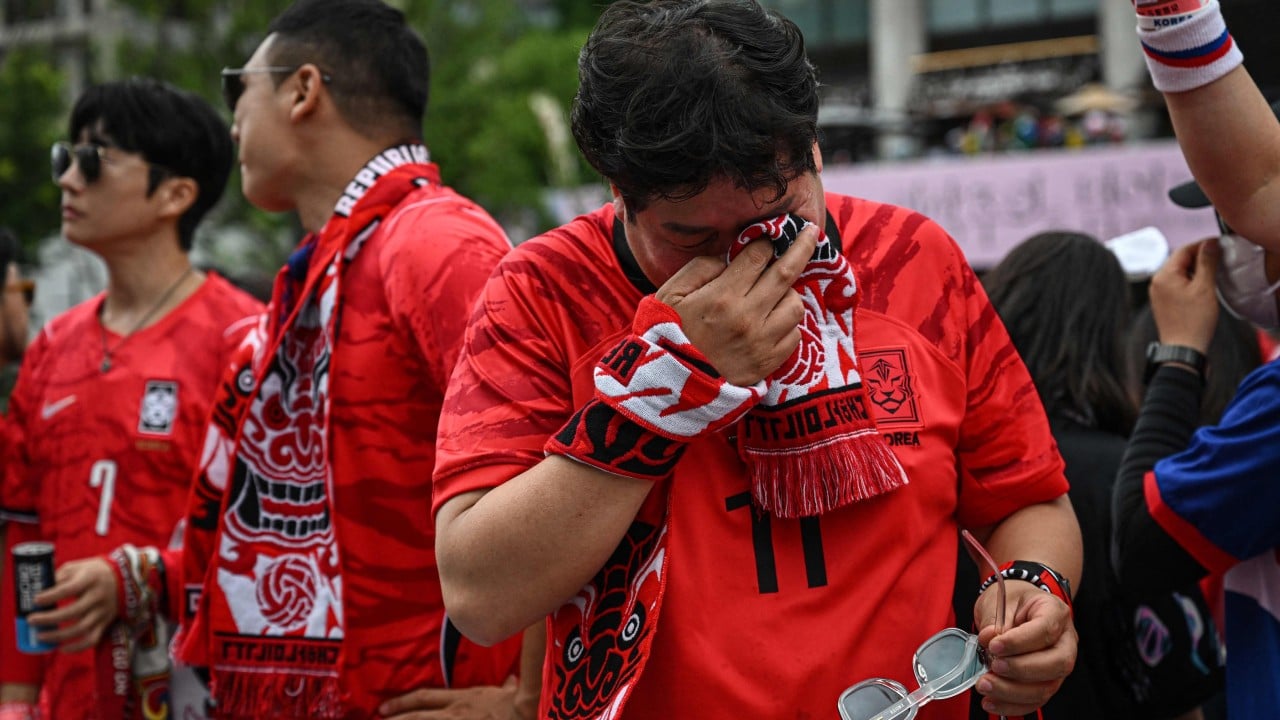
The premature exit of the South Korean national football team from the World Cup represents more than a sporting failure; it serves as a catalyst for systemic, asymmetrical societal backlash. When public disappointment escalates into death threats, corporate boycotts, and localized bans on athletes at commercial establishments, the phenomenon can no longer be dismissed as mere emotional volatility. Instead, this behavioral escalation must be analyzed as the intersection of hyper-collectivism, corporate sponsorship vulnerability, and the weaponization of digital spaces.
To understand why a sporting loss triggers such extreme socio-cultural retaliation, we must map the structural components that govern fan equity, national identity, and the mechanisms of public accountability in South Korea.
The Tri-Partite Framework of National Sporting Equity
The intensity of public fury directed at the national team is directly proportional to the perceived breach of a psychological contract. In South Korea, elite athletic performance is not viewed through the lens of individual achievement, but rather as an extension of geopolitical prestige and collective national investment. This relationship operates across three distinct dimensions.
1. The Mandatory National Service Arbitrage
Unlike peers in Western leagues, South Korean male athletes operate under a unique legal constraint: compulsory military service. Exceptional international sporting success—specifically winning an Asian Games gold medal or achieving a podium finish at the Olympics—grants athletes rare exemptions. Consequently, the public views international tournaments as a high-stakes transaction. Fans invest emotional equity and attention capital, and in return, they expect athletes to validate their systemic privileges through flawless execution. When a team underperforms, the public perceives a deficit in the transactional equilibrium, viewing the athletes as failed trustees of national leniency.
2. High-Density Collectivism and Shared Liability
South Korean society exhibits high density not just geographically, but socio-culturally. Under the framework of uri (we/our), individual actions reflect instantly on the collective. A national team loss is not contextualized as an isolated athletic failure by eleven individuals on a pitch; it is registered as a collective humiliation on the global stage. The anger that manifests post-tournament is an defense mechanism designed to externalize the shame by aggressively decoupling the collective from the underperforming agents.
3. Digital Panopticism and Hyper-Connected Outrage
South Korea possesses one of the most sophisticated digital infrastructures globally, characterized by high-speed connectivity and centralized digital forums. This creates an environment where outrage can be aggregated, amplified, and coordinated at near-instantaneous speeds. The transition from general dissatisfaction to coordinated targeted harassment, such as death threats or organized digital campaigns, is accelerated by algorithmic feedback loops on portals like Naver and localized communities like DC Inside.
The Cost Function of Public Disgrace
The backlash following an early World Cup exit manifests across distinct socio-economic layers, transforming abstract anger into tangible commercial and personal liabilities.
[Systemic Input: World Cup Early Exit]
               │
               ▼
┌──────────────────────────────────────────────┐
│  Breach of Collective Psychological Contract │
└──────────────┬────────────────────────┬──────┘
               │                        │
               ▼                        ▼
┌──────────────────────────────┐ ┌──────────────────────────────┐
│  Commercial Retaliation      │ │  Asymmetrical Digital Threat │
│  (Brand Damage & Redlining)  │ │  (Targeted Harassment)       │
└──────────────────────────────┘ └──────────────────────────────┘
Commercial Redlining and Restaurant Bans
The phenomenon of local businesses issuing bans on players or coaching staff represents a localized form of commercial redlining. For a small business owner, declaring a venue off-limits to an underperforming public figure is a low-cost, high-visibility marketing strategy. It aligns the business with the dominant public sentiment, transforming the establishment into a safe space for collective venting.
On a macro level, this introduces severe volatility for corporate sponsors. High-profile athletes in South Korea are heavily integrated into corporate advertising campaigns, spanning electronics, telecommunications, and consumer goods. When an athlete’s public sentiment score plummets into negative territory, corporate entities face immediate brand contagion risks. The cost function of maintaining the sponsorship alignment outpaces the historical ROI, triggering rapid contract terminations, the scrubbing of digital marketing assets, and legal demands for indemnity clauses related to reputational damage.
The Mechanics of Targeted Harassment
The escalation to death threats targeted at players and management highlights a critical vulnerability in the digital ecosystem. In South Korean digital culture, public accountability often manifests as majo-jadang (public trials via internet mobs). The anonymity or pseudo-anonymity of online platforms allows users to bypass legal guardrails, executing coordinated psychological warfare.
This behavior is driven by two main factors:
- Deindividuation: Online users lose their sense of individual responsibility when acting within a digital mob, leading to extreme rhetoric they would not deploy individually.
- Moral High-Grounding: Perpetrators reframe their harassment as a righteous act of correction. In their view, the athlete has damaged the national brand; therefore, any level of hostility is justified as a countermeasure to enforce accountability.
Structural Bottlenecks in the Korea Football Association
The immediate fury is often directed at the players, but a secondary, more analytical wave of resentment invariably targets the governing bureaucracy—the Korea Football Association (KFA). The systemic bottlenecks within this institution explain why structural reform remains elusive despite repeated cycles of public outrage.
The first limitation lies in institutional inertia. The KFA has historically operated under highly centralized leadership, often influenced by major industrial conglomerates (Chaebols) that provide the necessary financial backing. While this corporate patronage model ensures financial stability, it creates a governance structure insulated from merit-based, agile decision-making. Managers are frequently selected based on internal political alignment rather than tactical compatibility or long-term developmental blueprints.
This governance model creates an operational mismatch. The modern South Korean squad features elite talent operating in top-tier European leagues, accustomed to cutting-edge sports science, tactical flexibility, and data-driven management. When these athletes return to a national setup governed by rigid hierarchies and outdated training methodologies, friction is inevitable. The public senses this systemic disconnect. The fury directed at the administration is a reaction to a perceived squandering of a golden generation of footballing talent due to bureaucratic incompetence.
Evaluating Remediation Strategies
To mitigate the severity of future cyclical backlash and stabilize the ecosystem of national sports, organizations and athlete management firms must deploy structured risk-mitigation frameworks.
Crisis Communication Insulation
The current standard response to public outrage involves handwritten apologies or formulaic press conferences. This strategy is increasingly ineffective because it validates the mob's premise of moral superiority. Instead, management firms must implement strict communication insulation. This requires the temporary deactivation of public comment sections on athlete-owned channels, the routing of all media inquiries through specialized crisis PR entities, and the immediate deployment of legal teams to file civil defamation lawsuits against identifiable instigators of digital violence. Establishing a hard legal boundary alters the risk-reward ratio for online perpetrators.
Decentralization of Accountability
The KFA must transition from a top-down, centralized decision-making structure to an independent technical committee model. By insulating tactical and selection decisions from the political leadership of the association, the organization can defuse systemic anger. If a foreign or domestic coach fails, the accountability remains localized to the technical committee's data-driven metrics rather than triggering a broader indictment of the country's entire sporting infrastructure.
Psychological Load Balancing for Elite Athletes
Athletic organizations must integrate psychological load balancing into their core operational protocols. Players transitioning from highly professionalized club environments to the high-pressure environment of the national team require proactive cognitive behavioral therapy (CBT) frameworks to build resilience against external digital hostility. Treating public pressure as an inevitable environmental hazard—analogous to high altitude or extreme humidity—allows sports science departments to quantify and mitigate its impact on athletic performance.
The Long-Term Forecast for South Korean Sporting Culture
The structural friction between hyper-collectivist expectations and individual athletic career paths is reaching an unsustainable tipping point. Over the next decade, a generational shift will alter this dynamic. Younger demographics, characterized by rising individualism and a rejection of traditional hierarchical obligations, are beginning to decouple national identity from sporting outcomes.
This generational shift creates a clear trend line: while older cohorts will continue to view international tournaments through the lens of national duty and collective pride, younger consumers will view athletes more like sovereign entertainment brands. Consequently, the commercial viability of athletes will increasingly depend on global, diversified markets rather than domestic sentiment alone.
Athletes who build international brand equity independent of domestic media ecosystems will possess the leverage to withstand localized boycotts. For the KFA and domestic sponsors, this means the historical leverage they held over athletes via public pressure is decaying. To retain access to elite talent, institutions must modernize their governance models, shifting from an ethos of mandatory national sacrifice to a collaborative partnership based on mutual professional advancement.