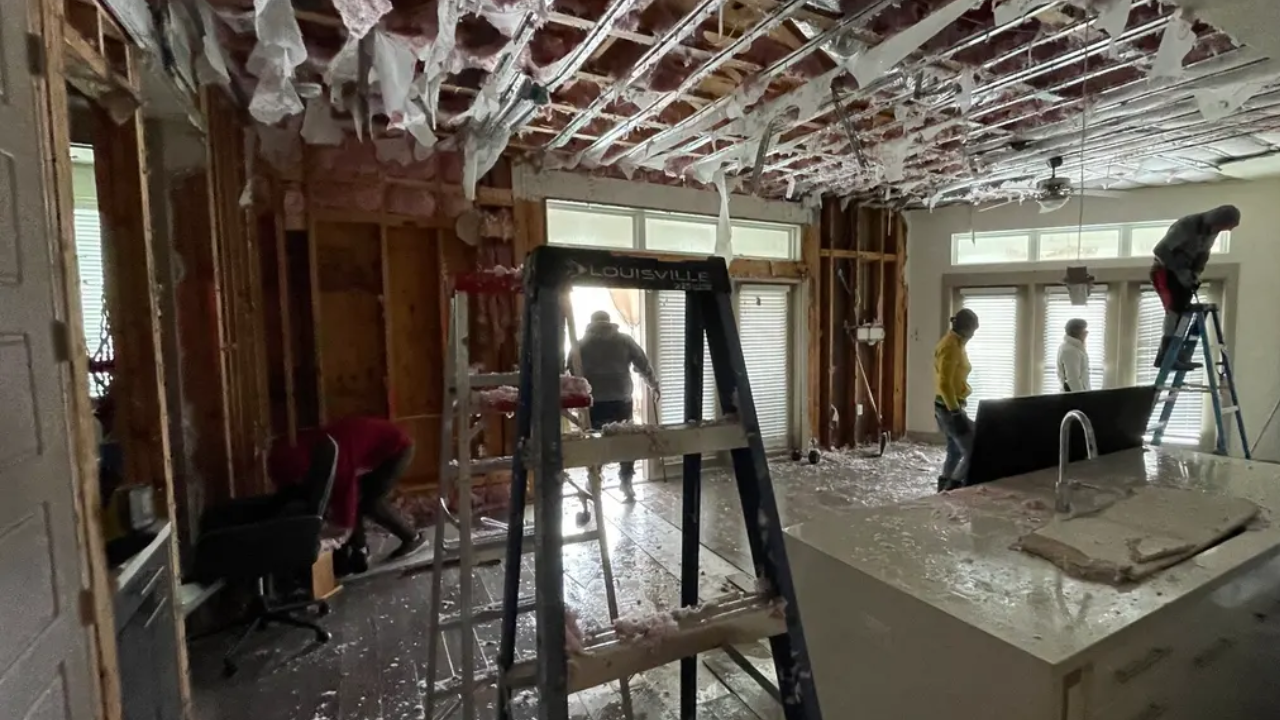
A $58,150 property repair claim does not evaporate because the physical damage is nonexistent; it evaporates because the claimant miscalculates the legal clock governing contractual recovery. When Dallas homeowners recently lost their bid to recover $58,150 in property repairs due to an untimely filing, the appellate outcome illustrated a brutal reality of civil procedure: procedural bars supersede substantive merit. In Texas property insurance disputes, the intersection of statutory limitations, contractual suit-limitation clauses, and the accrual of a cause of action creates a rigid timeline where a single miscalculated date reduces a valid five-figure asset to zero.
The Structural Mechanics of Claim Expiration
Property insurance policies operate as bilateral contracts governed by strict temporal boundaries. Unlike standard breach-of-contract claims in Texas, which carry a default four-year statute of limitations under Texas Civil Practice and Remedies Code § 16.004, insurance contracts routinely invoke § 16.070 to compress that window. Under this statutory carve-out, insurers legally shorten the deadline to file suit to two years and one day from the date the cause of action accrues.
The failure of the Dallas homeowners to secure their $58,150 recovery stems from a fundamental misunderstanding of how these three variables interact:
- The Date of Loss (Physical Trigger): The calendar date when the meteorological event, plumbing failure, or structural compromise occurred.
- The Date of Accrual (Legal Trigger): The precise moment the insurer breaches the contract, typically marked by an unambiguous written denial, a partial underpayment, or the closure of the claim file.
- The Suit-Limitation Deadline (Procedural Cutoff): The terminal date by which a plaintiff must file a formal petition in a court of competent jurisdiction and exercise due diligence in serving the defendant.
Most policyholders operate under the false assumption that ongoing communication, supplemental estimate submissions, or internal reinspection requests pause the statutory clock. In Texas jurisprudence, post-denial negotiations do not toll the statute of limitations unless the insurer explicitly waives the deadline in writing or engages in conduct that legally constitutes estoppel.
Accrual Traps and the Illusion of Active Negotiation
The primary operational failure in delayed property litigation occurs during the post-adjustment phase. When an insurer issues a decision letter—whether an outright denial or an undisputed payment that falls $58,150 short of the contractor's actual replacement cost value—the cause of action accrues immediately.
Claimants frequently enter an administrative loop. They hire public adjusters, submit competing Xactimate estimates, and request desk reviews. Insurers often facilitate this loop by acknowledging receipt of new documentation and assigning secondary adjusters to review the file. From a systems perspective, this creates a lethal asymmetry: the policyholder perceives an open, active negotiation, while the insurer’s legal department views the accrual clock as actively ticking down from the initial coverage determination.
If an insurer reopens a claim strictly to review supplemental photos without rescinding its original coverage position, Texas courts consistently rule that the original accrual date remains intact. By the time the homeowner realizes the carrier will not voluntarily fund the $58,150 gap, the two-year-and-one-day contractual window has frequently closed.
The Cost Function of Delayed Litigation
Evaluating the financial viability of a $58,150 dispute requires modeling the degradation of claim value over time. In property insurance litigation, delay introduces exponential risk rather than linear friction.
- Evidentiary Decay: Physical properties undergo continuous environmental exposure. Eighteen to twenty-four months after an initial loss event, distinguishing original storm or water damage from subsequent wear, tear, and deferred maintenance becomes forensically difficult. Engineering experts face higher burdens of proof, driving up litigation costs.
- Statutory Interest Forfeiture: Under the Texas Prompt Payment of Claims Act (Texas Insurance Code Chapter 542), insurers face statutory penalty interest for delayed payments. However, this recovery mechanism is entirely contingent upon surviving summary judgment on the underlying breach-of-contract claim. An untimely filing extinguishes both the $58,150 principal and all ancillary statutory penalties.
- Sunk Transaction Costs: Homeowners who spend thousands of dollars on independent roofers, structural engineers, and moisture-mapping specialists prior to filing suit convert those expenses into unrecoverable sunk costs the moment a motion for summary judgment is granted on limitations grounds.
Why Appellate Courts Enforce Strict Procedural Bars
When a trial court dismisses a $58,150 claim on a motion for summary judgment, homeowners often appeal on equitable grounds, arguing that strict enforcement creates a windfall for the insurer. Appellate courts reject these arguments based on foundational economic and legal principles.
Statutes of limitations exist to compel the exercise of a right of action within a reasonable time so that the opposing party has a fair opportunity to defend while evidence remains fresh and witnesses remain available. If courts allowed unilateral requests for reconsideration to reset the accrual clock, policyholders could indefinitely extend contractual liability simply by mailing a new contractor invoice every twenty-three months. To prevent perpetual liability exposure, the judiciary enforces bright-line rules. Once the defendant establishes the accrual date as a matter of law, the burden shifts entirely to the plaintiff to prove a recognized legal exception, such as fraudulent concealment or formal tolling.
Navigating the Limitations of Legal Countermeasures
Attempted workarounds to a missed filing deadline rarely survive appellate scrutiny. Policyholders frequently attempt to invoke the Discovery Rule, arguing that the full $58,150 scope of damage was inherently undiscoverable at the time of the initial loss. Texas courts restrict the Discovery Rule to injuries that are both inherently undiscoverable and objectively verifiable—a standard rarely met in residential property claims where visible leaks, missing shingles, or foundation shifts provided immediate inquiry notice.
Similarly, invoking the doctrine of equitable estoppel requires proving that the insurer made a false representation or concealed material facts with the intention that the homeowner act upon them to their detriment. Routine statements from a claims adjuster—such as "we are reviewing your supplemental documentation" or "we will get back to you next week"—do not meet the high evidentiary threshold required to prove misrepresentation. Relying on implied extensions is a strategic error with zero margin for recovery.
Execution Protocol for High-Value Property Disputes
Protecting a mid-five-figure repair claim requires treating the insurance adjustment process as pre-litigation discovery from day one. Policyholders and asset managers must implement strict temporal controls to prevent procedural forfeiture.
- Establish the Hard Stop Date Immediately: Upon receiving the very first written coverage determination or partial payment, log the exact date. Calculate two years and one day from that date, then set an internal hard filing deadline at the eighteen-month mark. Treat this date as immutable regardless of ongoing adjuster communications.
- Audit Policy Suit-Limitation Clauses: Never assume the four-year statutory default applies. Extract the "Suit Against Us" provision from the policy conditions section to verify whether the contract enforces a two-year-and-one-day limitation period, and check for mandatory pre-suit notice requirements under Texas Insurance Code § 542A.003, which requires sending a formal written notice at least 61 days before filing suit.
- Demand Written Tolling Agreements: If an insurer requests additional time to conduct a reinspection or engineering review within six months of the limitations deadline, condition your cooperation on a signed, bilateral tolling agreement that explicitly suspends the running of the statute of limitations for a defined period.
- Transition to Litigation at Month Eighteen: If the disputed valuation gap—such as a $58,150 shortfall—remains unresolved eighteen months post-accrual, terminate informal negotiations. Retain coverage counsel, issue the mandatory Chapter 542A pre-suit notice immediately, and file the original petition well ahead of the contractual cutoff to preserve both the principal claim and statutory fee-shifting leverage.