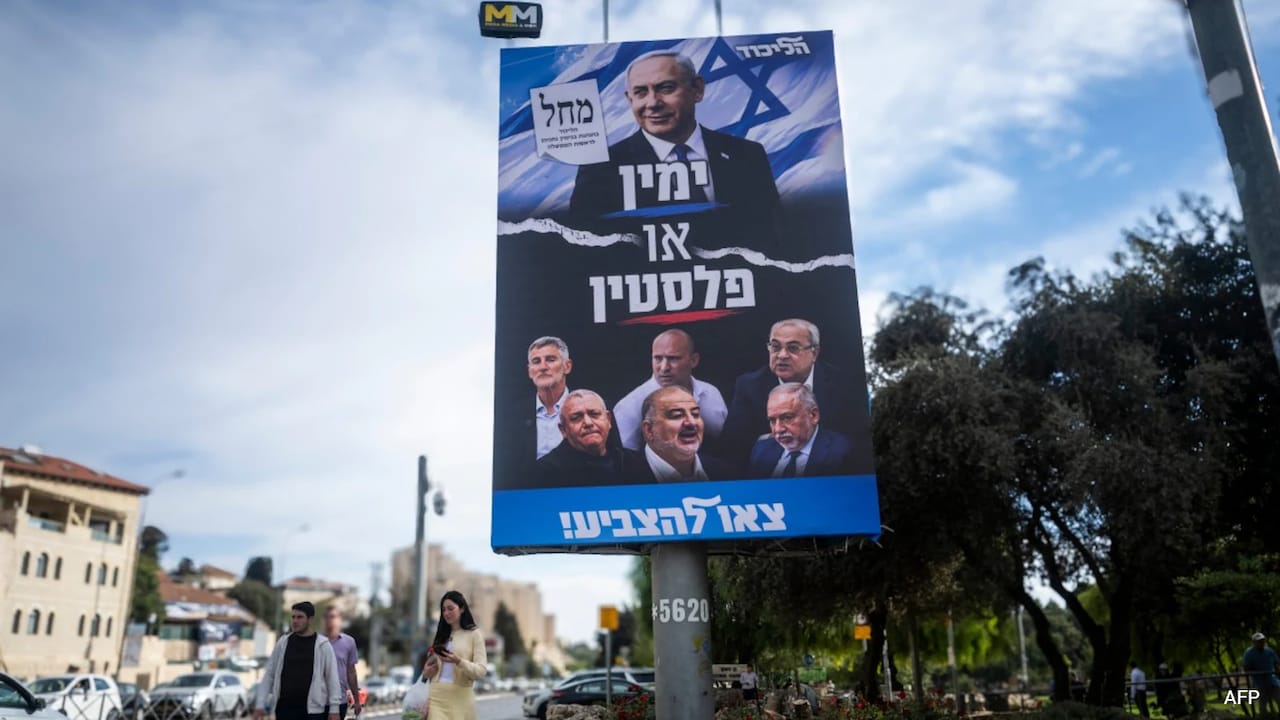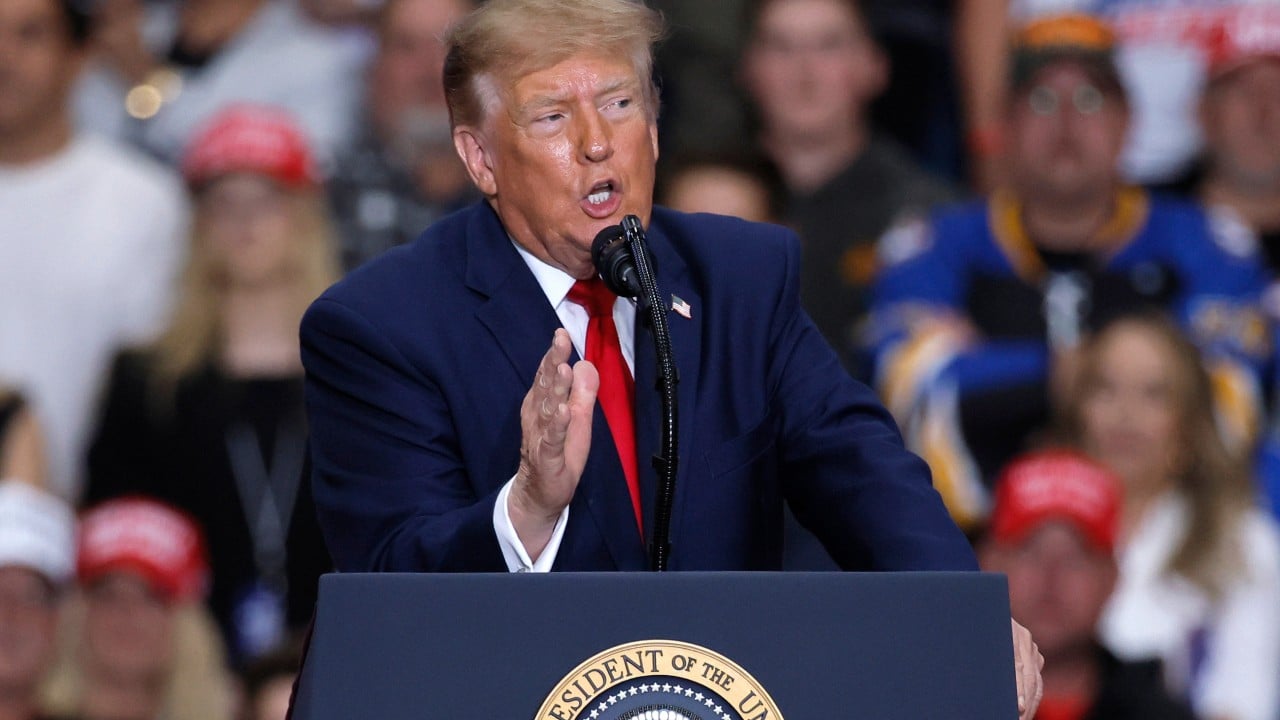
Deploying existential security framing against a domestic political opponent is a high-variance electoral gambit designed to nationalize a local race by trading suburban swing-voter margin for base turnout maximization. During the final stretch of the 2026 Michigan U.S. Senate campaign, President Donald Trump intervened on behalf of Republican nominee Mike Rogers by directly linking Democratic nominee Abdul El-Sayed—a Michigan-born physician and former Detroit health director—to the September 11 terrorist attacks. Speaking at a campaign rally in Port Huron on October 25, 2026, Trump labeled El-Sayed a "jihadist," claimed he would be the only senator required to pass through a metal detector before entering the chamber, and urged Michigan voters to fight his candidacy just as Flight 93 passengers fought hijackers 25 years earlier. Standard wire coverage treats this rhetorical escalation as a series of isolated soundbites and partisan rebuttals. Analyzed through the lens of political strategy and voter mobilization mechanics, however, the intervention reveals a calculated—and ultimately counterproductive—effort to weaponize identity cleavages in a battleground state defined by structural cross-pressures.
The Three Pillars of the National Security Wedge
In competitive statewide elections, campaigns rely on wedge issues to split an opponent's coalition while consolidating their own core electorate. When economic grievances or policy distinctions prove insufficient to overcome structural headwinds, political operatives frequently pivot to existential identity framing. In the 2026 Michigan Senate contest to succeed retiring Democrat Gary Peters, the Republican campaign apparatus constructed its closing argument around three distinct rhetorical pillars. Recently making headlines recently: What Everyone Missed About Serbia's Election Upset and Aleksandar Vucic's Concession.
- Securitization of Religious Identity: Rather than attacking El-Sayed exclusively on progressive policy positions such as healthcare reform or industrial regulation, the messaging framed his Muslim faith as an inherent national security liability. By invoking the 25th anniversary of September 11 and referencing Flight 93 passenger Todd Beamer, the rhetoric attempted to map historical trauma onto a domestic electoral choice. In political communication theory, securitization occurs when an actor frames a non-military subject—in this case, a candidate's religious background—as an existential threat requiring extraordinary defensive measures.
- Institutional Alienation: Trump's assertion that El-Sayed would require metal detector screening prior to entering the Senate floor served a specific psychological function. It sought to establish an immediate visual boundary between legitimate institutional insiders and a suspect outsider. Crowd reactions at the Port Huron rally, where attendees shouted "traitor" and "deport" at a candidate born and raised in Michigan, demonstrate how institutional alienation cues translate directly into nativist mobilization.
- Associative Guilt and Disinformation: The rhetoric paired broad religious tropes with specific, unsubstantiated organizational links. Both Trump and Rogers accused El-Sayed of ties to the Muslim Brotherhood, while Rogers falsely claimed that El-Sayed believed the United States "deserved" the 9/11 attacks—an assertion subsequently refuted by independent fact-checkers.
The operational objective of these three pillars was straightforward: force El-Sayed onto the defensive regarding his patriotism, distract from regional economic vulnerabilities—specifically the U.S.-Canada tariff standoff impacting Detroit's automotive sector—and drive maximum turnout among non-college-educated rural and exurban voters.
The Asymmetric Cost Function of Rhetorical Escalation
Every high-intensity campaign tactic carries an asymmetric cost function. While extreme rhetoric lowers the activation threshold for low-propensity base voters, it simultaneously imposes severe penalties across three adjacent voter segments that determine statewide outcomes in Michigan. Further details on this are covered by Associated Press.
The Suburban Persuasion Penalty
In post-2016 Michigan elections, statewide margins have hinged on college-educated suburban voters in Oakland, Kent, and Washtenaw counties. These voters exhibit high sensitivity to norm violations and overt religious or racial animus. Presenting Mike Rogers as "solid as a rock" and "apple pie" while standing alongside rhetoric that equates a Michigan-born physician with 9/11 hijackers created acute cognitive dissonance for moderate ticket-splitters. Rather than consolidating center-right suburbanites who harbored reservations about El-Sayed's progressive economic platform, the existential framing pushed undecided moderates toward the Democratic column as a referendum on basic democratic norms.
Counter-Mobilization and Diaspora Consolidation
Prior to October 2026, the Democratic coalition in Michigan suffered from severe structural fractures. Following a divisive August primary in which El-Sayed narrowly defeated moderate U.S. Representative Haley Stevens, the party struggled to unify its establishment and progressive wings. Simultaneously, Arab American and Muslim voters in Southeast Michigan—particularly in Dearborn, the nation's only Arab-majority city—remained deeply alienated from the national Democratic Party over U.S. foreign policy in Gaza during the 2024 cycle.
The Republican identity wedge inadvertently solved both of El-Sayed's coalition-building problems simultaneously. First, the overt hostility toward Muslim Americans transformed the race from an ideological referendum into a communal defense imperative for Arab and Muslim voters. Turnout in Dearborn surged on Election Day to the point that precincts temporarily ran short of paper ballots. Second, the extremity of the attacks neutralized intra-party hesitation among Jewish and moderate Democratic constituencies. Hundreds of Jewish voters organized under Michigan Jews for Democracy signed an open endorsement of El-Sayed, explicitly setting aside policy disagreements over Israel to reject the normalization of religious scapegoating.
The Establishment Backfire Mechanism
The final structural failure of the wedge strategy emerged from how it interacted with internal Democratic fractures. Two days before the November 3 election, El-Sayed's primary rival, Haley Stevens, broke party ranks to endorse Rogers alongside him at a Detroit church. Under normal campaign conditions, a late-stage defection by a prominent primary opponent fractures voter confidence and depresses turnout. However, because the Republican campaign had already saturated the information environment with existential attacks on El-Sayed's faith and loyalty, Stevens' endorsement was widely interpreted by Democratic small-dollar donors as capitulation to an exclusionary campaign. Within 24 hours of the defection, El-Sayed's campaign raised $2.4 million from more than 65,000 individual contributors—its highest single-day fundraising total of the cycle.
Precedent Benchmarking and the Limits of Birtherism 2.0
During an October 24 rally in Detroit—one day prior to Trump's Port Huron appearance—former President Barack Obama explicitly categorized the attacks on El-Sayed as a tactical iteration of the "birther" conspiracy theory deployed against him during his own campaigns. Assessing this comparison requires separating surface similarities from structural differences in the 2026 information environment.
- Media Ecosystem Saturation: During the 2008 and 2012 cycles, conspiracy theories questioning Obama's birthplace and religious background circulated primarily through fringe media outlets before being amplified by surrogate figures. By October 2026, the leader of the Republican Party delivered the existential framing directly from the primary rally stage, eliminating any plausible deniability for the down-ballot nominee.
- Vulnerability to Hypocrisy Framing: Unlike the abstract nature of birth-certificate conspiracies, attacks on El-Sayed's Arabic name and Muslim heritage collided directly with documented financial relationships involving the Trump family and Gulf Arab states. El-Sayed's campaign systematically neutralized the "othering" frame by pointing out the contradiction between demonizing a Michigan-born Muslim citizen while accepting billions of dollars in Saudi sovereign wealth investments for Jared Kushner's firm, Affinity Partners, and a Boeing 747 aircraft gifted by Qatar. In political messaging, an attack line loses persuasive force when the target can immediately pivot the audience's attention to a concrete, easily visualized hypocrisy.
- The Financial Asymmetry: The 2026 Michigan Senate contest became the most expensive in state history, with Republican-aligned outside groups spending approximately $104 million against $55 million from Democratic groups in the general election, following $70 million in anti-El-Sayed primary spending. When a campaign outspends its opponent nearly two-to-one in general election outside money yet relies on identity-based fear appeals in the final ten days, it signals internal polling distress. Campaigns holding a structural advantage on economic or governance metrics close on those metrics; campaigns facing an unfavorable macroeconomic or tariff environment reach for cultural polarization to alter the electorate's composition.
Strategic Limits and Operational Takeaways
Analyzing the failure of the 9/11 wedge strategy in Michigan requires acknowledging clear boundary conditions. Identity-based securitization is not universally ineffective; it can succeed in homogenous, low-diversity electorates where the targeted minority group lacks local institutional presence, social integration, or counter-mobilization capacity. Michigan, however, possesses one of the largest, most politically organized Arab American and Muslim populations in the United States, deeply embedded in the state's civic, medical, and industrial infrastructure. In such an environment, caricaturing a prominent local public health official as a foreign threat collides with the lived daily experience of swing voters who interact with Muslim physicians, business owners, and neighbors.
Furthermore, the strategy's collapse was accelerated by the misalignment between the national surrogate's message and the local candidate's positioning. Mike Rogers attempted to run as a traditional, pragmatic national security Republican while simultaneously echoing unverified claims about the Muslim Brotherhood and 9/11. Because Rogers failed to establish clear distance from the most extreme rally rhetoric—even as he distanced himself from the administration's unpopular Canadian auto tariffs—he absorbed the full suburban persuasion penalty without gaining incremental base turnout beyond what Trump's presence on the ballot or trail already generated.
El-Sayed's victory on November 3, 2026, making him the first Muslim elected to the United States Senate, establishes a clear operational rule for battleground campaigns heading into the 2028 presidential cycle: existential identity attacks fail when they substitute for a coherent economic argument in diverse industrial states. Future campaigns attempting to nationalize swing-state races must restrict wedge messaging to verifiable policy divergences—such as trade, energy costs, or healthcare financing—rather than biological or religious traits. When an opposition campaign resorts to questioning a native-born candidate's basic right to enter a legislative chamber, the targeted campaign should immediately abandon defensive biographical explanations, expose financial or institutional hypocrisy on the attacker's side, and convert the resulting moral outrage into small-dollar fundraising and high-propensity diaspora turnout.