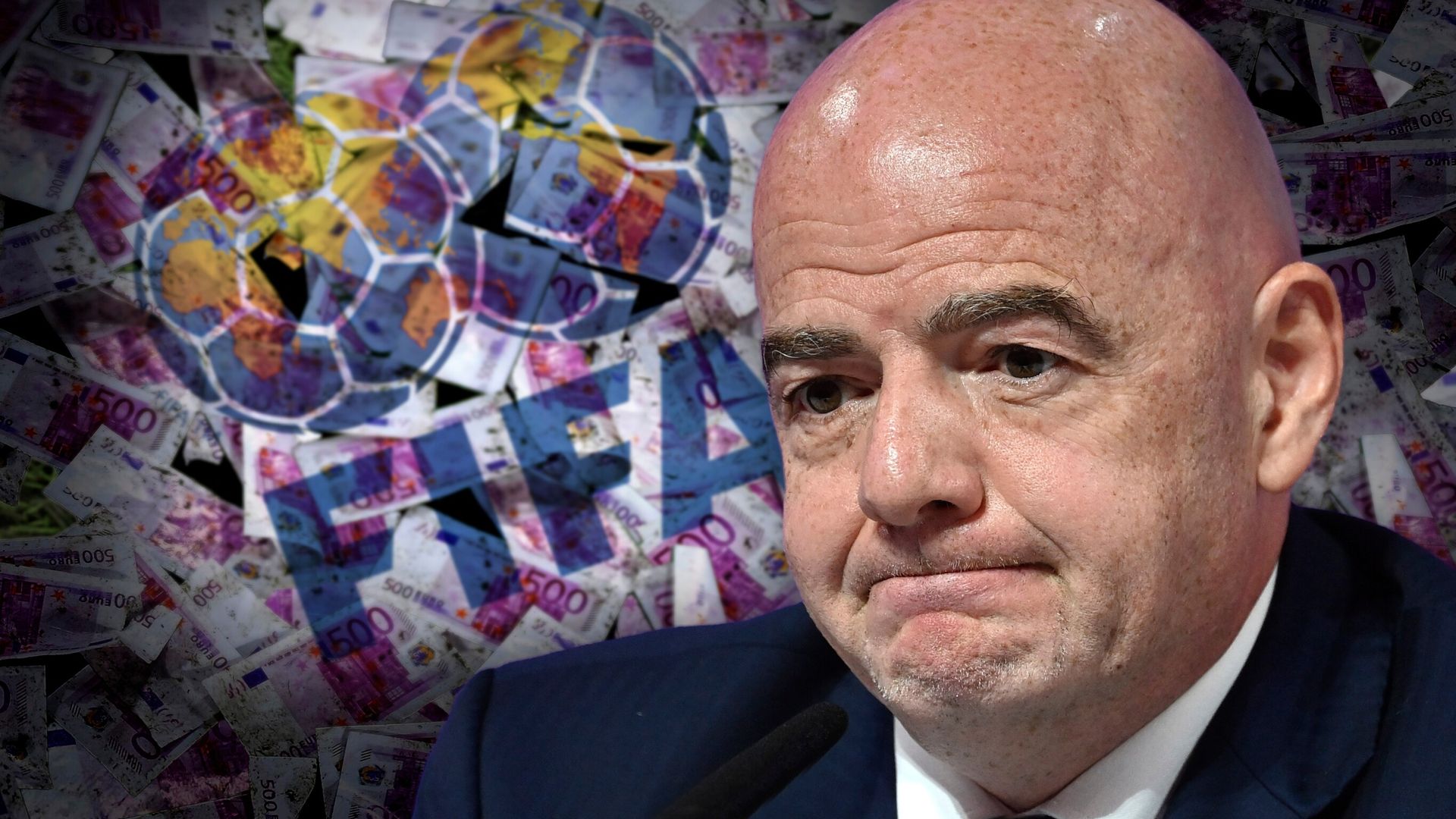
Institutional resistance to public accountability follows a predictable mathematical and behavioral trajectory whenever a centralized governing body faces operational stress. When global authorities like the International Federation of Association Football counter external critique by claiming an organized campaign intended to destabilize leadership, they activate a classic crisis management protocol. This dynamic illustrates how massive sporting organizations preserve legitimacy by shifting the locus of debate from policy failures to institutional victimhood.
The Structural Mechanics of Institutional Shielding
Large-scale governing bodies operate under distinct operational pressures that dictate how they respond to external negative evaluations. The primary objective of any centralized sports administration is the preservation of commercial revenue streams and stakeholder alignment. When media organizations or legislative bodies highlight operational discrepancies—such as visa allocation bottlenecks, ticketing anomalies, or political interventions in disciplinary outcomes—the governing entity incurs a legitimacy deficit.
To counteract this deficit, leadership structures deploy a three-tiered defense mechanism:
- Attribution of Malevolent Intent: Repackaging investigative scrutiny as personal animus or coordinated distortion rather than a legitimate governance check.
- Appeal to Electoral Mandate: Highlighting democratic election by member associations to invalidate critiques originating from non-voting entities or external observers.
- Juxtaposition of Spectacle and Dissent: Contrasting the micro-level operational grievances of critics with the macro-level celebratory experiences of millions of event attendees.
This framework enables management to isolate core decision-makers from direct accountability. By framing dissent as a byproduct of bad faith, the organization removes the requirement to address specific operational malfunctions through empirical metrics.
The Cost Function of Narrative Control
Maintaining an unblemished public narrative involves distinct trade-offs. When executive leadership chooses aggressive public counter-attacks over transparent remediation, the long-term organizational cost shifts from immediate public relations friction to structural distrust.
The economic model of international sports governance relies heavily on institutional stability. Sponsors and broadcasting partners evaluate risk through volatility indices. When a governing body engages in protracted public disputes with regional confederations, legislative oversight committees, and journalistic outlets, the perceived regulatory risk increases.
The mechanism fails when external actors possess structural leverage. For instance, legislative inquiries wielding subpoena power or regional bodies withholding commercial compliance cannot be neutralized by social media messaging or open letters. Consequently, the aggressive defense posture functions primarily as an internal alignment tool, designed to rally member associations and suppress internal dissent rather than convince objective external analysts.
Deconstructing the Rhetoric of Unity
A granular examination of executive counter-narratives reveals a reliance on emotional validation rather than operational transparency. Appeals to universal harmony, safety metrics, and cross-border participation are frequently measured using binary outcomes: the event occurred, matches were played, and spectators occupied seats.
This approach ignores variance analysis. An aggregate metric indicating high overall stadium occupancy rates provides no visibility into the friction points experienced by specific stakeholder cohorts, such as supporters denied transit documentation or federations subjected to inconsistent disciplinary interpretations. Rigorous evaluation requires dissecting the margin between systemic success and institutional blind spots. Treating structural complaints as anomalies to be dismissed rather than data points to be optimized guarantees the persistence of recurring operational vulnerabilities.
Strategic Forecast for Regulatory Governance
As international sporting mega-events expand in scale and geopolitical complexity, the friction between centralized authorities and decentralized accountability will intensify. Future tournaments will face heightened scrutiny regarding state-level political interference, resource allocation equity, and transparency in disciplinary consistency.
Organizations that rely on adversarial communication strategies will experience diminishing returns as digital information ecosystems become more fragmented and resistant to top-down narrative management. Sustainable governance requires shifting from defensive insularity to verifiable procedural transparency, aligning public relations messaging with objective operational audits.
2026 WC: Infantino's World Cup Defence Falls Apart? FIFA Faces Fresh Trump Questions | First Sports
This segment analyzes the political pressures and administrative controversies surrounding FIFA leadership following the 2026 World Cup.
http://googleusercontent.com/youtube_content/1