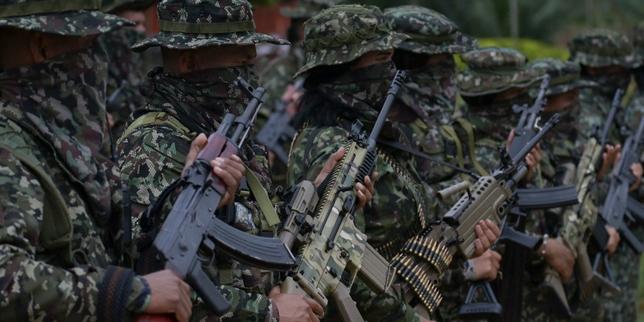
Geopolitical volatility intersecting with transnational military migration creates acute vulnerabilities when active-duty personnel transit through non-permissive environments on personal leave. The August 6 abduction of Franco-Colombian Corporal José Olger Melo Charry of the French Foreign Legion in the Nariño department by dissident factions of the FARC exemplifies the friction points between localized insurgent economies and globalized military human capital. Deconstructing this event requires an examination of regional control vectors, the structural utility of high-value targets within irregular armed groups, and the operational friction generated when state-level defense commitments collide with fragmented sub-national governance.
The Mechanics of Interception in Contested Terrain
Operating environments like the Nariño department in southwestern Colombia are defined by overlapping illicit economies, primarily cocaine processing corridors and illegal mineral extraction networks. Insurgent splinter factions, particularly those aligned with commanders such as Iván Mordisco, maintain dense intelligence networks along transit arteries.
The capture of an off-duty military professional on leave is rarely a random act of highway criminality; it represents an opportunistic intelligence exploitation model. When an individual's background within a premier elite unit—such as the Foreign Legion—is uncovered at an irregular checkpoint, the target's value proposition shifts instantly.
- Information Asymmetry: Local security architectures often fail to protect returning expatriate service members who assume anonymity in their home regions.
- Economic Extraction: Irregular armed groups convert high-profile identity markers into political leverage or financial extortion currency.
- Geographic Control: Pockets of territorial sovereignty vacuum allow dissident units to detain, process, and relocate high-value individuals before state response loops can close.
Strategic Calculus of Insurgent Splinter Factions
Following the formal 2016 peace accords, residual FARC dissident structures abandoned centralized ideological cohesion in favor of hyper-local criminal-political syndicates. For these groups, holding a soldier who serves under a foreign national flag introduces a multi-layered diplomatic complication for Bogota and Paris.
The primary objective behind such detentions involves testing the friction tolerance of newly instituted state security doctrines. When administrations signal a hardening posture against armed groups, dissident factions respond by escalating asymmetric pressure metrics.
[Target Identification] → [Institutional Affiliation Discovery] → [Asymmetric Value Escalation] → [State Bargaining Pressure]
This sequence illustrates how an ordinary highway interception transforms into an international security dossier. The structural incentive for the captors lies in extracting concessions, disrupting state consolidation efforts in strategic drug-producing corridors, or signaling operational impunity to regional rivals and government forces alike.
Systemic Risks of Transnational Military Migration
Armies utilizing foreign recruitment models, such as the French Foreign Legion, inherently inject dual-national personnel into global hot zones and home-state environments during authorized leave cycles. This creates structural exposure risks that defense planners must quantify.
- Threat Transfer: Personnel returning to high-risk countries of origin carry institutional expertise that elevates their personal risk profile compared to civilian travelers.
- Diplomatic Entanglement: Host-nation governments bear the sovereign responsibility for rescue or negotiation, while foreign capitals face pressure to ensure consular protection without violating local jurisdictional limits.
- Intelligence Compromise: Interrogations conducted by sophisticated insurgent groups aim to extract tactical methodologies utilized by foreign elite units, multiplying local threat capabilities.
Counter-Strategy and Operational Adjustments
Mitigating similar security failures demands a rigorous reassessment of force protection protocols for military personnel traveling to high-risk zones on personal leave. Standard travel advisories remain insufficient when local cartels and guerrilla networks deploy systematic identity-checking apparatuses along rural transit routes.
Intelligence sharing between partner nations must extend beyond active deployment theaters to encompass predictive risk mapping for off-duty personnel. Defense ministries need to implement mandatory debriefing and itinerary clearance protocols for legionnaires and foreign service members visiting known conflict zones. Without tightening the feedback loop between international military human resources and regional threat intelligence, irregular armed actors will continue to exploit the seams between global military mobility and local insurgent control.



