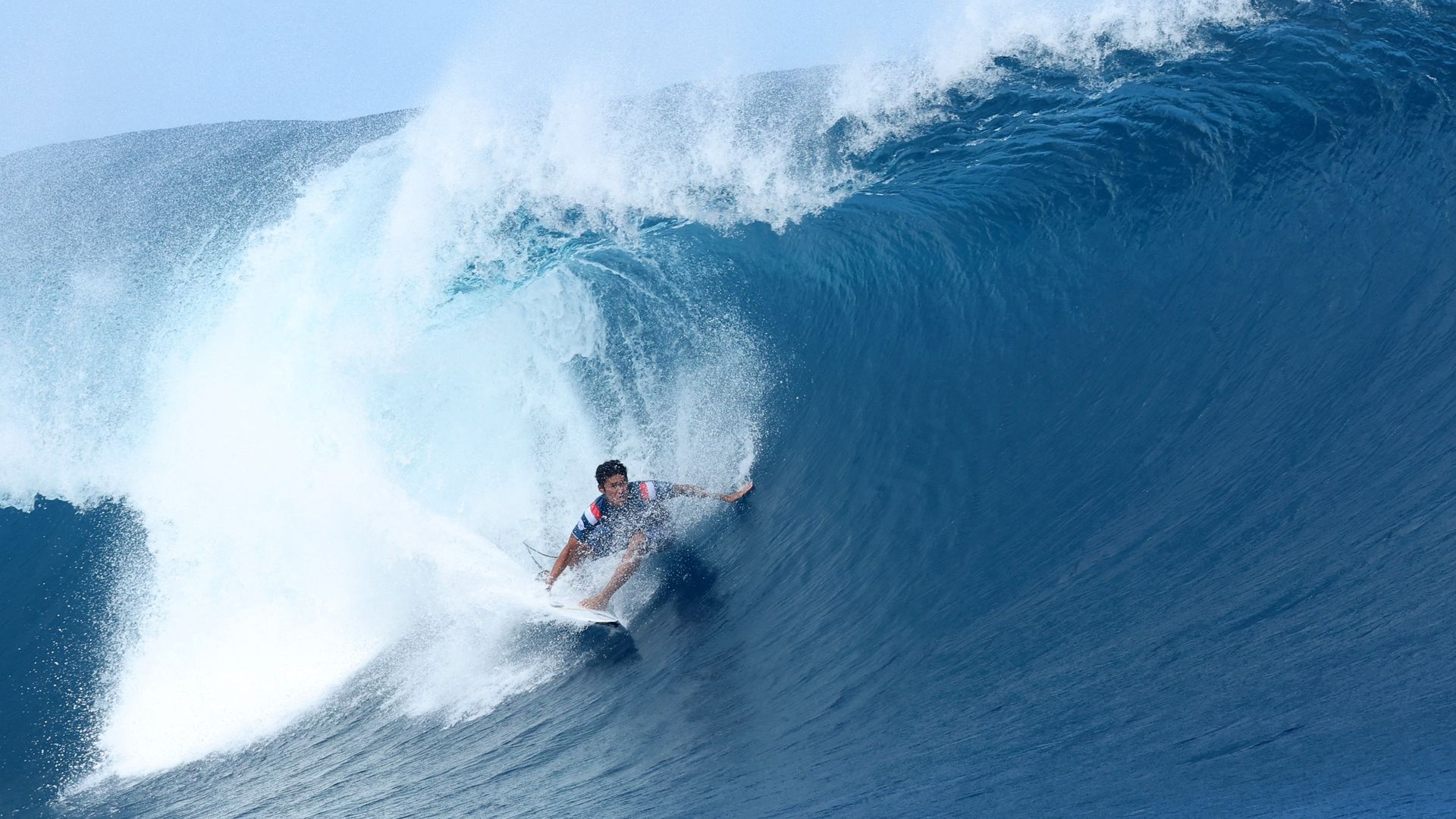
The operational viability of live-broadcast ocean sports relies on a delicate trade-off: maximizing raw athletic performance within high-energy wilderness zones while maintaining a quantifiable risk-mitigation framework. This tension was demonstrated during the finals day of the World Surf League (WSL) New Zealand Pro at Manu Bay, Raglan. A localized marine wildlife encounter involving an in-water media asset triggered an immediate operational shutdown. Rather than an isolated incident of misfortune, the event exposed the precise trigger mechanics, economic bottlenecks, and risk-transfer protocols that govern elite professional surfing.
Evaluating this disruption requires separating the sensationalism of open-ocean encounters from the systematic variables at play. Analysis reveals the event's structural failure modes, the biological realities of the point-break ecosystem, and the strategic protocols necessary to safeguard human assets without compromising media delivery.
The Operational Cost Function of Open-Ocean Production
Live professional surfing cannot function without in-water personnel. While high-definition terrestrial lenses and unmanned aerial vehicles (UAVs) capture the macro-dynamics of a heat, water-bound photographers establish the visceral, close-range imagery required for commercial distribution. This exposure creates a permanent, non-reducible base risk.
Total Event Risk = f(Athlete Exposure, Media Asset Exposure, Environmental Baseline)
During the second men’s semifinal between Yago Dora and Italo Ferreira, an in-water photographer, Ed Sloane, was positioned on the inside of the point break—the exact drop-zone and terminal path for breaking waves. At 8:26 AM, Sloane sustained an acute lower-limb injury from an unidentified marine organism. The mechanical sequence of the subsequent disruption follows a precise three-stage operational chain:
- The Signal Trigger: The photographer's physical counter-measures created localized surface cavitation and erratic splashing. This immediate variance from normal swimming behavior was detected by the competing athletes and on-water jet-ski patrol teams.
- The Command Execution: The contest director issued an immediate audio-signal termination (the horn), halting the 35-minute heat 15 minutes into regulation. This initiated an immediate extraction protocol, removing Dora and Ferreira via personal watercraft (PWC) within minutes.
- The Protocol Activation: The WSL implemented its highest tier of environmental emergency response: a "Code Red" designation. This operational status halts all waterborne activity, freezes the broadcast clock, and shifts onsite resources entirely to medical triage and asset extraction.
The immediate consequence was an operational bottleneck. While the first semifinal had concluded seamlessly—with Australian Morgan Cibilic registering a two-wave total of 15.34 to defeat American Griffin Colapinto's 12.20—the second heat was frozen with Dora leading Ferreira 6.33 to 3.00. The pause halted the sporting momentum and disrupted linear broadcasting schedules across global networks.
Biological Variables and Pathogen Mechanics
The primary complication in optimizing the response protocol was the ambiguity of the apex organism involved. Onsite medical assessments identified small, localized puncture wounds on the photographer's left foot, accompanied by the mechanical destruction of his swim fin. Two distinct biological hypotheses emerge from the physical evidence, each carrying vastly different risk profiles.
Hypotheses of Organism Typology
| Variable | Species Hypothesis A: New Zealand Fur Seal / Sea Lion | Species Hypothesis B: Broadnose Sevengill Shark |
|---|---|---|
| Physical Evidence | Small puncture wounds, compression marking, torn synthetic rubber (swim fin). | Puncture wounds, clean shear marks, laceration potential. |
| Behavioral Driver | Territorial defense, exploratory biting, or low-tide hunting displacement. | Opportunistic predation, low-visibility mistargeting. |
| Systemic Risk Status | Low structural risk; localized territorial incident. | Severe structural risk; presence of active apex predator. |
Onsite medical personnel inclined toward the sea lion hypothesis, citing the compressed, non-shearing nature of the puncture wounds. In high-energy coastal zones like Raglan's left-hand point break, pinnipeds display highly territorial behaviors, particularly when their hunting corridors intersect with stationary human assets utilizing swim fins—which mimic the visual signature of competing marine mammals.
Alternatively, regional marine data identifies the broadnose sevengill shark (Notorynchus cepedianus) as a common shallow-water predator along the North Island's west coast. Sevengills use a low-velocity, ambush methodology. An exploratory bite from a juvenile specimen matches the minor structural damage observed, contrasting with the catastrophic tissue loss associated with white sharks (Carcharodon carcharias).
The biological distinction is critical for risk management. A pinniped bite represents an isolated behavioral variance. A shark strike implies a predatory hunting pattern within the competition zone, requiring a prolonged quarantine of the water column.
The Micro-Tidal Resumption Framework
The decision to resume competition cannot be arbitrary. It must balance corporate broadcast obligations with human safety metrics. The WSL managed this challenge by aligning the event delay with the local environmental cycle: the micro-tidal shift.
The event was held for more than four hours. This timeline was not chosen simply for medical logistics; it was designed to let the low-tide phase pass. In point-break ecosystems, low tide compresses the shallow shelf, forcing marine life into narrower, deeper channels where human interaction is more concentrated. By pushing the resumption time to just after 1:00 PM, organizers aligned the restart with an incoming tide, expanding the water column, increasing dispersion, and reducing close-quarter wildlife encounters.
Before restarting the heat between Dora and Ferreira, management deployed a three-layered surveillance matrix to reduce residual risk:
- Aerial Telemetry: Continuous UAV tracking to scan the shallow sand-and-rock shelf for thermal signatures or large silhouettes.
- Surface Patrol Multipliers: Increasing the density of PWC units from standard rescue positioning to active perimeter sweeping.
- Terrestrial Spotters: Utilizing elevated vantage points along the Manu Bay headland with high-powered optics to track movement outside the surf zone.
Strategic Mitigations for High-Exposure Events
The Raglan incident demonstrates that professional surfing's existing safety protocols can effectively manage acute crises. However, as events push into remote regions to capture optimal wave dynamics, these models must evolve from reactive management to predictive mitigation. Relying on visual identification after a strike occurs leaves a dangerous gap in safety protocols.
To protect assets in high-risk zones, organizations should deploy continuous acoustic monitoring networks around competition boundaries to flag tagged apex predators in real time. Replacing manual water-patrol sweeps with automated, AI-driven drone surveillance can provide early warning of large marine life approaching the lineup. Finally, equipping all in-water staff and athletes with personal electromagnetic deterrent devices would add an active layer of safety, substantially reducing the risk of exploratory bites without disrupting the marine environment.