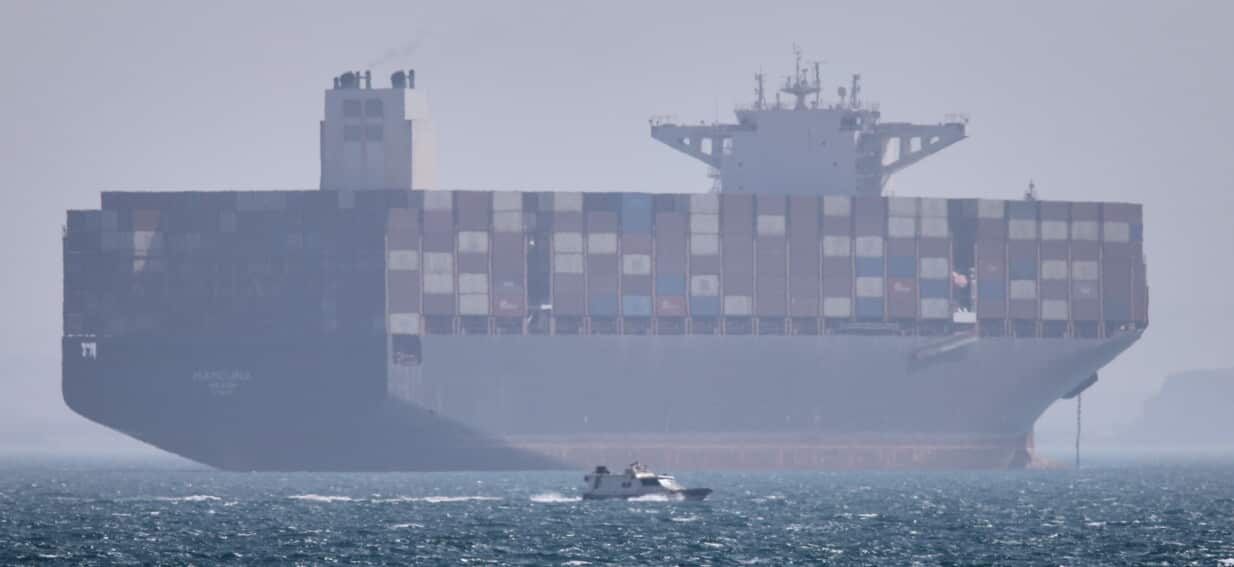
The kinetic exchange between United States Central Command (CENTCOM) forces and Iranian military assets near the Strait of Hormuz exposes a critical operational reality: tactical skirmishes in maritime chokepoints are fundamentally battles over sensor dominance. When US naval forces intercepted four Iranian one-way attack drones and subsequently destroyed coastal surveillance radar installations at Goruk and Qeshm Island, the objective was not merely punitive. The operation targeted the foundational component of Iran’s anti-access/area-denial (A2/AD) strategy. By stripping away shore-based radar tracking, the US military disrupted the tracking-to-targeting kill chain required to threaten commercial shipping and naval vessels.
Understanding this escalation requires analyzing the structural mechanics of maritime interdiction, the economic leverage points underlying the current naval blockade, and the strategic bottlenecks preventing a diplomatic resolution. For a different perspective, consider: this related article.
The Kill Chain Mechanics of Chokepoint Warfare
To effectively target commercial or military vessels in a narrow waterway like the Strait of Hormuz, an adversary must successfully execute a multi-stage kill chain: find, fix, track, target, engage, and assess. The weekend’s engagements illustrate exactly how this chain functions, and how targeted counter-strikes can break it.
[Shore-Based Radar] ---> [Target Acquisition] ---> [Telemetry Data Link] ---> [Loitering Munitions]
         |                                                                             |
 (Struck at Goruk &)                                                           (Interceptors Disrupted)
 (  Qeshm Island  )
The process begins with long-range detection. Coastal surveillance radars, such as the installations targeted on Qeshm Island and at Goruk, provide the foundational layer of situational awareness. These shore-based systems scan the horizon, establishing initial tracking data on maritime traffic. Without these active sensors, local commanders are functionally blinded, forced to rely on commercial transponder data (which targeted ships routinely deactivate) or visual spotting, which lacks the precision required for long-range targeting. Similar coverage on this matter has been shared by BBC News.
Once a target is acquired, its telemetry must be communicated to the strike asset. In this instance, the assets were one-way attack drones—low-cost, loitering munitions designed to detonate on impact. For these drones to strike moving maritime targets successfully, they require either pre-programmed coordinates of a stationary target, active terminal homing seekers, or mid-course guidance updates derived from the very coastal radars that the US military destroyed.
The US response executed a two-phase disruption of this chain:
- Active Defense: Surface-to-air interceptors or electronic warfare assets neutralized the four airborne drones, breaking the engagement phase of the initial Iranian sortie.
- Proactive Degradation: Subsequent airstrikes targeted the radar sites at Goruk and Qeshm Island, severing the find-and-fix phase of future operations. By eliminating the sensors, the US military artificially increases the miss-distance of subsequent drone or anti-ship missile salvos, driving down their operational probability of destruction.
Attrition Math and the Strategic Blockade
The tactical friction in the Strait of Hormuz occurs against the backdrop of a broader economic and military blockade enforced by the United States against Iranian ports. This blockade is a direct response to Tehran’s efforts to restrict a maritime corridor that handles approximately 20 percent of global petroleum liquids transits.
The current confrontation highlights a severe asymmetry in the cost functions of both nations. Iran leverages an asymmetric attrition strategy, utilizing low-cost unmanned aerial vehicles (UAVs) and ballistic missiles to force the US and its allies to expend highly sophisticated, multi-million-dollar air defense interceptors. However, this strategy faces a hard ceiling dictated by physical stockpile depletion.
The White House notes that months of sustained hostilities have degraded Iran's total missile and drone inventory to an estimated 21 to 22 percent of its pre-conflict volume. While independent intelligence assessments suggest variations in this figure based on hidden underground storage facilities and ongoing domestic assembly lines, the fundamental trajectory remains one of net attrition.
The structural bottleneck for Iran is not just the volume of munitions, but the survival rate of its launch and guidance infrastructure. Drones can be replaced relatively quickly via modular assembly plants; highly specialized coastal surveillance radars and hardened command-and-control nodes cannot. When CENTCOM systematically removes fixed radar infrastructure, the replacement cycle operates on a timeline of months to years, severely undermining Iran's capacity to enforce its policy of mandatory transit permissions for commercial tankers.
The Asymmetric Retaliation Framework
Following the destruction of the Goruk and Qeshm Island sites, the Islamic Revolutionary Guard Corps (IRGC) attempted to re-establish deterrence by shifting the conflict from the maritime domain to land-based infrastructure. This tactical pivot manifests as a multi-tiered retaliatory framework aimed at regional adversaries and hosting complexes.
The IRGC launched a salvo of seven ballistic missiles targeting US and allied installations in Kuwait and Bahrain. The operational outcome of this strike demonstrates the high efficacy of integrated regional air defense networks: six of the incoming ballistic missiles were successfully neutralized by terminal-phase interceptors, while the seventh failed to achieve its target coordinate profile.
This specific sub-theater demonstrates a critical variable in regional stability: the vulnerability of civilian infrastructure to leakage in air defense umbrellas. Earlier drone strikes impacting Kuwait's main international airport passenger terminal underscore that even a low success rate for asymmetric munitions can yield disproportionate geopolitical and economic shockwaves. The threat of secondary damage to commercial aviation and logistics hubs increases the insurance premiums and sovereign risk profiles across the entire Persian Gulf region, amplifying the economic pain of the maritime blockade beyond the energy sector.
Diplomatic Deadlocks and Asset Liquidity
The military escalations are intrinsically tied to stalled indirect negotiations aimed at establishing a durable framework deal. The diplomatic impasse is governed by a rigid matrix of conditions that neither party has been willing to compromise on, creating a classic game-theoretic deadlock.
Iran’s strategic objectives in these negotiations focus entirely on immediate liquidity and structural economic relief. Tehran’s core demands comprise four distinct pillars:
- The immediate unfreezing and repatriation of $24 billion in frozen foreign assets.
- The issuance of formal waivers targeting sanctions on crude oil exports to restore primary state revenue streams.
- The immediate lifting of the US naval blockade currently strangling access to domestic ports.
- Formal recognition of Iranian regulatory authority over transit protocols within the Strait of Hormuz.
The United States approach, conversely, treats economic normalization not as a prerequisite, but as the ultimate prize for verified compliance. The US position demands verifiable halts to weapon-grade nuclear material enrichment and a permanent cessation of state-sponsored maritime interdiction as baseline conditions before releasing frozen funds.
This creates a fundamental structural friction point. Iranian leadership views its remaining military leverage—the capacity to disrupt 20 percent of global oil flows via its remaining drone and missile stockpiles—as its primary negotiating asset. Relinquishing that leverage without upfront sanctions relief is viewed by Tehran as strategic capitulation.
Consequently, the conflict enters a self-perpetuating cycle. Every breakdown in negotiations prompts an Iranian tactical demonstration in the strait to signal leverage; every demonstration prompts a precise US counter-strike that further degrades the very military infrastructure Iran relies on to project power.
Maritime Escort Protocols
Given the persistent degradation of Iran's coastal radar network, the short-term tactical landscape will likely shift toward a heavier reliance on mobile, decentralized assets. Deprived of fixed radar installations at Goruk and Qeshm Island, the IRGC will likely attempt to utilize civilian dhows, commercial vessels, and small fast-attack craft equipped with commercial-grade marine radars to feed target telemetry to remaining drone launch sites.
To counter this adaptation, the US military must institutionalize and expand its low-profile convoy protocols. Naval elements have quietly escorted dozens of commercial vessels through the chokepoint, utilizing a protocol where civilian tankers deactivate their Automatic Identification System (AIS) transponders to prevent easy tracking by rudimentary Iranian sensors.
The optimal strategic play for coalition forces is to maintain a high-frequency, non-cooperative target profile for all friendly shipping while systematically conducting counter-battery and counter-sensor strikes on any active radar emitter along the Iranian littoral zone. By keeping the Iranian sensor network in a state of permanent degradation, the US effectively neutralizes the tactical efficacy of Iran's remaining drone and missile inventories, forcing a choice between total economic exhaustion under the blockade or a diplomatic compromise that requires abandoning its maritime interdiction doctrine.
.jpg)