Standard reporting on strikes against humanitarian infrastructure relies on reactive casualty counts and isolated descriptions of structural damage. When a kinetic strike hits an active Ukrainian aid distribution site—leaving 31 dead and dozens unaccounted for—the immediate reporting obscures the systemic mechanics of the event. A high-casualty outcome at a civilian relief center is rarely an anomaly; it is the predictable result of predictable operational vulnerabilities intersecting with modern munitions effects and delayed rescue logistics. Understanding the full impact requires decomposing the event into three operational phases: kinetic vulnerability, casualty reporting latency, and systemic supply-chain degradation.
The Structural Vulnerability of Aid Distribution Nodes
Humanitarian aid hubs operate under a fundamental operational paradox. To maximize distribution efficiency to displaced or vulnerable populations, these sites must be accessible, centralized, and predictable. To survive in a contested battlespace, assets must be dispersed, hardened, and mobile. When an aid site prioritizes distribution throughput, it inherently maximizes its vulnerability profile.
Three specific variables govern the lethality of a strike on a civilian relief facility:
- Population Density Aggregation: Distribution events artificially compress foot traffic into narrow temporal and spatial windows. Unlike residential neighborhoods where civilians are dispersed across separate structures and floors, an active aid queue concentrates dozens or hundreds of individuals into a single unfortified perimeter.
- Acoustic and Structural Fragility: Aid facilities are typically retrofitted commercial warehouses, municipal buildings, or temporary shelters. These structures lack reinforced concrete load-bearing cores or subterranean blast shelters. When struck by high-explosive warheads, the primary mechanism of lethality shifts from direct fragmentation to structural progressive collapse.
- Predictable Operational Cadence: Distribution schedules are often publicized locally to ensure residents arrive on time. This eliminates operational security, allowing targeting cells to synchronize strikes with peak civilian occupancy.
In the specific instance of a strike yielding 31 confirmed fatalities, the lethality ratio indicates either a high-payload munition hitting a rigid structure at peak queue density, or a secondary collapse trapping occupants before evacuation protocols could initiate. Without structural hardening, the building envelope itself becomes the primary weapon against those inside.
The Mechanics of Casualty Latency and the Missing Metric
Initial news reports consistently bifurcate casualties into confirmed dead and "dozens still missing." In conflict zone emergency management, the "missing" figure is not an administrative placeholder; it is a direct measurement of search-and-rescue (SAR) friction.
The gap between immediate fatalities and final confirmed tolls is driven by four sequential bottlenecks:
- Structural Entrapment and Void Space Collapse: When unreinforced masonry or steel-truss roofs fail under blast overpressure, they create pancake collapses. Survivors trapped in surviving void spaces face a rapidly declining survival curve dictated by crush syndrome, dehydration, and hypoxia. Until heavy lifting equipment clears the debris slab, these individuals remain statistically categorized as missing.
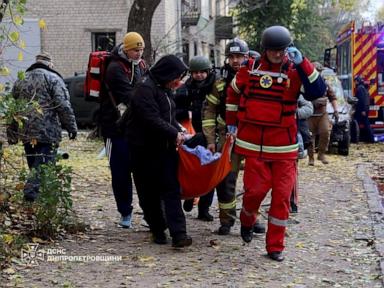
- Secondary Strike Risk (The Double-Tap Dynamic): Emergency responders cannot deploy heavy machinery immediately after an initial impact. Protocols mandate a perimeter hold to mitigate the threat of follow-on strikes targeting first responders. This mandatory delay directly degrades the "golden hour" of trauma intervention, converting survivable injuries into unrecovered fatalities beneath the rubble.
- Identification and Manifest Deficits: Unlike military units or formal workplaces, humanitarian aid sites rarely maintain strict entry-exit manifests. Beneficiaries arrive informally, often without identification documents on their person. When structural collapse or thermal effects complicate visual identification, forensic reconciliation requires DNA matching or family reporting, stretching confirmation timelines from hours to weeks.
- Evacuation Triage Dispersion: During chaotic mass-casualty events, walking wounded and critically injured victims are frequently evacuated by civilian vehicles to multiple regional stabilization points rather than a single central hospital. Cross-referencing hospital intake logs against site-specific missing persons lists introduces significant reporting lag.
Therefore, when dozens remain missing after a confirmed toll of 31, the statistical probability heavily favors upward revision of the fatality count. The missing metric functions as a lagging indicator of structural collapse severity rather than simple dispersal.
The Compounding Cost Function of Humanitarian Disruption
The strategic impact of striking an aid hub extends far beyond the immediate casualty list. In logistical terms, the destruction of a distribution node imposes a dual cost function: acute trauma load on regional medical infrastructure and systemic supply-chain paralysis for the surrounding civilian population.
First, a mass-casualty strike instantly saturates local medical capacity. Regional hospitals operating near wartime baselines possess limited surgical theaters, blood reserves, and intensive care beds. Absorbing dozens of blast and crush trauma patients simultaneously forces medical administrators to implement crisis standards of care, delaying routine trauma treatment and increasing secondary mortality across unrelated patient cohorts.
Second, the loss of a primary distribution node severs the last-mile delivery network for essential calories, potable water, and medical supplies. Aid organizations must immediately halt operations across adjacent sectors to conduct security reviews, re-route supply convoys, and establish decentralized micro-distribution points. During this operational pause, vulnerable populations face acute resource deficits, accelerating displacement and increasing the burden on neighboring municipalities.
Limitations of Current Force Protection Models
Standard recommendations for protecting civilian aid operations emphasize decentralization, early warning integration, and physical hardening. However, practitioners operating in active conflict zones face severe structural constraints that limit the efficacy of these measures:
- Decentralization vs. Throughput: Splitting one centralized hub into ten mobile micro-sites reduces mass-casualty exposure, but it requires ten times the logistical coordination, transport vehicles, and security personnel. Most humanitarian budgets and staffing models cannot sustain this overhead without reducing total aid volume delivered.
- Early Warning Latency: Integrating air-raid alert systems into aid sites relies on sufficient warning lead times. Against ballistic missiles or short-range precision munitions launched from proximate front lines, flight times are often measured in seconds rather than minutes. Alarms cannot outpace supersonic delivery systems when civilians lack immediate underground access.
- Hardening Costs: Retrofitting commercial warehouses with blast walls, overhead protection, and subterranean shelters requires capital expenditures and engineering timelines incompatible with rapid emergency response.
No purely defensive posture can eliminate risk when humanitarian operations must occur within the engagement envelope of modern artillery and missile systems.
Operational Protocol for High-Risk Aid Distribution
To reduce mass-casualty exposure without halting critical civilian support, humanitarian logistics coordinators must transition away from static, scheduled distribution models toward asynchronous, low-signature operations:
- Eliminate Fixed Distribution Schedules: Replace announced public distribution hours with staggered, SMS-dispatched appointment windows for small cohorts (fewer than 15 individuals per 20-minute block). This caps maximum casualty exposure at any single moment.
- Decouple Storage from Distribution: Never distribute aid from the primary warehouse. Store bulk inventory in dispersed, unmarked locations and use rapid-turnaround light vehicles to drop pre-packaged kits at rotating, unannounced curb-side transfer points.
- Mandate Subterranean Proximity: Restrict active indoor distribution exclusively to facilities possessing verified, structurally rated below-grade basements capable of holding 100 percent of peak occupancy within a 30-second transit time.
- Pre-Position Heavy SAR Assets: Where high-density operations remain unavoidable, coordinate with municipal emergency services to stage heavy lifting and concrete-cutting equipment outside the immediate blast radius prior to operational hours, compressing debris clearance timelines if a strike occurs.