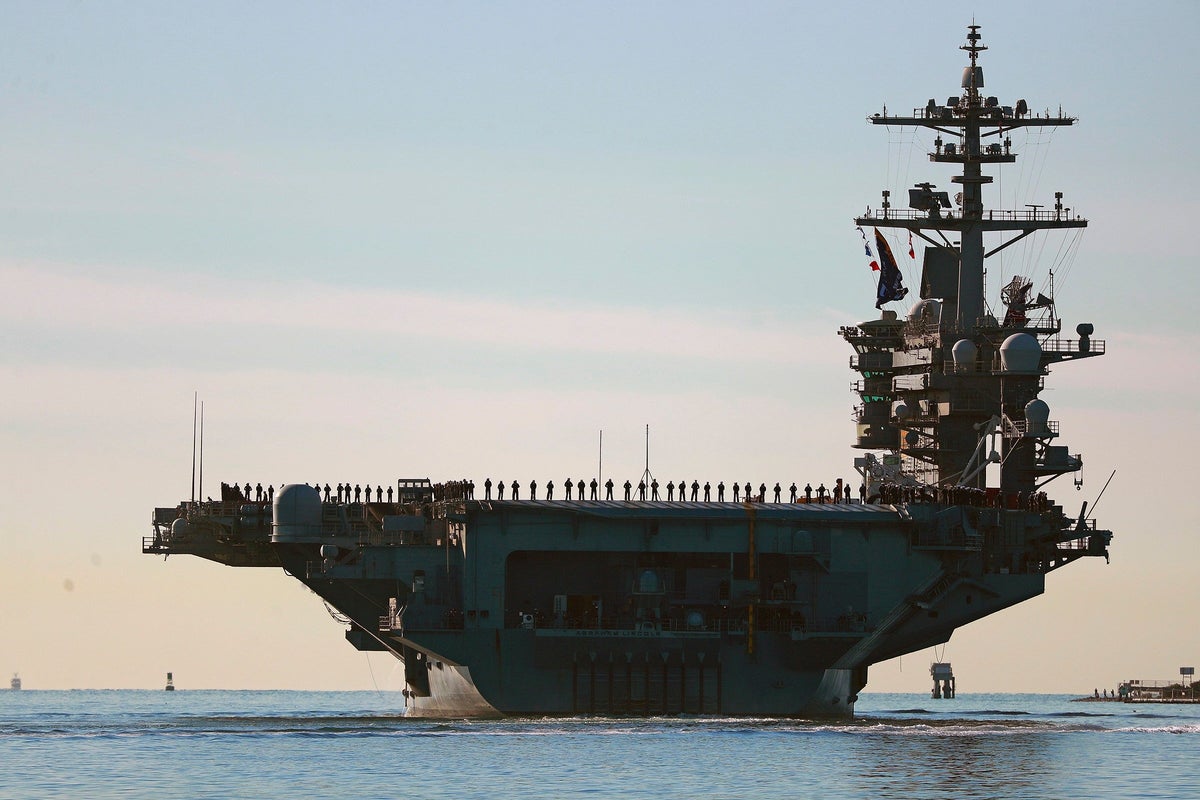
Operating a nuclear-powered aircraft carrier past the two-hundred-day mark without a port call transforms a tactical asset into a chronic test of human endurance. When institutional supply chains break down alongside critical shipboard infrastructure, the resulting crisis inside a floating military installation is rarely a single catastrophic event. Instead, it represents a compound failure of logistics, preventative maintenance, and psychological capacity. Examining conditions aboard the USS Abraham Lincoln during its extended deployment reveals how systemic stress points multiply across a five-thousand-person crew, turning high-tempo combat operations into an operational bottleneck.
The logistical architecture of a modern carrier strike group relies on predictable replenishment cycles. When theater demands force extended operational horizons past two hundred and fifty total days at sea—with over two hundred of those consecutive days spent away from land—the margin for supply chain error narrows to zero. Traditional underway replenishment ships can transfer fuel, ordnance, and dry goods efficiently, but they cannot easily compensate for fractured theater distribution hubs or closed supply routes.
Food and consumable distribution operates on strict inventory formulas. When these formulas fail, the rationing shifts directly to the crew. Reports of restricted rations—such as meals reduced to minimal caloric baselines of rice and basic starches alongside systemic shortages of hygiene products like soap, toothpaste, and deodorant—indicate that supply prioritization has broken down. In a high-stress military environment, basic physiological comfort functions as a primary variable for morale stabilization. Removing these variables accelerates the degradation of operational focus.
Shipboard infrastructure degradation follows a distinct thermodynamic curve. A vessel operating at continuous combat tempo places unprecedented strain on closed-loop life support systems. Wastewater management, desalination units, and laundry facilities are designed for regular maintenance cycles that require shore-side contractor support or extended stand-downs.
When deployment windows double, mechanical systems experience failure rates that outpace onboard repair capabilities. Broken toilets, mold accumulation in high-moisture shower blocks, and weeks of non-functional laundry banks are symptoms of deferred maintenance compounding under heavy usage. Graywater and blackwater systems operating continuously without overhaul back up through the ship's infrastructure, creating localized biohazard zones that directly degrade living quarters.
The human cost of these infrastructural and logistical breakdowns manifests as acute psychological fatigue. Crew members sustaining twelve-to-sixteen-hour shifts without designated rest days face exponential cognitive decline. Sleep deprivation impairs situational awareness, increases industrial accident risks on the flight deck, and accelerates depressive disorders.
When institutional communication channels—including mail delivery systems that lose or delay care packages for months—are disrupted, isolation from civilian support networks becomes absolute. The emergence of severe mental health crises, including reports of sailors attempting to jump overboard, functions as an extreme biological indicator of institutional overload. Dismissing these behavioral breakdowns as isolated incidents or communication artifacts ignores the quantifiable link between prolonged sensory deprivation, physical squalor, and psychological collapse.
Addressing fleet-wide operational fatigue requires moving beyond reactive public relations dismissals. Defense leadership must institute hard caps on consecutive days at sea, decouple carrier deployment lengths from static geopolitical signaling, and re-engineer theater logistics to ensure that sustainment parity matches operational tempo. Without structural reform in rotation planning, the true cost of prolonged naval projection will be measured in permanent human attrition and degraded fleet readiness.