Maritime choke points operate on strict economic and logistical parameters where the deployment of sovereign naval force cannot bypass the realities of distance, asset scarcity, and asymmetric threat dynamics. When analysts debate whether regional powers can unilaterally shield commercial shipping across hostile corridors like the Red Sea or the Strait of Hormuz, they frequently overlook the mathematical constraints governing naval architecture. Protecting merchant vessels requires continuous physical presence, high-density air defense capabilities, and legal authorizations that extend far beyond simply steaming a warship into a contested zone.
To evaluate why sovereign escorts face severe operational limits, we must examine the core mechanics of naval deployment: asset allocation efficiency, the economics of air defense munitions, and the friction points of multinational command structures. For a different look, read: this related article.
The Asset Allocation Deficit and Force Ratios
The primary constraint on any blue-water navy is the finite number of hull-years available for active deployment. A frontline destroyer or frigate cannot occupy two geographic theaters simultaneously. Operating a continuous escort corridor requires a baseline mathematical ratio known as the rotational triad: one ship actively deployed on station, one ship transiting or undergoing maintenance, and one ship in reserve training cycles.
When a nation maintains commercial transit routes spanning thousands of nautical miles—such as the vital energy and trade corridors connecting western Asian ports to domestic terminals—the sheer perimeter length outstrips the available surface combatant inventory. Deploying a destroyer to provide close-in escort services for slow-moving container ships or liquefied petroleum gas tankers degrades the fleet's overall operational tempo. A warship steaming at five to ten knots to match the speed of a merchant carrier is effectively paralyzed, sacrificing its primary tactical advantage: high mobility and rapid response radius. Similar insight on this trend has been published by The Guardian.
This creates a severe opportunity cost. Diverting high-value assets equipped with phased-array radars and vertical launch systems to perform localized police work leaves primary strike groups and carrier defense grids exposed in home waters or primary strategic zones.
The Economic Asymmetry of Air Defense Munitions
Modern asymmetric maritime threats, characterized by low-cost uncrewed aerial vehicles and anti-ship cruise missiles, introduce an unsustainable cost-per-intercept equation. A surface combatant relies on sophisticated surface-to-air missiles to neutralize inbound vectors. The unit cost of these interceptors dwarfs the manufacturing cost of the incoming threat vector by a factor of twenty to one or greater.
When a naval escort commits to protecting commercial shipping within zones of active conflict, it absorbs the defensive burden of the entire convoy. If an adversary launches repeated saturation volleys, the defending warship faces a rapid depletion of its magazine depth. Unlike land installations or large bases, a destroyer at sea has finite storage capacity. Once vertical launch cells are expended, the vessel must break formation and steam to a friendly port for re-arming, leaving the protected merchant fleet entirely vulnerable.
The logistical tail required to sustain high-intensity air defense operations in distant choke points demands secure replenishment ports, specialized ordnance handling facilities, and tanker support that many regional navies cannot maintain outside their immediate territorial zones.
Jurisdictional Friction and Rules of Engagement
Sovereign naval action is bound by international maritime law, territorial waters boundaries, and the explicit consent of flag states. Escorting merchant vessels through narrow straits often requires navigating legal gray zones where commercial carriers fly flags of convenience, registering in foreign jurisdictions to minimize tax and labor overhead.
When an incident occurs aboard a foreign-flagged vessel operated by multinational crews, the protecting navy faces complex jurisdictional hurdles regarding hot pursuit, boarding rights, and the prosecution of hostile actors. While domestic legislation—such as specialized maritime anti-piracy acts—provides legal clarity for specific criminal acts on the high seas, state-sponsored or non-state militia attacks involving missile fire operate under the laws of armed conflict. A naval commander must operate under tightly constrained rules of engagement that prevent inadvertent escalation with regional powers, restricting preventive strikes against launch sites located on sovereign landmasses.
Consequently, close protection often transforms into a reactive posture. Waiting for an inbound projectile to cross the threshold of defense before engaging eliminates the margin for error, placing civilian crews and multi-million-dollar hulls at continuous risk despite the physical presence of naval escorts.
The Architecture of Alternative Risk Mitigation
Given the structural limits of unilateral naval escort models, maritime strategy must pivot from direct kinetic protection to decentralized risk management and digital tracking architectures. Modern crisis response relies on integrated maritime domain awareness centers that aggregate vessel telemetry, satellite tracking, and real-time threat intelligence to reroute commercial traffic before it enters active engagement zones.
Deploying naval assets effectively requires shifting from close-in physical escort models to regional deterrent patrols stationed outside high-risk bottleneck corridors. By maintaining a stabilizing presence in broader ocean sectors rather than hugging hostile coastlines, navies preserve their freedom of maneuver, maintain strategic reserve capacity, and retain the capability to execute targeted rescue or intervention operations without trapping high-value combatants in unsustainable, low-speed tactical bottlenecks.
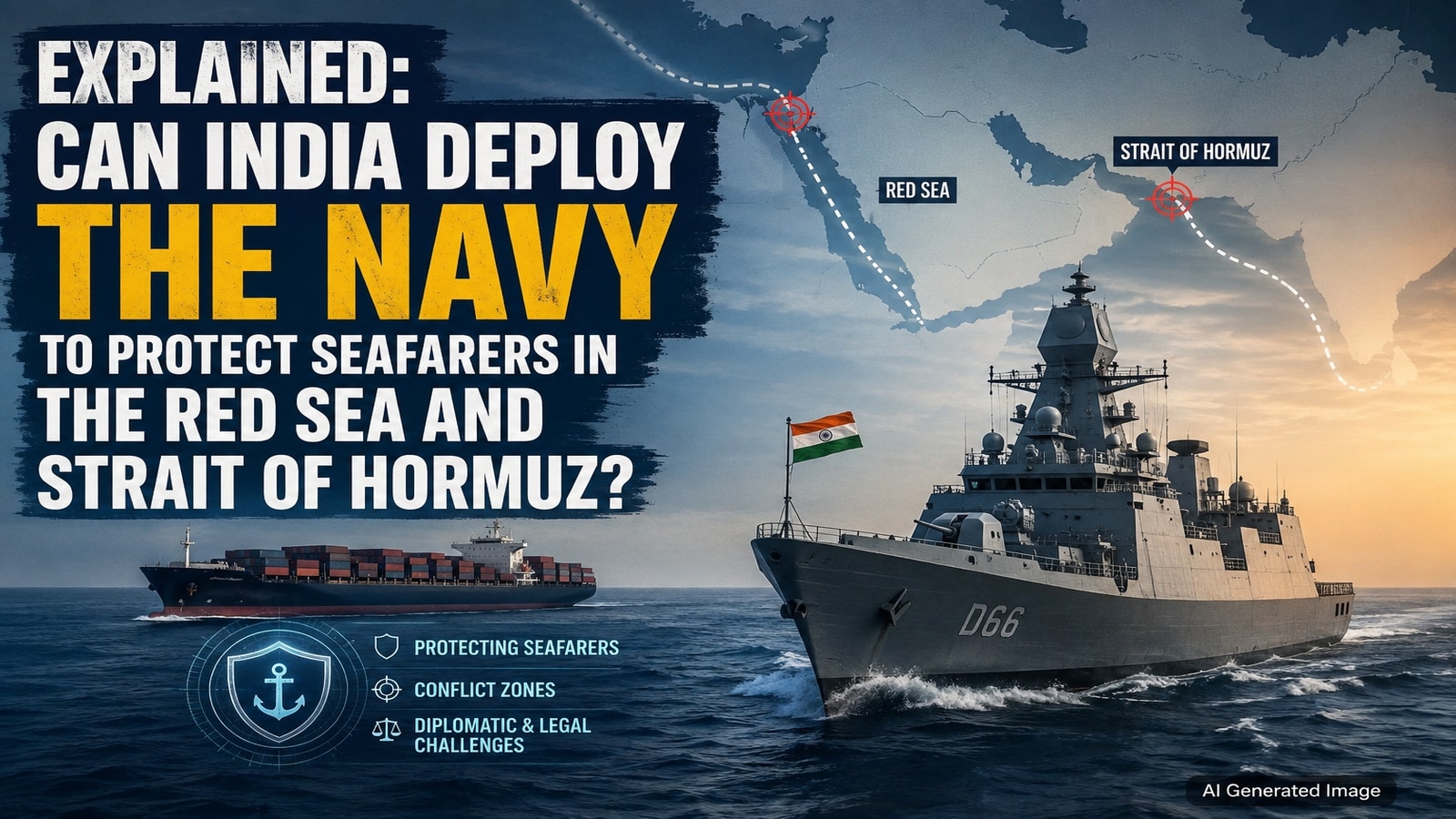
Why India cannot simply send Navy ships to protect merchant vessels in the Red Sea and Hormuz
This analysis is further detailed in visual breakdowns regarding maritime security challenges in the region.