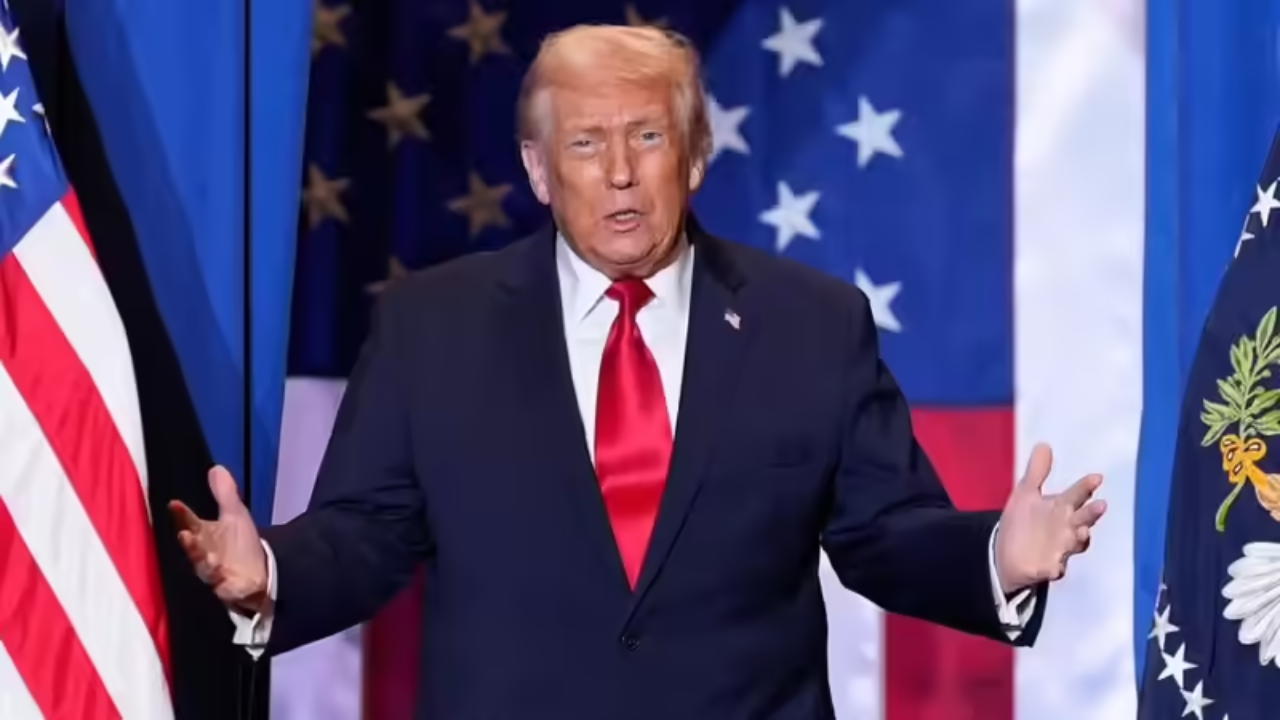
The breakdown of the "Great American State Fair" concert series on the National Mall exposes a fundamental truth about cultural property management: in a hyper-polarized marketplace, a nonpartisan veneer cannot survive asymmetric executive gravity. Within forty-eight hours of the initial talent roster announcement by Freedom 250—the public-private entity coordinating the United States Semiquincentennial—seven out of nine headlining acts withdrew from the event. The rapid dissolution of this cultural program offers a stark case study in risk miscalculation, brand contamination, and the economic mechanics of live entertainment assets.
The failure of the project stems from a structural misalignment between the organizers, the performing talent, and the executive office. When corporate or civic entities attempt to build broad-market cultural events under a heavily politicized framework, they create a commercial paradox. The subsequent proposal by the executive branch to substitute the musical series with an "America Is Back" political rally confirms that the infrastructure was vulnerable to partisan capture from its inception.
The Asymmetric Risk Matrix of Cultural Capital
For a commercial artist, entering a performance contract requires balancing short-term financial compensation against long-term brand equity. Cultural capital is highly liquid but remarkably fragile. When Martina McBride, Bret Michaels, the Commodores, Young MC, and Morris Day canceled their appearances, their decisions were driven by a rational calculation of asset protection.
The mechanism behind this mass exit can be modeled through an asymmetric risk-return matrix.
                  [ High Political Polarization ]
                             │
              ┌──────────────┴──────────────┐
              ▼                             ▼
     [ Legacy Artists ]             [ Institutional Brand ]
  - Fixed Asset Capital          - Variable Public Capital
  - Low Recovery Velocity        - High Institutional Inertia
              │                             │
              ▼                             ▼
   Risk: Permanent Attrition     Risk: Operational Collapse
Legacy artists operate on fixed asset capital. Their primary economic engine is a stable, multi-generational fan base that spans diverse geographic and ideological demographics.
- The Equity Destruction Function: For an artist like McBride or Michaels, participating in an event perceived as a partisan alignment does not expand their market; it fractures it. The downside risk involves permanent customer attrition, venue boycotts, and streaming catalog devaluation. The upside—a standard performance fee—fails to clear the risk-adjusted cost of capital.
- Information Asymmetry and Contractual Blind Spots: The statements issued by the departing artists point to a systemic failure in talent procurement. Multiple acts noted they were assured the event was strictly nonpartisan and structured like a standard, state-sponsored civic celebration. The discovery of the administration's deep operational involvement triggered immediate breach-of-intent anxieties, causing talent representation to invoke exit clauses or deny the existence of finalized contracts entirely.
The Network Effect of Talent Cascades
The exit of seven musical acts did not occur in isolation; it followed the mathematical dynamics of an informational cascade. In live entertainment ecosystem management, talent density creates its own equilibrium.
When the first mover—in this case, Morris Day—publicly invalidated the booking announcement, it altered the strategic calculus for every subsequent performer.
[Initial Lineup Reveal] ──► [First Mover Exit] ──► [Validation Squeeze] ──► [Mass Attrition]
This sequence accelerates because remaining artists face a compounding "validation squeeze." As the roster thins, the political salience of the remaining performers intensifies. An artist who stays on a rapidly depleting billing is no longer viewed as a participant in a national anniversary; they are interpreted as making an explicit ideological declaration.
This explains why a diverse group of artists across country, rock, funk, and hip-hop genres reached a structural consensus to withdraw within a 48-hour window. The remaining baseline—comprising Vanilla Ice, Flo Rida, and Fab Morvan—represents a distinct tier of talent insulation where the economic utility of national exposure outweighs the risk of brand friction.
Institutional Capture and the Substitution Playbook
The institutional failure of Freedom 250 highlights the difficulty of executing public-private partnerships under highly visible executive authority. While organized as a nonpartisan 501(c)(3) entity meant to unite the domestic public around the 250th anniversary, the organization suffered from structural brand contamination. In modern political economy, an institution's true identity is defined by its ultimate point of authority, not its tax status.
The executive response to the talent exodus—calling for the total cancellation of the musical format in favor of a unilateral political rally—illustrates a classic substitution strategy. When a mainstream commercial asset fails to perform due to brand resistance, political actors pivot to high-affinity, closed-loop assets.
The Operational Trade-offs of Event Substitution
| Metric | Planned Concert Series | Proposed Political Rally |
|---|---|---|
| Audience Demographics | Broad-market, multi-generational, low-affinity | High-affinity, ideologically homogenous, high-engagement |
| Economic Framework | Capital-intensive (high talent fees, production, security) | Low talent overhead, high merchandising, high donation capture |
| Brand Impact | Fragmented, litigious, volatile | Concentrated, predictable, self-reinforcing |
| Infrastructure Scalability | Rigid multi-day schedule, high reliance on external vendors | Flexible timeline, optimized for digital broadcast loops |
The shift from an inclusive civic festival to a targeted political rally solves an immediate logistical bottleneck for the administration. A concert series requires continuous coordination with external talent agents, corporate sponsors, and municipal bodies that are sensitive to public pressure. A political rally, conversely, relies on internal logistical networks and faces zero talent risk, as the executive figures act as the primary anchor.
The Logistics of Capital Deflection on the National Mall
The collapse of the entertainment lineup leaves significant infrastructural and financial liabilities. Preparing the National Mall for a 16-day event involving state pavilions, exhibitions, and major concerts requires substantial capital deployment months in advance. The sudden withdrawal of primary talent assets creates a vacuum in scheduled programming, disrupting vendor contracts, broadcast rights, and corporate sponsorship tiers.
Furthermore, the legal friction surrounding adjacent civic infrastructure—such as the ongoing judicial disputes regarding the attempted renaming and structural modifications of the Kennedy Center—indicates that the administration's cultural strategy is meeting systemic institutional resistance. This friction reduces the operational velocity of any planned event. When judicial rulings or talent boycotts freeze capital deployment, the event's fixed costs begin to erode the organizing committee's financial runway.
The strategic pivot to an alternative presentation format is a direct mechanism to bypass these institutional roadblocks. By reinterpreting a national milestone through a highly specific political lens, the organizers convert a broad public failure into a concentrated media victory for a specific base. This strategy accepts the total loss of mainstream civic engagement in exchange for absolute operational control over the venue and the narrative.
Strategic Imperatives for National Cultural Events
To execute large-scale civic commemorations without incurring catastrophic talent abandonment, organizers must decouple administrative execution from active political brands. The Semiquincentennial collapse demonstrates that mixed governance models are inherently unstable when applied to highly visible mass entertainment. Future civic iterations require a strict separation of corporate governance, independent trust financing, and long-term, non-transferable talent booking frameworks that protect participants from sudden shifts in executive messaging. Without these structural guardrails, national milestones will consistently devolve into partisan assets, narrowing the addressable market and eliminating broad public participation.
Trump may cancel U.S. anniversary concerts, says he draws bigger crowds than Elvis
This report details the immediate political fallout and media reactions surrounding the cancellation threats and the proposed pivot to an independent political event on the National Mall.