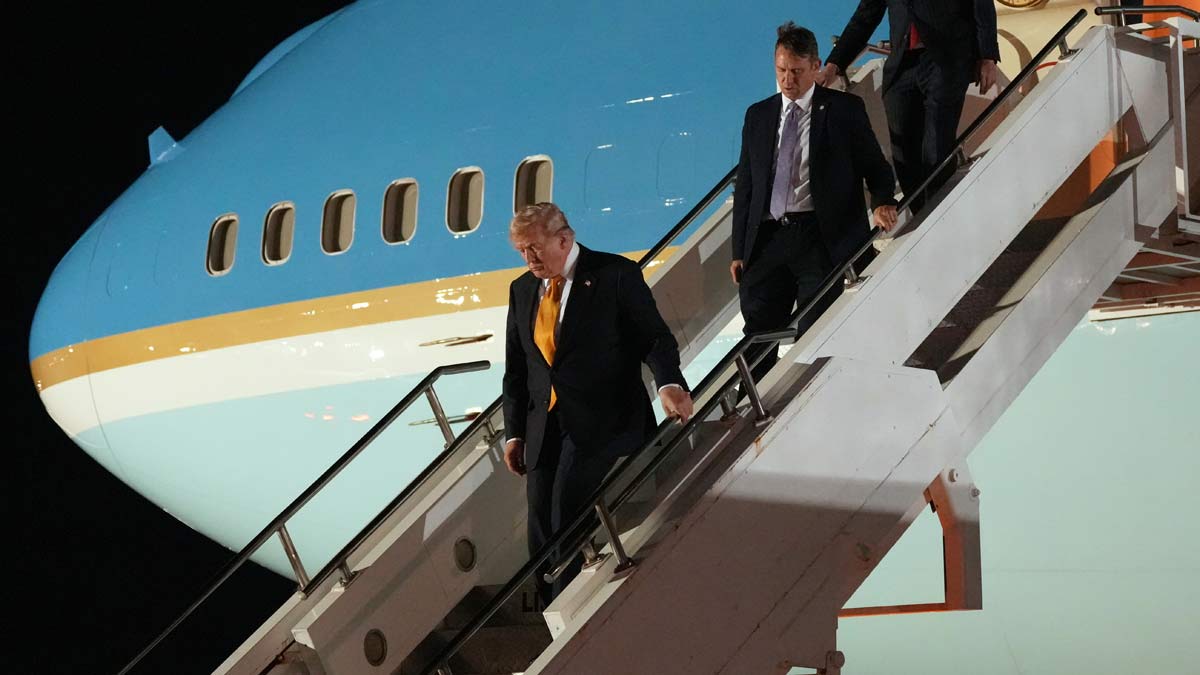
High-stakes state travel under active threat vectors requires a fundamental decoupling of physical presence from visible signaling. When threat intelligence indicates a targeted assassination plot during international engagements, standard executive transport protocols collapse under their own predictability. The recent clandestine exfiltration of United States leadership from Ankara, utilizing a legacy Boeing frame as an electronic and visual decoy while executing a subterranean transfer via a secondary ground vehicle, illustrates the intersection of tactical deception and operational security. This operation exposes the underlying mechanics of modern executive protection, where visibility is actively weaponized to absorb risk away from the high-value asset.
The Mechanics of Structural Deception
Operating an executive transport network under hostile surveillance demands an architecture built on multi-layered obfuscation. Standard diplomatic movements rely on predictable patterns: public arrivals, recognized tail numbers, and transparent press pools. When those patterns are compromised by actionable threat streams, security details must implement real-time asset substitution without tipping off external observers or local intelligence assets.
The Ankara operation relied on a three-phase operational sequence designed to maximize visual confirmation while neutralizing actual tracking data.
- The Public Anchor: The target asset physically boards the primary visible platform in full view of media and ground observers. This satisfies external visual confirmation requirements and fixes the observer's timeline.
- The Internal Transfer Vector: Utilizing non-standard infrastructure—specifically, an elevated airport catering vehicle positioned on the obscured flank of the aircraft—the asset exits the primary cabin unseen. This breaks the line-of-sight continuity required by hostile spotters.
- The Secondary Platform Insertion: The asset transitions to a smaller, tactical military transport frame optimized for electronic discretion, while the original platform functions as an unmanned or staffed decoy bearing the anticipated call sign signature.
[Public Arrival] ---> [Boarding Primary Frame] ---> [Concealed Transfer via Catering Unit] ---> [Secondary C-32A Exfiltration]
                                                               |
                                                               v
                                                    [Decoy Flight Activation]
The Risk Calculus of Platform Substitution
Choosing to substitute transport assets mid-journey introduces distinct operational vulnerabilities that must be weighed against the baseline threat of inaction. The introduction of the Qatar-donated Boeing 747-8 into the presidential fleet created an anomalous variable in standard security baselines. Newer or non-standard airframes often lack the fully integrated, hardened electronic countermeasure suites native to legacy presidential platforms, forcing security command to rely on alternative tactical frameworks.
The cost function of such an operation involves balancing three competing variables:
- Signature Management: Maintaining the illusion that the high-value asset remains on the primary flight path to dilute focused tracking efforts.
- Chain of Custody Control: Restricting knowledge of the actual movement vector to an absolute minimum circle of personnel, thereby minimizing internal intelligence leakage.
- Transfer Vulnerability Window: The precise seconds during which the asset is physically outside a hardened or armored perimeter during the vehicle-to-aircraft or aircraft-to-aircraft transition.
The use of an airport catering truck represents an exercise in utilizing low-value, high-frequency operational traffic as physical camouflage. In a busy military-civilian airfield, service vehicles move continuously without triggering heightened tactical scrutiny from low-level surveillance. By matching the vector of the service vehicle to the geometry of the aircraft door, the detail exploits the blind spots inherent to standard airport architecture.
Counter-Surveillance and Electronic Footprints
Physical camouflage is insufficient if electronic signals betray the asset's true location. Modern threat actors rely on transponder interrogation, cell-site simulators, and satellite tracking to verify target positioning.
During the exfiltration sequence, the decoy platform initially operated without a definitive call sign before assuming the designated presidential identifier mid-flight. This tactical spoofing forces hostile intelligence agencies to allocate monitoring resources across multiple vectors. If an adversary attempts to verify the target through localized communications intercepts or directional radio frequency tracking, the presence of White House staff and the traveling press pool aboard the decoy generation framework ensures that ambient electronic noise mimics a normal operational profile.
The secondary transport vehicle, a C-32A military derivative, offers distinct acoustic and radar cross-section advantages over a massive four-engine jumbo jet. Operating a smaller, highly maneuverable military transport allows for rapid routing changes, non-standard flight levels, and integration into routine military logistics traffic rather than standing out as a unique head-of-state movement.
Systemic Vulnerabilities in Executive Transit
Despite the tactical success of aviation ruses, historical precedents from operations involving high-risk deployments—such as past movements into high-threat regions like Pakistan or active conflict zones—reveal permanent structural limitations in executive protection.
- The Arrival Re-entry Bottleneck: While mid-flight deception protects the transit phase, the arrival phase requires eventual physical manifestation. Reintegrating the asset into a standard public-facing schedule at the destination creates a predictable vulnerability window where security teams must manage local crowds, media pools, and infrastructure constraints.
- Information Compartmentalization Drag: Keeping support staff, security elements, and press pools in the dark protects against operational compromise via intercepted communications, but it simultaneously degrades the situational awareness of peripheral team members who may need to respond to secondary contingencies.
- Platform Dependency: Over-reliance on ad-hoc physical concealment methods highlights gaps in primary asset hardening. When primary transport frames are deemed inadequately secure against specific regional missile or electronic threats, the entire diplomatic itinerary becomes contingent on theatrical evasion tactics.
Security details operating under elevated threat matrices must institutionalize continuous asset rotation and dynamic route planning as standard operating procedure rather than treating them as emergency deviations. The integration of mundane service infrastructure into high-level statecraft underscores a fundamental operational truth: absolute security is achieved not by building impenetrable shields, but by systematically denying the adversary the ability to calculate the vector of the target.


