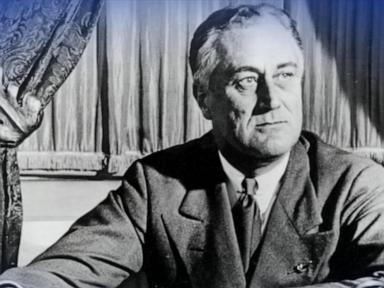
The valuation of a political legacy behaves precisely like corporate brand equity, subject to predictable rates of depreciation, market volatility, and shifting consumer values. When biological descendants or organized kinship networks attempt to steward the public memory of historical figures—such as the lineage of William McKinley or Herbert Hoover—they are not merely engaging in sentimental retrospection. They are executing an informal brand equity preservation strategy. The public memory of a historical leader is a depreciating asset that requires constant reinvestment, defensive PR positioning, and institutional scaffolding to survive macroeconomic and ideological shifts.
The traditional media format treats interviews with presidential descendants as human-interest filler. This approach fails to identify the underlying structural mechanics of institutional preservation. To understand how historical reputations survive, one must analyze the components of what can be defined as Ancestral Capital. This analysis deconstructs the mechanisms of reputation curation, the economic framework of historical depreciation, and the tactical playbook required to maintain relevance in a hyper-fragmented media ecosystem.
The Tripartite Framework of Ancestral Capital
The preservation of a historical legacy relies on three interdependent pillars of capital. When direct descendants or family foundations intervene in the public arena, their efficacy depends on how efficiently they deploy these specific resources.
1. Biological Legitimacy
Biological legitimacy serves as the foundational validation mechanism. It grants immediate, unearned media access and carries inherent human interest. The descendant functions as an living artifact, bridging contemporary audiences to historical eras. This form of capital possesses high initial conversion rates for media engagement but suffers from rapid diminishing returns if unsupported by systemic or intellectual capital.
2. Institutional Scaffolding
Institutional scaffolding comprises physical and bureaucratic infrastructure: presidential libraries, dedicated foundations, university chairs, and geographical monuments (such as the Hoover Institution or the McKinley National Memorial). This infrastructure acts as the primary defense against historical erasure. It provides a permanent base of operations for academic research, archival preservation, and public programming.
3. Historiographical Agility
Historiographical agility represents the capacity of a legacy to adapt to shifting sociological and moral standards. Historical figures are static; modern values are dynamic. If a legacy lacks the elasticity to be reinterpreted through contemporary analytical lenses, it faces immediate cultural obsolescence. For example, Hoover’s legacy must be continually framed around international humanitarian efficiency rather than purely his domestic economic management during the onset of the Great Depression.
The Reputational Depreciation Formula
Without proactive intervention, a leader’s public capital decays over time. This decay is not accidental. It follows a predictable operational curve driven by structural variables. The rate of historical depreciation can be modeled conceptually by analyzing the velocity of specific systemic forces.
$$R_t = R_0 \cdot e^{-\lambda t} \pm \Delta M_t$$
Where:
- $R_t$ represents the Net Reputational Capital at time $t$.
- $R_0$ is the baseline reputational equity at the moment of exit from the public stage.
- $\lambda$ is the Decay Coefficient, determined by historical distance and institutional friction.
- $\Delta M_t$ represents Contemporary Market Shocks (ideological re-evaluations, discovered papers, or modern political crises that mirror past events).
The Decay Coefficient ($\lambda$) is accelerated by three critical bottlenecks.
Structural Obsolescence of Policy Achievements
Policy victories are frequently time-bound. McKinley’s protectionist tariff strategies and adherence to the gold standard served as defining macroeconomic frameworks for the turn of the 20th century. However, as global supply chains shifted toward free-trade agreements and fiat currencies, the operational relevance of his core policy platform eroded. When the technical mechanisms of a president's achievements lose utility for contemporary policymakers, the public memory of those achievements decays.
Compounding Historical Distance
As direct generational links sever, the emotional resonance of an era fades. The transition from active memory to archival text removes the behavioral nuances that humanize historical leaders. The narrative flattens into a single sentence in a high school textbook. For McKinley, this flattening reduces an expansive era of industrial expansion and global foreign policy realignment down to a single event: his 1901 assassination.
The Replacement Rate of Cultural Memory
The modern attention economy operates on a fixed capacity. Every new administration introduces fresh political archetypes, rhetorical strategies, and systemic crises into the public consciousness. This constant influx displaces historical data points. For a historical figure to retain market share within the public consciousness, older information must be aggressively repackaged to compete with modern digital content cycles.
Strategic Re-Positioning Case Studies
Analyzing the specific legacy management strategies of the McKinley and Hoover lineages reveals two distinct operational plays for counteracting reputational decay.
The Hoover Playbook: Humanitarian Pivot Strategy
The primary vulnerability of the Hoover brand is his association with the 1929 financial collapse. Left unmanaged, this association creates a permanent deficit in reputational value. The strategic pivot executed by the Hoover Presidential Foundation and his descendants focuses on decoupling his administrative capability from the domestic economic collapse, instead highlighting his pre- and post-presidential record as a master of global supply chain logistics and famine relief.
By elevating his management of the Commission for Relief in Belgium and his post-WWII European relief efforts, the narrative shifts from a failed domestic economic strategist to a pioneering global humanitarian. This strategy capitalizes on modern institutional values regarding cross-border operational efficiency, technical expertise, and non-partisan crisis management.
The McKinley Playbook: The Modern Anchor Strategy
McKinley’s legacy faces a different challenge: absolute neutrality in the popular imagination. While he presided over the birth of modern American industrial hegemony and the acquisition of overseas territories, his historical profile lacks the dramatic flair of his successor, Theodore Roosevelt.
The McKinley lineage and regional institutions counter this by utilizing a modern anchor strategy. This mechanism ties his historical actions directly to contemporary geopolitical debates surrounding American global engagement and industrial protectionism. By framing McKinley as the architect of the modern executive branch—the president who institutionalized the White House press corps and centralized foreign policy decision-making—they update his relevance from a late-Victorian figure to the first modern chief executive.
The Operational Mechanics of Effective Curation
Family networks and historical societies seeking to optimize the preservation of public capital cannot rely on passive commemoration. They must operate with the tactical precision of a corporate communications firm.
- Audit Archival Assets Digitally: Unprocessed physical letters and internal memos yield zero public value. Legacy managers must prioritize the high-throughput digitization and open-access indexing of personal papers. Providing frictionless access to researchers ensures that the figure remains a viable subject for academic publishing, which serves as the primary feeder mechanism for mainstream historical documentaries and trade books.
- Decouple and Diversify Narratives: Attempting to defend every policy decision or personal flaw creates a brittle public profile. A sophisticated strategy accepts historical errors or outdated perspectives as baseline data points while shifting focus toward secondary narratives that align with modern societal interests. This diversification mitigates the impact of single-topic historical cancellations.
- Construct Shared Legacy Platforms: Isolated efforts by individual family members generate fragmented, low-impact media moments. The establishment of cross-legacy coalitions, such as the Society of Presidential Descendants, pools social capital and institutional resources. This aggregation increases bargaining power with major media networks, educational institutions, and publishing houses, converting isolated family anecdotes into structured cultural programming.
The survival of public memory is ultimately a function of institutional resource allocation. Legacies that rely on the unmanaged drift of popular history will inevitably dissolve under the pressure of shifting cultural priorities and the relentless accumulation of new historical data. Long-term reputational viability belongs exclusively to those organizations that treat historical memory not as a static monument to be protected, but as an active brand equity asset requiring continuous, structured reinvention.