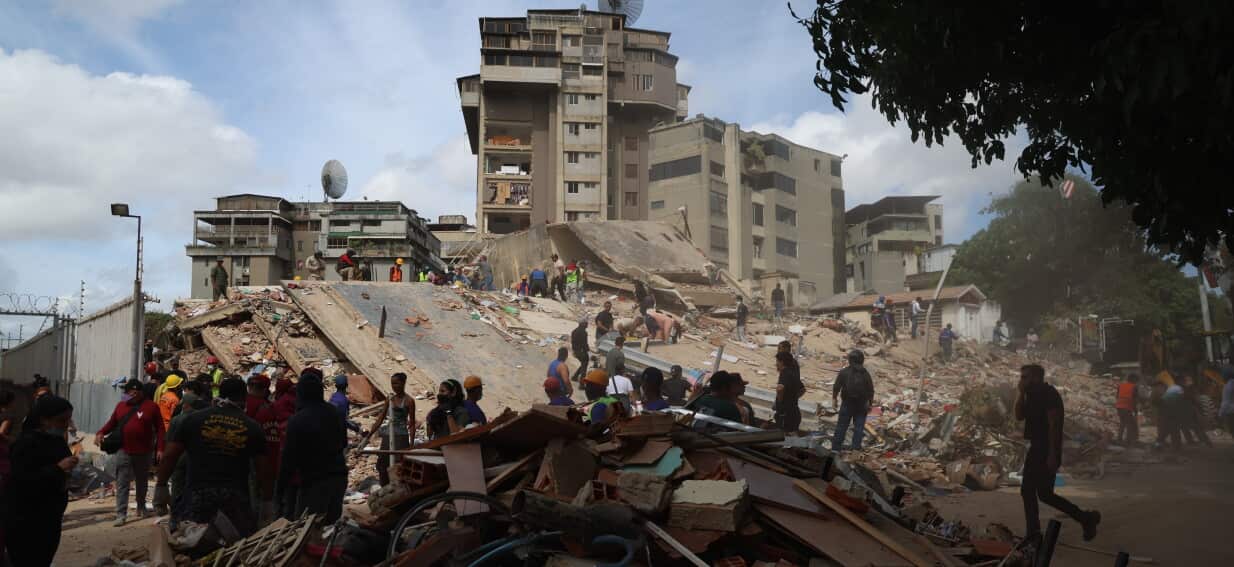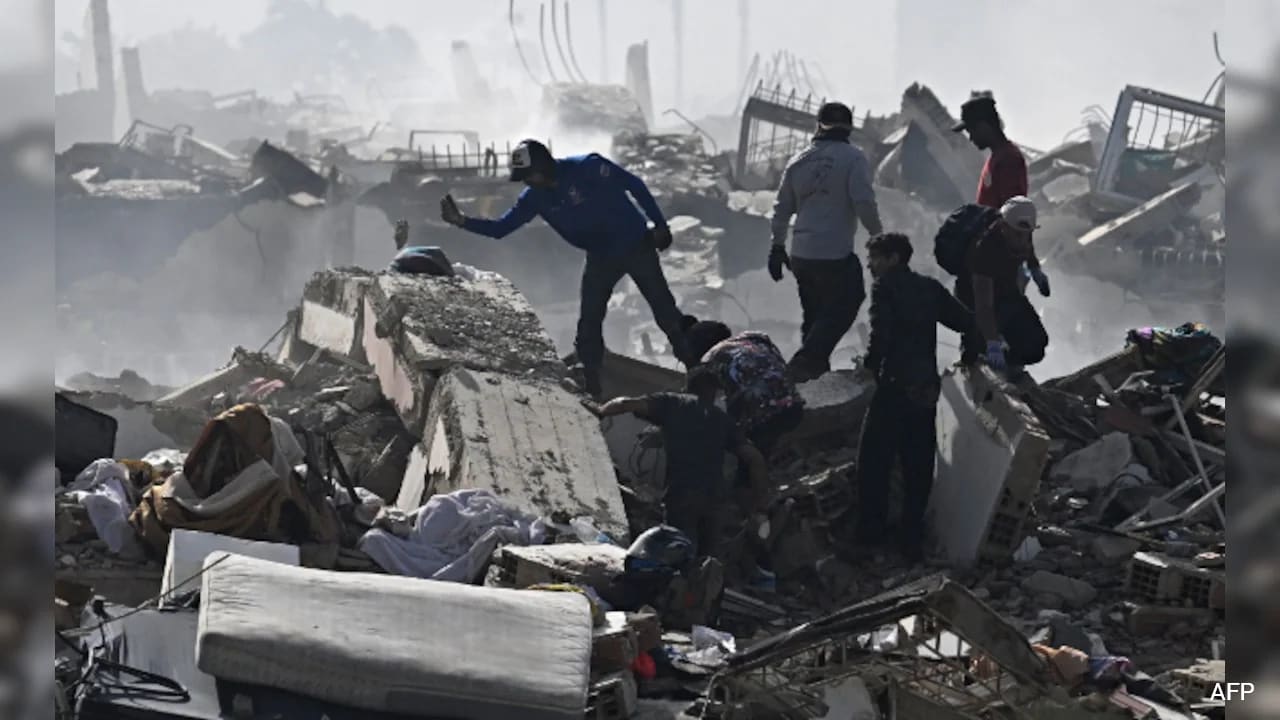
The back-to-back 7.2 and 7.5 magnitude earthquakes that struck northern Venezuela on June 24, 2026, demonstrate a classic cascading failure. When twin, shallow seismic events occur within a 60-second window, the destructive output is not additive; it is logarithmic. The initial 7.2 tremor destabilized structural foundations across the coastal state of La Guaira and the capital city of Caracas. The subsequent 7.5 tremor, originating at a shallow depth of 10 kilometers, encountered already-compromised structures, precipitating immediate structural collapses. With at least 235 confirmed dead, 4,300 injured, and thousands missing, this disaster exposes a stark intersection of complex geophysics, critical infrastructure decay, and international consular friction.
Understanding this crisis requires moving past raw casualty counts and examining the specific operational bottlenecks that are currently stifling rescue efforts and complicating the extraction of foreign nationals. Learn more on a related issue: this related article.
The Mechanics of a Double Seismic Shock
The physical destruction in Venezuela is fundamentally tied to the behavior of shallow crustal faults along the boundary of the South American and Caribbean tectonic plates. The epicenter, located near Morón on the Caribbean coast, experienced what geophysicists classify as an amplified resonance event.
[Fault Rupture 1: 7.2 Magnitude] ──(60-Second Window)──> [Structural Pre-Weakening]
                                                                  │
                                                                  ▼
[Fault Rupture 2: 7.5 Magnitude] ────────────────────────> [Systemic Structural Collapse]
This sequence creates two distinct structural hazards: Additional reporting by Al Jazeera explores related views on this issue.
- Foundation Pre-Weakening: The first shock wave creates micro-fractures in concrete and shears unreinforced masonry. Structures that appear standing immediately after the first minute have already lost their structural shear walls.
- Constructive Interference: When the second, larger shock wave arrives 60 seconds later, the seismic vibrations overlap. The ground acceleration increases exponentially, forcing compromised buildings past their ultimate tensile strength.
The shallow depth of the second epicenter (10 kilometers) meant that the kinetic energy experienced on the surface had minimal crustal dampening. In La Guaira, a high-density coastal zone built on alluvial slopes, this led to immediate soft-story collapses—where the ground floors of buildings pancaked under the weight of the upper levels.
The Three Pillars of Infrastructure Collapse
The high casualty rate is directly correlated with a multi-decade deficit in infrastructure capitalized maintenance and regulatory oversight. The failure of the built environment can be categorized into three distinct operational bottlenecks.
1. Structural Aging and Materials Deficit
A substantial percentage of residential buildings in northern Venezuela lack seismic retrofitting. Due to long-term supply chain constraints, informal housing networks rely on substandard concrete mixes with incorrect sand-to-cement ratios. This reduces the compressive strength of the concrete, making it highly susceptible to the high-frequency ground shaking characteristic of shallow quakes.
2. Immediate Loss of Lifeline Infrastructure
The twin shocks immediately severed the northern electrical grid and disabled cell towers in Caracas and La Guaira. This creates an information vacuum. Search and rescue operations depend on real-time data to locate survivors. Without cellular triangulation or operational networks, emergency teams are forced to rely on manual, sight-based searches, severely slowing response velocity during the critical 72-hour survival window.
3. Logistical Strangling of the Transportation Apex
The closing of Simón Bolívar International Airport in Maiquetía due to structural runway and terminal damage presents the most critical bottleneck. This airport serves as the primary node for heavy international aid, specialized search-and-rescue teams, and foreign consular evacuations.
[Airport Closure] ──> [Disruption of Heavy Air Cargo] ──> [Overreliance on Mountainous Arteries]
Because air cargo cannot land at the primary gateway, international aid must be rerouted to alternative airfields or maritime ports. This forces heavy machinery to navigate compromised, mountainous road arteries that are highly susceptible to secondary landslides triggered by ongoing aftershocks.
Consular Dynamics and the Foreign Victim Matrix
A disaster of this scale in a globalized economic landscape introduces severe consular friction. As confirmed by foreign ministries, the dead include foreign nationals from Brazil, Italy, China, and Portugal. Managing the identification, legal processing, and repatriation of foreign victims under a state of emergency highlights clear operational hurdles.
| Country | Confirmed Fatalities | Primary Consular Vulnerability |
|---|---|---|
| Brazil | 2 | Border-adjacent migration tracking and overland repatriation limits |
| China | 2 | Commercial asset protection zones and language-barrier isolation |
| Italy | 1 (Dual National) | Legal jurisdiction conflicts regarding dual citizenship status |
The presence of dual nationals, such as the Italian-Venezuelan citizen killed in La Guaira, introduces complex legal frameworks. Sovereignty laws dictate that the host country views a dual citizen primarily as its own national during a domestic emergency. This dynamic can limit the speed with which foreign consular teams can intervene, gain access to medical registries, or coordinate independent forensic identification.
Furthermore, diplomatic missions face an acute tracking deficit. Due to the high volume of undocumented or informal residency statuses in the region, the official registries of foreign embassies rarely match the real number of foreign nationals on the ground, creating significant delays in resolving missing person cases.
Strategic Action Matrix for Emergency Response
To optimize rescue efficiency and transition into a structured recovery phase, emergency managers and international partners must pivot from ad-hoc responses to a systematic, resource-allocated strategy.
- Deploy Autonomous Micro-Grids: Immediate deployment of satellite-linked, solar-powered communication hubs must take priority over broad grid restoration. These hubs establish localized cellular bubbles for rescue teams, bypassing the destroyed regional infrastructure.
- Establish a Secondary Air-Bridge: With Simón Bolívar International Airport compromised, logistics coordinators must immediately designate and clear secondary regional airfields or optimize military bases capable of handling heavy cargo aircraft like C-130s.
- Formalize Sanctions-Exemption Frameworks: Leveraging the US Treasury’s temporary waiver of specific financial sanctions, international banking compliance departments must deploy pre-vetted escrow channels. This ensures that reconstruction funds—including the proposed $200 million domestic fund—can process transactions for heavy machinery and medical imports without hitting compliance blocks.
- Standardize Consular Data Sharing: Foreign embassies must unify their missing person registries into a centralized, cryptographic database accessible by the Venezuelan civil defense teams. This eliminates redundant tracking and accelerates the legal verification process for deceased foreign nationals.
The immediate priority relies entirely on the structural clearance of land corridors linking maritime ports to the urban centers. Until heavy earth-moving equipment can bypass the landslide-blocked arteries of La Guaira, the rescue operation will remain heavily constrained by manual labor limits, directly impacting the survivability rate of those still trapped beneath the debris.