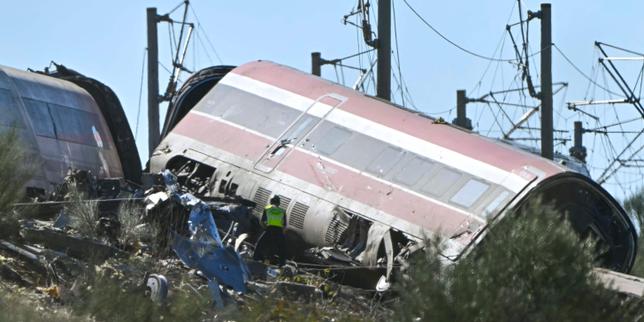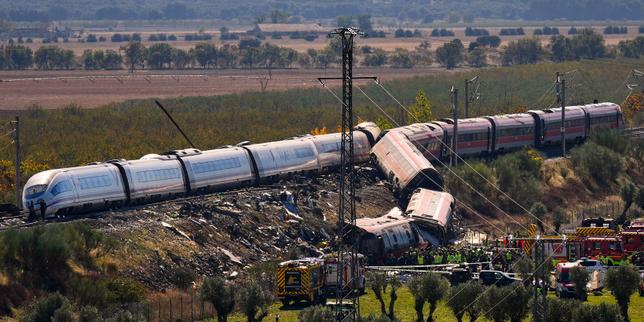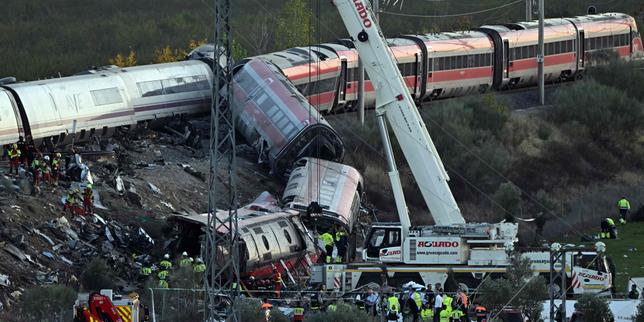
Every rail collision on a modern European network represents a multi-layered breakdown of physical block-sectioning, automated braking interlocks, and human-machine interface protocols. When two trains occupy the same segment of Spanish track simultaneously, the event is never a singular mechanical fluke; it is the terminal output of cascading operational failures across signaling architecture, dispatch communication, and kinetic energy management.
Standard media coverage of rail incidents in Spain—typified by surface-level video recaps of wreckage and emergency response—obscures the engineering realities governing railway safety. Visual documentation of derailed rolling stock captures only the final millisecond of a failure chain that typically initiates minutes or hours earlier in the interlocking logic or dispatch terminal. To evaluate any Spanish rail collision accurately, one must separate the immediate physical impact from the underlying control-system vulnerabilities across the Red Ferroviaria de Interés General (RFIG), managed by the state infrastructure administrator, Adif. You might also find this related story useful: When Steel Meets Silence on the Spanish Tracks.
The Structural Architecture of Rail Separation
Railway safety relies on a foundational principle: two masses cannot occupy the same spatial block at the same time, and the braking distance of a heavy rail consist almost always exceeds the operator's line of sight. Unlike road transport, where operators steer to avoid obstacles and stop within visual range, rail transport depends entirely on pre-allocated spatial intervals enforced by infrastructure signaling.
In Spain, track separation operates through three distinct technological tiers, each carrying specific failure modes and human-dependency ratios: As reported in detailed reports by The Washington Post, the effects are significant.
- European Rail Traffic Management System (ERTMS / ETCS Level 1 and 2): Deployed primarily on high-speed Alta Velocidad Española (AVE) corridors and upgraded commuter trunks. ETCS continuously calculates a dynamic braking curve based on train mass, gradient, and target speed. If an operator exceeds the permitted velocity profile, the onboard computer intervenes automatically to trigger emergency braking without human input.
- ASFA Digital (Anuncio de Señales y Frenado Automático): The legacy national train protection system governing the vast majority of Spain's conventional Iberian-gauge network and commuter lines (Cercanías / Rodalies). ASFA uses track-mounted balises (beacons) to transmit discrete aspect states (green, yellow, red) to the cab at fixed points. Unlike continuous ETCS supervision, ASFA operates on spot-transmission logic; between balises, the system relies on driver compliance with speed reductions until the next beacon is crossed.
- Telephone Block and Manual Dispatch Protocols (Bloqueo Telefónico): Used as a degraded-mode fallback when track circuits fail, during infrastructure maintenance windows, or on low-density regional lines. Under manual block rules, station masters and centralized traffic control (CTC) operators authorize movement via voice communication and written or electronic dispatch orders, temporarily bypassing automated track-circuit interlocking.
The Four-Stage Failure Cascade in Train Collisions
A collision between two trains requires the simultaneous defeat of multiple independent defense barriers, a dynamic formalized in James Reason’s Swiss Cheese Model of accident causation. When analyzing a Spanish rail crash—whether a rear-end impact on a commuter corridor or a head-on convergence on a single-track line—the causal sequence follows four distinct operational phases.
Phase 1: Loss of Spatial Exclusivity
The primary failure occurs when the interlocking system or human dispatcher permits a second train to enter an occupied block section. On automated tracks, track circuits or axle counters detect the presence of a train by measuring electrical continuity across the rails or counting wheelsets entering and exiting a zone.
False clear indications—though statistically rare—occur when railhead contamination (such as rust, leaves, or grease) insulates the wheels from completing the electrical circuit, causing the interlocking logic to register an occupied track as vacant. More frequently, spatial exclusivity is breached during degraded operations: when a signal malfunctions and displays a restrictive red aspect, dispatchers must issue a formal authorization (rebase autorizado) allowing the driver to pass the signal at danger under strict speed limits (typically 30 km/h) while maintaining visual vigilance.
Phase 2: Detection Latency and Braking Curve Deficit
Once two trains are routed onto conflicting paths or into the same block, the outcome is dictated by kinetic physics rather than regulatory procedure. A standard commuter electric multiple unit (EMU) weighing 200 metric tons traveling at 100 km/h possesses roughly 77 megajoules of kinetic energy. Under dry rail conditions, maximum service braking decelerates the train at approximately $1.0 \text{ m/s}^2$, requiring nearly 385 meters to reach a complete stop—excluding system reaction time.
If the incident occurs on an ASFA-equipped line rather than an ETCS Level 2 corridor, detection latency increases sharply. Because ASFA only checks compliance at discrete balise locations, a driver who misinterprets a restrictive aspect or suffers a momentary lapse in attention after passing a yellow warning beacon may not trigger an emergency brake intervention until passing the red signal balise itself. By that point, the remaining overlap distance (distancia de deslizamiento) beyond the signal is frequently shorter than the train's physical stopping distance.
Phase 3: Degraded Mode Normalization
Operational audits of European rail incidents consistently identify a recurring organizational vulnerability: the normalization of degraded-mode procedures. Infrastructure upgrades, signal modernizations, and weather-induced track circuit faults routinely force rail networks out of fully automated protection and into human-monitored fallback states.
When dispatchers and drivers execute signal-pass authorizations daily due to recurring infrastructure maintenance, cognitive vigilance degrades. The procedural safeguard—driving on sight at reduced speed—becomes routine rather than exceptional. Under high-density commuter schedules, pressure to minimize cascading delays across the network creates subtle operational incentives to clear bottlenecks rapidly, compressing the margin for verification between the centralized control center and the cab.
Phase 4: Structural Crashworthiness and Energy Dissipation
When braking fails to prevent contact, the survivability of passengers depends on the structural mechanics of the rolling stock. Modern European rail vehicles manufactured under EN 15227 crashworthiness standards incorporate sacrificial crumple zones, anti-climbers, and energy-absorbing couplers designed to deform predictably and prevent one carriage from overriding (telescoping) into the passenger compartment of another.
Older rolling stock still active on regional or secondary routes lacks progressive deformation zones. In a low-speed collision (under 40 km/h) between modern EMUs, structural deformation remains largely confined to the cab ends and coupler assemblies, resulting in non-fatal trauma from secondary impacts inside the cabin. Conversely, if an impact occurs at main-line speeds or involves legacy fleet units without anti-climbing ribs, vertical override occurs, transferring catastrophic structural loads directly into occupied passenger spaces.
Analytical Matrix: Differentiating Known Facts from Investigative Hypotheses
In the immediate aftermath of a Spanish rail collision, public reporting conflates confirmed physical evidence with preliminary operational theories. Rigorous post-incident analysis requires separating verified telemetry from hypotheses awaiting forensic extraction by the Comisión de Investigación de Accidentes Ferroviarios (CIAF).
- Confirmed Telemetry (The Hard Data): Every modern Spanish train carries an event recorder (registrador jurídico, analogous to a black box) logging speed, throttle position, brake pipe pressure, horn activation, and ASFA/ETCS balise telegrams at millisecond intervals. Simultaneously, Adif’s Centralized Traffic Control servers log every signal aspect change, switch point position, and dispatcher keystroke. These two datasets establish the exact physical timeline within hours of recovery.
- Human-Factor Hypotheses (Requires Forensic Audio/Interviews): Whether a driver experienced cognitive overload, missed a visual aspect due to sun glare, or misheard a dispatch authorization cannot be deduced from track geometry alone. Determining human performance requires synchronizing cab voice recordings (GSM-R radio logs) with physiological and shift-schedule audits.
- Infrastructure Maintenance Hypotheses (Requires Physical Inspection): Suspicions regarding faulty axle counters, degraded ballast drainage causing track circuit short-circuits, or improper wiring during recent maintenance windows require physical bench-testing of the field equipment before causal weight can be assigned.
Operational Limitations of Current Rail Safety Frameworks
No signaling architecture eliminates collision risk entirely; each system shifts the vulnerability profile from one operational domain to another.
- The Transition-Zone Vulnerability: Spain’s rail network features numerous interfaces where high-speed ETCS lines transition onto conventional ASFA tracks, or where upgraded digital interlocking meets legacy relay-based hardware. These boundary zones require drivers to switch cognitive frameworks and operational rulebooks mid-journey, creating elevated error probabilities compared to uniform corridors.
- The Visual-Rule Paradox: When automated systems fail, rail protocols revert to "marcha a la vista" (driving on sight), requiring the driver to regulate speed so they can stop before any obstacle. Yet track curvature, tunnels, overhead catenary masts, and low-visibility weather frequently restrict sightlines to less than 150 meters. Relying on human visual detection in environments engineered for automated block control introduces an inherent mismatch between physical geometry and human perception.
- Data Silos Between Infrastructure and Operators: Following the liberalization of the Spanish rail market—introducing private operators alongside state incumbent Renfe—incident prevention depends on seamless data sharing between Adif (infrastructure) and multiple rolling-stock operators. When near-miss events (such as Signals Passed at Danger, or SPADs) are logged internally by individual operators without real-time cross-platform trend analysis, systemic hot-spots on specific track segments remain unaddressed until a physical collision occurs.
Strategic Imperatives for Rail Risk Mitigation
Reducing collision probability on mixed-traffic rail networks requires shifting capital and procedural focus away from post-accident emergency response and toward eliminating degraded-mode exposure.
- Mandatory ETCS Level 2 Overlay on High-Density Commuter Trunks: Infrastructure authorities must prioritize eliminating spot-transmission ASFA dependencies on high-frequency commuter corridors where train headways drop below four minutes. Continuous speed supervision removes the single-point human failure window between trackside balises.
- Automated Telemetry Auditing for Near-Miss Events: Rail operators and infrastructure managers should deploy automated analytics across event-recorder downloads to flag every uncommanded braking event, late acknowledgment of yellow aspects, and authorized signal pass. Treating high-frequency rebase autorizado zones as critical infrastructure defects—rather than routine operational workarounds—forces targeted maintenance before a signaling fault intersects with human error.
- Hard-Coded Speed Enforcement During Degraded Modes: Rather than relying solely on verbal dispatch instructions when a track circuit fails, onboard train computers must enforce hard electronic speed caps (e.g., 20 km/h) whenever an operator inputs a manual signal-pass override, ensuring that even if a collision occurs due to human misjudgment, the kinetic energy remains well within the structural absorption limits of modern crashworthy rolling stock.