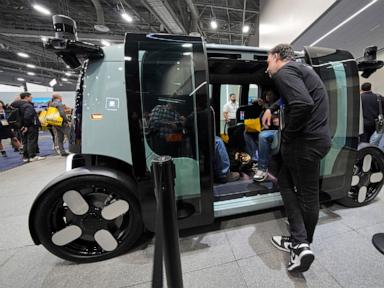
Removing the steering wheel and brake pedal from a production motor vehicle is not an incremental engineering adjustment; it is a structural redesign of the vehicular cost function. Regulatory approvals for vehicles devoid of manual driver interfaces signal a transition from human-fallback architectures to deterministic autonomy. This shift eliminates the dual-control redundancy that has defined automotive engineering since its inception. To understand why regulators are clearing vehicles without mechanical overrides, one must examine the economic pressures of fleet management, the failure modes of human-fallback systems, and the strict engineering criteria required to replace a mechanical pedal with redundant electronic actuators.
The economic imperative driving the removal of manual controls stems from two primary variables: unit production cost and interior spatial utility. In a human-operated vehicle, the cockpit requires a fixed volume dedicated to steering shafts, pedal boxes, instrumentation clusters, and collapsible safety columns. Removing these components reduces assembly line complexity and eliminates several hundred mechanical parts subject to wear, thermal fatigue, and calibration drift. For commercial ride-hail operators, a cabin stripped of driver controls unlocks alternative spatial configurations. Passengers gain legroom, luggage capacity, or modified seating arrangements tailored for shared mobility.
However, transitioning to a zero-control cabin shifts the entire safety burden onto the automated driving system. When a vehicle retains a steering wheel, the machine assumes responsibility for navigation while the human operator serves as the ultimate safety net. This dual-ownership model introduces a critical behavioral failure mode: automation complacency. Human drivers fail to maintain situational awareness when monitoring automated systems over long durations. When an edge case arises requiring immediate intervention, the transition time from passive observer to active driver exceeds human reaction thresholds. Eliminating the steering wheel resolves this ambiguity by legally and operationally removing the human from the control loop. The machine assumes 100 percent of the operational design domain liability.
Replacing a mechanical brake pedal with a fully electronic architecture requires a transition from physical linkage to fault-tolerant actuation. In a standard braking setup, hydraulic pressure is generated via a master cylinder linked directly to the driver's foot. Autonomous systems substitute this mechanical input with drive-by-wire electromechanical actuators. To achieve the reliability levels mandated by safety authorities for wheel-less operation, these electronic braking systems must incorporate deep redundancy. If primary electrical power fails, a secondary power source must immediately energize the braking actuators. If the primary electronic control unit suffers a fatal error, a secondary computing channel must assume command within milliseconds.
This requirement for fail-operational design extends across all primary vehicle subsystems: steering, braking, power distribution, and perception computing. Traditional vehicles rely on single-point systems because a human driver can compensate for a stalled engine or a failed power steering pump by muscling the steering wheel or applying emergency mechanical parking brakes. Without a steering wheel or brake pedal, the vehicle cannot rely on human muscle power as a backup energy source. Every critical actuator must be mirrored by an independent secondary system capable of bringing the vehicle to a safe stop within its current lane or at the road shoulder.
The regulatory framework governing these vehicles relies on exemption processes rather than standardized mass-market homologation. Federal motor vehicle safety standards were drafted decades ago with the explicit assumption that a licensed human driver would be present to interpret traffic laws and execute dynamic driving tasks. When a manufacturer petitions for an exemption to deploy vehicles without steering wheels, safety agencies evaluate the petition against performance-equivalent safety metrics. The manufacturer must prove that the automated system's statistical probability of a catastrophic failure is lower than the average fatality rate of human-driven fleets over equivalent operating miles.
Achieving this statistical threshold requires moving beyond heuristic software design toward formal verification and validation methodologies. Machine learning models trained on vast datasets are susceptible to corner cases—rare, unexpected environmental conditions that do not appear in training distributions. Because deep neural networks are probabilistic, safety cases for driverless vehicles cannot rely solely on empirical road testing. Millions or billions of miles driven in simulation are necessary to stress-test the autonomy stack against rare weather events, erratic pedestrian behavior, and infrastructure degradation. The removal of the manual override means the software cannot falter; there is no human safety valve to catch a misclassified object or a phantom braking event.
The operational design domain dictates where these vehicles can function without physical controls. Urban environments with high pedestrian density, unpredictable construction zones, and erratic traffic signaling present vastly different hazard profiles than controlled freeway corridors or geofenced suburban grids. Operators restrict zero-control vehicles to specific geographic boundaries where the operational design domain has been mapped to centimeter-level accuracy. High-definition maps provide pre-recorded structural data regarding lane widths, curb heights, and traffic light locations, allowing the vehicle to localize itself through sensor fusion rather than relying solely on real-time perception.
Sensor suite redundancy mirrors the actuator redundancy of the vehicle. Autonomous platforms utilize overlapping modalities—typically a combination of long-range lidar, radar, and high-resolution cameras. Each sensor type possesses distinct operational blind spots and environmental vulnerabilities. Cameras degrade in heavy precipitation, direct glare, and low-light conditions. Lidar struggles with dense fog, heavy snowfall, and airborne particulate matter, though it excels at precise depth measurement. Radar penetrates adverse weather but offers lower angular resolution. By fusing these disparate data streams, the perception system maintains high-confidence object tracking even when one sensor modality experiences performance degradation.
The supply chain economics of building vehicles without driver controls are reshaping the automotive manufacturing paradigm. Traditional automakers operate on high-volume production lines optimized for universal human interfaces. Tier-one suppliers develop standardized steering columns, pedal assemblies, and dashboard modules across multiple vehicle platforms. Autonomous fleet developers, conversely, are commissioning custom-built electric vehicle platforms designed explicitly for modular passenger compartments. These purpose-built pods prioritize durability, ease of interior sanitization, and low maintenance overhead over aesthetic customization.
Maintenance protocols for steering-wheel-free vehicles diverge sharply from consumer automotive service models. Without mechanical wear points like steering racks, mechanical linkages, and pedal pivots, mechanical service intervals extend significantly. Maintenance operations focus primarily on sensor calibration, computing hardware diagnostics, electromechanical actuator wear, and tire replacement. Fleets rely on remote teleoperation centers to handle edge cases where the vehicle requests external guidance—such as navigating an unmapped construction detour or a blocked roadway. Teleoperation does not involve remote steering via a joystick; rather, it consists of high-level path authorization, where the remote operator approves a proposed trajectory calculated by the vehicle's onboard safety planner.
The transition from human-driven automobiles to autonomous pods without manual controls represents a permanent shift in liability allocation. As automakers and fleet operators assume direct legal and financial responsibility for the dynamic driving task, the insurance model transforms from retail consumer policies to enterprise commercial liability underwriting. Insurers evaluate risk based on fleet telemetry, software update verification records, and operational design domain compliance. Vehicles that eliminate the steering wheel and brake pedal are fundamentally transforming the cost structure of personal mobility by replacing variable labor and high-maintenance mechanical interfaces with centralized software validation and redundant electronic hardware.
Deploy dedicated capital expenditure toward custom, purpose-built electric chassis featuring dual-redundant electromechanical braking and steering loops, completely bypassing traditional tier-one steering column supply chains. Restrict initial commercial deployment strictly to geofenced urban corridors with pre-validated high-definition maps, leveraging multi-modal sensor fusion to ensure zero reliance on human fallback interventions.