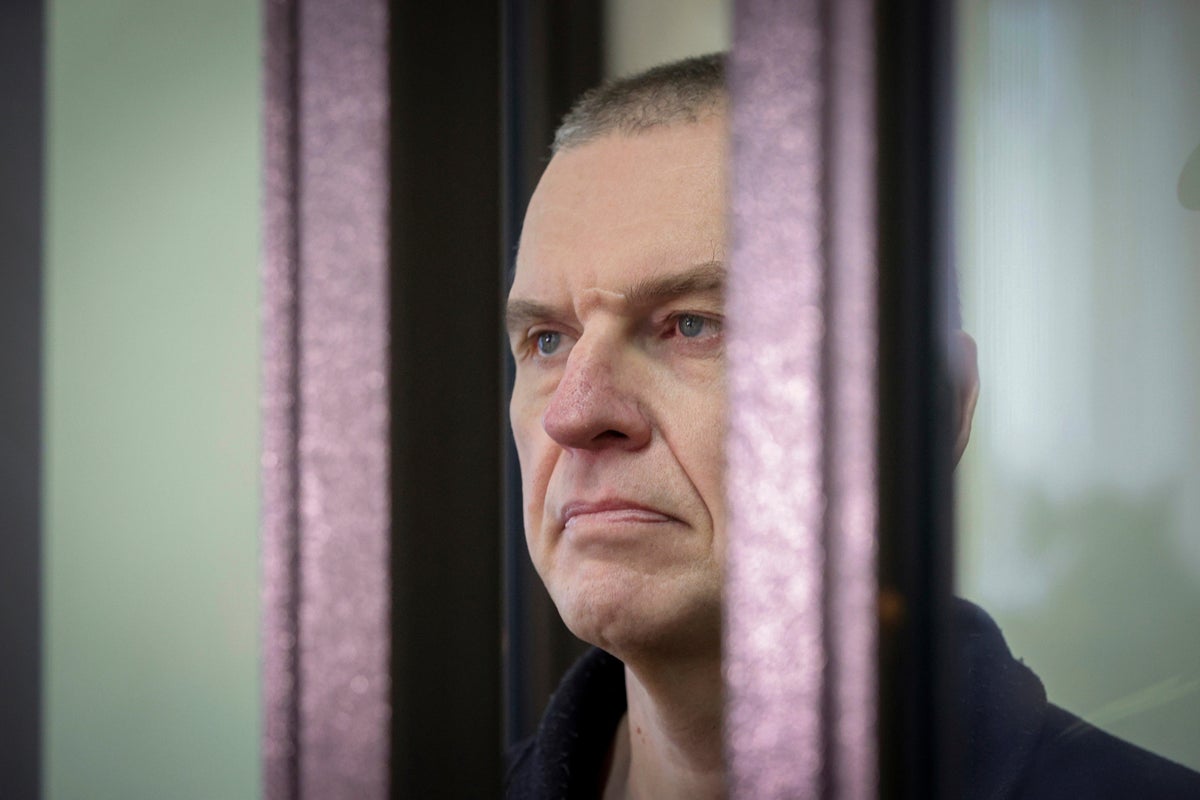
The headlines are predictable. They speak of "justice," "diplomatic breakthroughs," and "the end of a nightmare." The mainstream narrative frames the release of Andrzej Poczobut in a prisoner swap as a triumph of Western values over a stubborn dictatorship.
It isn't.
If you view this exchange through the lens of humanitarian success, you are missing the brutal mechanics of 21st-century statecraft. This wasn't a rescue. It was a transaction. By treating the freedom of a high-profile journalist as a win, we are validating a business model that encourages authoritarian regimes to snatch up more hostages.
The Journalist as Sovereign Currency
For years, the Polish government and various international bodies treated the Poczobut case as a moral crusade. They focused on his health, his refusal to sign a pardon request, and the blatant absurdity of his "inciting ethnic hatred" charges.
But Aleksandr Lukashenko does not care about your moral crusade. He cares about leverage.
In the cold logic of Minsk, Poczobut was never a prisoner; he was an asset on a balance sheet. When the West treats these swaps as a "release," they ignore the fact that the price of the trade often involves the return of actual criminals—spies, assassins, or money launderers—who were caught fair and square.
We are trading pawns for queens and calling it a draw. Every time a high-profile journalist is swapped, the market value of a foreign passport in a conflict zone goes up. We aren't making the world safer for reporters; we are making them more lucrative targets for state-sponsored kidnapping.
The Myth of the Diplomatic Breakthrough
The "lazy consensus" suggests that this swap signals a thawing of relations or a moment where the regime finally blinked. That is a fantasy.
Lukashenko doesn't blink; he liquidates.
When a regime frees a political prisoner like Poczobut, it is rarely because of international pressure. It is because the prisoner’s utility as a bargaining chip has peaked. If they stay in prison and die, the asset is lost. If they are traded, the regime gets something tangible—perhaps the easing of a specific border restriction, the return of a sleeper agent, or simply a temporary reprieve from a new round of sanctions.
Consider the timing. These swaps happen when the regime needs a pressure valve. By participating, the West provides that valve. We allow the "last dictator in Europe" to set the terms of engagement. We are playing a game where the house always wins because the house owns the jail.
The Cost of Humanitarian Exceptions
There is a hard truth that human rights organizations hate to admit: exceptions kill the rule.
When we create a "special case" for a journalist or a high-profile activist, we signal to every other political prisoner in Belarus—the thousands of nameless people currently rotting in Penal Colony No. 1 or No. 3—that they are worth less.
If you aren't a member of the Union of Poles in Belarus, and if you don't have the weight of the Polish state apparatus screaming for your release, you stay in the cell. The Poczobut swap doesn't weaken the Belarusian prison system; it reinforces its hierarchy. It tells the regime exactly which type of person they need to arrest if they want to get the West back to the negotiating table.
Dismantling the "Press Freedom" Narrative
Organizations like Reporters Without Borders will celebrate this. They have to. It’s their job to get people out. But we need to be honest about the fallout.
Calling this a "victory for press freedom" is a linguistic sleight of hand. Press freedom is the ability to report without being arrested in the first place. A prisoner swap is just a high-stakes human trafficking operation conducted by governments.
By celebrating the swap, we are essentially saying: "It is okay to kidnap our people, as long as you eventually give them back in exchange for a favor."
Is that the world we want?
The Intelligence Asymmetry
Look at what the West gives up in these "victorious" trades. Often, it's people who have spent years infiltrating Western systems.
Imagine a scenario where a Western democracy spends a decade and millions of dollars to flip or catch a deep-cover operative. That operative represents a massive investment in national security and counter-intelligence. When we trade that person for a journalist whose only "crime" was writing the truth, we are telling our own intelligence services that their work is a disposable commodity.
The regime gets back a professional who can be put back to work. We get back a traumatized writer who will likely live the rest of his life in exile. On paper, it’s one-for-one. In reality, the strategic deficit is staggering.
Why the "People Also Ask" Answers Are Wrong
People often ask: "Does this mean things are getting better in Belarus?"
The answer is a resounding no. Arrests are continuing at a steady clip. The "revolving door" of the Belarusian prison system is well-oiled. For every Poczobut who crosses the border to freedom, five more activists disappear into the system.
People also ask: "Why can't we just use sanctions instead of swaps?"
Because sanctions are a slow-acting poison, and the political cycle demands immediate results. A prisoner swap is a "photo-op" event. It provides a quick hit of dopamine for a government’s domestic base. Sanctions require a decade of discipline that most modern democracies no longer possess.
The Professional Price of Moral High Ground
I have seen this cycle play out in multiple theaters—from Russia to Iran to Venezuela. The playbook is always the same.
- Arrest a foreigner on "espionage" or "inciting hatred" charges.
- Wait for the Western media to build a narrative around the prisoner.
- Use that media pressure to force the Western government to "do something."
- Trade the prisoner for a high-value asset the West didn't want to lose.
If we want to stop this, we have to do the unthinkable: stop the trades.
We have to accept the grim reality that some people will remain in prison. It sounds heartless. It feels cruel. But the moment you engage in the trade, you are financing the next kidnapping. You are providing the liquidity for a market that thrives on human suffering.
The Poczobut release isn't a sign that the West is strong. It’s a sign that we are predictable. We are so committed to our individualistic "save the one" morality that we are willing to sacrifice the collective security of the "many."
Lukashenko knows this. Putin knows this. They are counting on our empathy to undermine our strategy.
Stop calling it a rescue. Call it what it is: a ransom payment. And in the world of geopolitics, once you pay the ransom, the price only goes up.
Stop cheering for the swap and start looking at the vacant cells that are already being prepared for the next set of "assets."
The trade is a trap.