For years, talking about Russian interference in the 2016 Brexit referendum felt like shouting into a void of official denial and institutional foot-dragging. We had intelligence committee reports gathering dust, anonymous security whistleblowers raising alarms, and a political class desperate to sweep the whole mess under the rug. Nobody at the very top was willing to say the quiet part out loud.
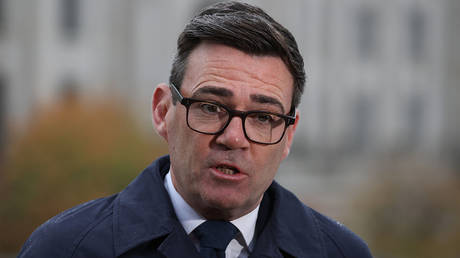
Then British Prime Minister Andy Burnham stepped up and broke the taboo.
By explicitly stating that Russia clearly interfered in the EU referendum—and labeling Moscow an outright enemy—Burnham did something no sitting UK leader had done before. He shattered the diplomatic fiction that kept us pretending our democratic infrastructure was bulletproof. But beyond the immediate shockwave of a prime minister pointing the finger, we need to look at what this actually means for the country, how we got here, and why the fallout is going to ripple across European politics for years.
The Reality Behind Closed Doors
When Burnham mentioned that he received a clear answer upon entering Number 10, it wasn't just a throwaway political line. It exposed the stark gap between what intelligence briefings tell incoming leaders behind closed doors and what governments are willing to admit publicly. For a decade, politicians hid behind carefully worded nuances. They admitted foreign actors tried to sow discord, but they always stopped short of connecting the dots to the actual outcome of the vote.
Why? Because acknowledging that a hostile foreign power successfully manipulated a foundational democratic vote opens up an administrative nightmare. If the vote was tainted, what comes next? Does it invalidate history? Does it force a radical rethink of national sovereignty?
Governments hate questions with expensive, messy answers. So they choose denial. Burnham’s decision to drop the diplomatic pleasantries changes the calculus. When a sitting prime minister calls out state-sponsored subversion without hedging, the era of plausible deniability officially ends.
Moving Past the Denial Phase
We have spent far too much time arguing over whether online bots and dark-money funding operations actually sway elections. Of course they do. Modern information warfare isn't about hacking voting machines; it's about hacking public perception. It is about amplifying existing social fractures until a country breaks apart from the inside.
Russia didn't need to change a single ballot paper in 2016. They just needed to amplify the most toxic narratives, flood social feeds with targeted polarization, and watch the UK tear itself apart over immigration, sovereignty, and identity.
And the playbook didn't stop at Britain. Look at the broader European landscape. The exact same tactics have been deployed across France, Germany, and Eastern Europe. Yet, Western leaders kept treating each incident as an isolated anomaly rather than a coordinated, continuous campaign against democratic stability. Burnham labeling Russia an enemy signals a much-needed shift toward calling things by their proper names. You cannot defend yourself against a threat if you refuse to identify it.
The Domestic Fallout and Accountability
Admitting the problem is only step one. The harder question is what the UK government plans to do about the vulnerabilities that allowed this meddling to succeed in the first place.
Our campaign finance laws are still riddled with loopholes. Foreign donations can still find their way into political circles through opaque corporate structures and shell companies. Social media algorithms remain fundamentally optimized for outrage, making them weaponizable terrain for any foreign intelligence agency with a few servers and a troll farm.
If Burnham's administration is serious about confronting this threat, words in front of a camera aren't enough. We need aggressive legislative overhaul. That means transparency on political funding, strict accountability for tech platforms hosting political ads, and a complete overhaul of how counter-intelligence agencies track illicit influence operations.
Facing Up to Modern Security Realities
The geopolitical landscape has shifted beneath our feet, and pretending we live in a peaceful, rule-bound status quo is a luxury we no longer have. National security isn't just about aircraft carriers and nuclear deterrents anymore. It is about protecting the integrity of the national conversation.
When foreign actors can manipulate a population into voting against its own long-term economic and geopolitical interests, physical borders cease to matter. We are fighting a war on perception, and for a long time, we were fighting with our hands tied behind our backs by our own political cowardice.
The silence has finally broken. Now comes the hard part of fixing the damage and building an immune system robust enough to survive the next wave of digital aggression.