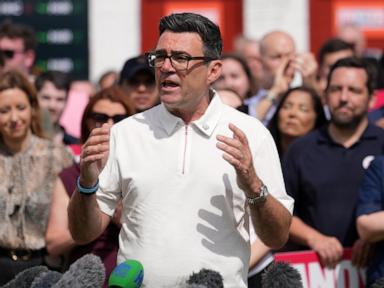
Keir Starmer’s time is running out. The results from the Makerfield by-election aren't just bad for the sitting Prime Minister. They are terminal. By winning a massive 55% of the vote in a working-class northern seat, Greater Manchester Mayor Andy Burnham has officially punched his ticket back to Westminster. He didn't just win a seat. He launched a full-blown coup.
For months, the rumors swirled. Westminster insiders whispered about a coordinated effort to get the man nicknamed the King of the North back into Parliament. Then, Josh Simons stepped aside, triggering a high-stakes special election in a former coal-mining district just outside Wigan. Burnham jumped at the chance. On Friday morning, the final tally confirmed what everyone already suspected. The public wants a change, and they want Burnham to lead it.
You have to look at the raw anger driving British politics right now to understand why this matters. Starmer led Labour to a massive majority just two years ago, but his popularity has cratered. People feel ignored. They feel like the promises of economic renewal were hollow. Burnham tapped directly into that frustration. He didn't run a standard, defensive campaign. He ran against his own party leader's record. That is a bold move. It paid off handsomely.
The Math That Makes Starmer Defenceless
Let's look at the actual numbers because they tell a devastating story for the current Downing Street team. Burnham captured 24,927 votes. His closest challenger, Robert Kenyon of the populist, anti-immigration party Reform UK, finished a distant second with 15,696 votes. Rebecca Shepherd from the hard-right Restore Britain party took a meager 3,111 votes.
- Andy Burnham (Labour): 24,927 votes (54.8%)
- Robert Kenyon (Reform UK): 15,696 votes (34.5%)
- Rebecca Shepherd (Restore Britain): 3,111 votes (6.8%)
- Michael Winstanley (Conservative): Lost deposit
- Sarah Wakefield (Green): Lost deposit
- Jake Austin (Liberal Democrat): Lost deposit
Turnout hit an astonishing 58.7%. That is incredibly high for a standalone by-election. Usually, voters stay home during these off-cycle contests. This time, they turned out en masse because they knew exactly what was at stake. This wasn't a vote about local bin collections. It was a de facto national referendum on who should run the country.
What should terrify Downing Street is how Burnham utterly dismantled the populist threat. Reform UK has been eating Labour's lunch in traditional heartlands for the last two years. Nigel Farage's machine thought they had a real shot at causing an upset in Makerfield. Instead, Burnham won more votes than Reform and Restore Britain combined. He proved that a specific type of northern, working-class politics can stop the right-wing populist wave dead in its tracks.
The political commentators who insisted that the hard right would sweep post-industrial Britain got it completely wrong. They failed to realize that voters didn't necessarily want Farage's brand of division. They just wanted someone who sounded like a normal human being instead of a corporate lawyer. Burnham gave them that choice.
How the King of the North Rewrote the Playbook
Most politicians who lose a leadership race fade into the background. They take corporate board seats or write dull memoirs. Burnham did the exact opposite. After finishing a distant second to Jeremy Corbyn in the 2015 Labour leadership election, he packed his bags and left London entirely. He went back to his roots.
Winning the Greater Manchester mayoralty three times gave Burnham something that regular Members of Parliament can only dream of: real executive power. He ran a region of nearly three million people. He integrated the bus network, tackled homelessness head-on, and consistently picked fights with the central government when he felt the north was getting a raw deal. He built a distinct political brand completely separate from the national Labour party.
That separation is exactly why he won Makerfield. During the campaign, Burnham didn't defend Starmer's record. Why would he? Starmer is deeply unpopular. Instead, Burnham positioned himself as an outsider. He used the entire apparatus of the Labour party while simultaneously acting as the candidate for radical change. It is a brilliant, slightly cynical political trick. But it worked.
I've watched British politicians try to bridge the gap between London and the rest of the country for a long time. Most fail because they look like tourists when they leave the capital. Burnham looks comfortable drinking a pint in a working-class club because that is his natural environment. He spent 16 years representing nearby Leigh before becoming mayor. He knows these communities inside out. He knows their grievances, their fears, and their hopes.
Inside the Looming Labour Leadership Fight
Do not buy the polite corporate statements coming out of Downing Street right now. Starmer posted a quick message on social media congratulating Burnham, claiming that voters chose hope over hate. It was standard political boilerplate. Behind closed doors, the atmosphere in Number 10 is pure panic.
Under the current rules of the Labour party, Burnham cannot just walk into Downing Street. He has to trigger a formal leadership contest. To do that, he needs the signatures of 81 Labour MPs, which represents 20% of the parliamentary party.
Insiders close to Burnham's campaign manager, Louise Haigh, are already letting it slip that they have those numbers locked down. MPs are terrified of losing their seats at the next general election in 2029. They see Starmer as a sinking ship. They see Burnham as a life raft.
[Labour Party Leadership Challenge Process]
1. Challenger secures signatures from 20% of Labour MPs (81 signatures required).
2. Formal challenge is registered with the party's National Executive Committee.
3. Incumbent leader decides whether to fight or resign.
4. If a fight occurs, a ballot is opened to MPs and the wider party membership.
The process could move incredibly fast. Over the weekend, Burnham’s team expects to hold direct talks with Starmer. The goal is simple: convince the Prime Minister to step aside gracefully and arrange an orderly transition of power. If Starmer digs his heels in, things will get incredibly messy. A public, bruising internal war is the last thing the country needs, but it might be the only way to resolve the deadlock.
Senior figures are already taking sides. Lisa Nandy publicly praised Burnham, calling the Makerfield result an astonishing and emphatic win. Meanwhile, other potential contenders like Wes Streeting are watching from the sidelines, trying to figure out if they should launch their own bids or fall in line behind the Manchester mayor. Streeting noted that Burnham's campaign proved Labour needs to change if it wants to keep winning. That sounds a lot like a soft endorsement.
What Burnhamism Actually Looks Like
If Burnham takes over, the economic direction of the UK will shift dramatically. He rejects trickle-down economics entirely. He calls his philosophy business-friendly socialism, though critics might just call it old-school economic nationalism.
We already have a clear picture of what a Burnham government would look like based on his victory speech and recent policy briefings. He brought in top economists over the last month to draft a blueprint for government. Here are the core pillars of his plan:
- Massive Re-industrialisation: Direct state investment into green energy manufacturing and traditional industrial sectors in the midlands and the north.
- Buy British Procurement: Forcing Whitehall departments and local councils to buy goods and services from domestic suppliers whenever possible.
- Radical Devolution: Stripping power away from London and handing tax-raising powers to regional mayors across England.
- Public Infrastructure Control: Following his Manchester model by bringing public transport networks back under state control nationwide.
This isn't the cautious, middle-of-the-road technocracy that Starmer prefers. It is an aggressive, populist economic strategy designed to appeal directly to the voters who felt betrayed by globalization. It carries huge risks. Critics point out that a "Buy British" mandate could drive up costs for public services and strain international trade relationships. But Burnham doesn't care about the objections from orthodox economists in London. He cares about the factories in places like Wigan, Sheffield, and Wolverhampton.
The Massive July Election Nobody Is Ready For
There is a huge logistical headache sitting right in the middle of this political drama. Burnham is still technically the Mayor of Greater Manchester. He cannot hold both jobs indefinitely. By winning the seat in Makerfield, he has triggered an automatic countdown for his mayoral exit.
This means the country is about to witness one of the largest elections in its political history on July 30, 2026. Nearly two million voters across Greater Manchester will go to the polls to select his replacement.
This mayoral election will be another brutal battleground. Labour will have to defend its record in the region without its star player on the ballot. Reform UK will undoubtedly pour millions into the contest, hoping to avenge their loss in Makerfield. The national parties will be stretched to their absolute limits running a massive regional campaign while simultaneously managing a potential leadership crisis in Westminster.
If you think British politics has been chaotic over the last decade, brace yourself. We have already seen six prime ministers since the Brexit vote ten years ago. Burnham is openly campaigning to be the seventh. The political system is constantly on the edge of a nervous breakdown, and this latest development is going to push it right over the brink.
The next few days will determine the path of the country for the rest of the decade. Burnham will take his seat in the House of Commons next week. He isn't going there to sit quietly on the backbenches and ask occasional questions about local railway lines. He is going there to take the crown. Starmer can try to fight the incoming tide, but the momentum shifted permanently in the early hours of Friday morning in a sports hall in Wigan. The King of the North has arrived in the south, and he isn't planning on leaving anytime soon. Your move, Downing Street.


