The Antarctic tourism sector reached a definitive operational inflection point during the 2025 to 2026 season, registering approximately 120,000 arrivals. Popular discourse frames this volume through an emotional lens of environmental transgression and resource degradation. This perspective obscures the underlying market mechanics, regulatory vacuums, and logistical bottlenecks driving the expansion. The core challenge facing the continent is not a moral failure of individual travelers, but a structural mismatch between legacy governance frameworks and modern expedition economics.
Analyzing this growth requires discarding subjective assessments of what constitutes a crowded wilderness. Instead, the system must be evaluated through three distinct vectors: vessel capacity consolidation, site rotation constraints, and the economic rent extraction model of polar expedition operators. When visitor volume scales linearly against fixed geographical assets, environmental wear and passenger risk profiles shift exponentially.
The Supply Chain and Fleet Economics of Polar Cruising
The primary driver of the 120,000-visitor milestone is fleet modernization and capital allocation within the maritime sector. Over the past decade, expedition cruise operators invested heavily in polar-class vessels designed to maximize passenger yield per square meter of operational footprint.
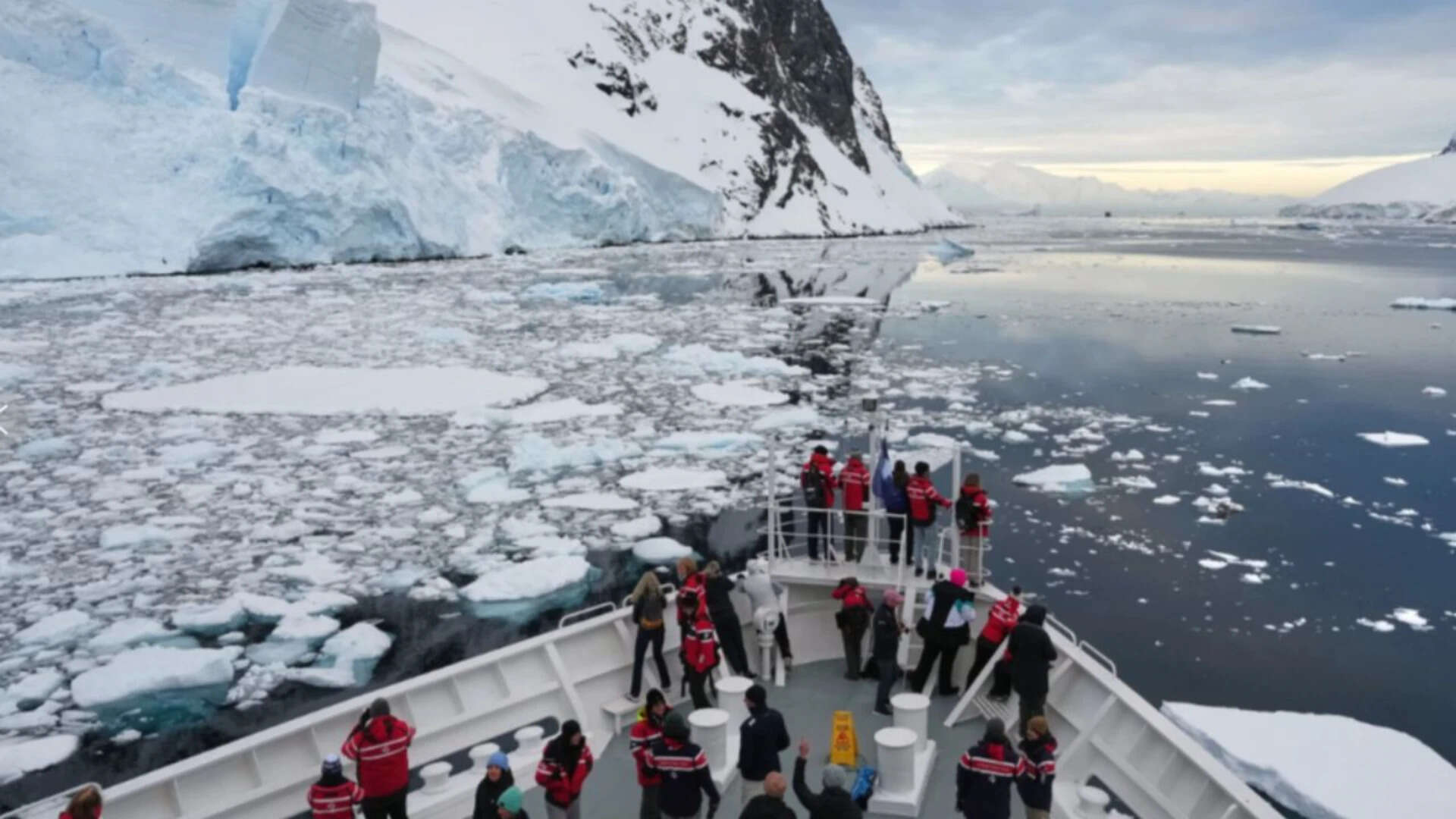
Traditional Antarctic travel relied on repurposed research vessels or smaller ice-strengthened ships carrying fewer than one hundred passengers. These legacy operations imposed natural limits on visitor footprints through high per-capita costs and restricted berth availability. The modern fleet consists of high-capacity luxury expedition ships designed to carry between two hundred and five hundred passengers.
This shift alters the unit economics of polar travel. Larger vessels achieve economies of scale, reducing the marginal cost per passenger while increasing total gross revenue per voyage. Operators deploy these assets across compressed seasonal windows, maximizing turnaround frequency between South American ports like Ushuaia and the Antarctic Peninsula.
The economic incentive structure rewards density. A ship carrying four hundred passengers generates sufficient revenue to absorb high fuel costs, ice-pilot retainers, and specialized insurance premiums while maintaining robust profit margins. Consequently, the commercial imperative to fill berths overrides the ecological carrying capacity of localized landing sites.
Site Concentration and the Bottleneck of Landing Infrastructure
Antarctic tourism is geographically constrained. The vast majority of vessels land on the Antarctic Peninsula and its adjacent islands because these locations offer ice-free anchorages, wildlife concentrations, and manageable transit times from the Drake Passage. This geographic concentration creates severe spatial friction.
The International Association of Antarctica Tour Operators establishes self-regulation protocols, including limits on the number of visitors ashore simultaneously and mandatory briefing requirements. These guidelines were engineered for a low-density era. At 120,000 annual visitors, the operational execution of these protocols creates critical bottlenecks.
When multiple high-capacity vessels converge on popular visitor sites such as Neko Harbour or Deception Island, operators must negotiate landing slots. This introduces scheduling compression. Guides face pressure to cycle groups through ashore excursions rapidly to maintain tight vessel timetables.
The physical impact of high-frequency foot traffic manifests as soil compaction, vegetation damage in fragile moss beds, and behavioral disruption of breeding seabirds and marine mammals. While individual landings are monitored, the cumulative footprint of successive cohorts visiting the same terrestrial zones throughout a four-month season exceeds the natural regeneration rate of polar ecosystems.
Regulatory Fragmentation and the Enforcement Deficit
Governance of the Antarctic Peninsula operates under the Antarctic Treaty System and the Protocol on Environmental Protection, commonly known as the Madrid Protocol. These legal instruments designate Antarctica as a natural reserve, devoted to peace and science. However, the system contains a structural vulnerability regarding commercial tourism regulation.
The treaty framework relies on consensus among consultative parties. Enacting binding, enforceable caps on visitor numbers or vessel sizes requires unanimous international agreement, a political threshold that is difficult to achieve given divergent national interests. As a result, oversight falls largely to self-regulation through industry associations.
While self-regulation provides compliance frameworks for reputable operators, it lacks coercive legal enforcement mechanisms for non-compliant actors or new market entrants operating outside traditional trade groups. The absence of a centralized maritime authority with powers to issue binding quotas or levy punitive fines for environmental infractions creates a regulatory vacuum.
Operators exploit this vacuum through jurisdictional arbitrage, registering vessels under flags of convenience and utilizing ports that lack strict oversight on polar environmental standards. This legal ambiguity shields commercial stakeholders from accountability while transferring the long-term ecological risk to the public commons.
The Risk Multiplier and Search and Rescue Exposure
Scaling visitor volume from a few thousand to 120,000 introduces severe systemic risks related to maritime safety and emergency response. Antarctica remains one of the most hostile environments on Earth, characterized by rapid meteorological shifts, uncharted hazards, and immense distances from major medical and rescue infrastructure.
When a high-capacity passenger vessel experiences a mechanical failure, grounding, or hull breach in Antarctic waters, the response capacity of the region is tested to its limits. Traditional maritime search and rescue assets in the Southern Ocean are scarce. National Antarctic programs possess limited resources, which are primarily dedicated to supporting scientific research stations rather than commercial rescue operations.
The assumption that modern technology mitigates all operational risk creates a false sense of security among travelers and operators. Larger ships carry sophisticated navigation systems, but ice conditions remain volatile and unpredictable. An incident involving a vessel carrying five hundred passengers and crew exceeds the immediate evacuation capacity of nearby stations or other tour ships, transforming a localized mechanical failure into a potential humanitarian crisis.
Operational Realignment for High-Density Polar Logistics
Addressing the pressures of high-volume Antarctic tourism requires moving beyond voluntary guidelines toward mandatory operational constraints. The objective is to decouple commercial growth from environmental degradation by enforcing structural limits on vessel deployment and site utilization.
Enforce Regional Vessel Capacity Caps
Regulatory bodies must transition from voluntary codes of conduct to legally binding tonnage and passenger caps per sector. Restricting maximum vessel size for specific landing zones eliminates the logistical strain of high-capacity ships. Operators should be incentivized to deploy smaller, specialized vessels that distribute visitor impact across a wider geographic dispersion rather than concentrating high volumes at historical honey-pot sites.
Implement Dynamic Site Rotation and Rest Periods
The current fixed-site landing model accelerates environmental wear. Management frameworks must adopt algorithmic site rotation models that enforce mandatory ecological rest periods. Using real-time monitoring of soil composition, wildlife breeding cycles, and micro-climate indicators, sites should be dynamically closed when cumulative stress exceeds established thresholds, redirecting traffic to resilient or underutilized zones.
Mandate Comprehensive Environmental Insurance Bonds
To internalize the externalized risks of polar operations, regulatory authorities should require operators to post substantial, liquid environmental and rescue bonds prior to the season. These financial instruments must cover the full cost of emergency evacuation, environmental remediation, and waste recovery. Tying insurance premiums directly to vessel safety records and environmental compliance history creates a direct financial incentive for risk mitigation, restructuring the economics of high-density Antarctic expeditions.