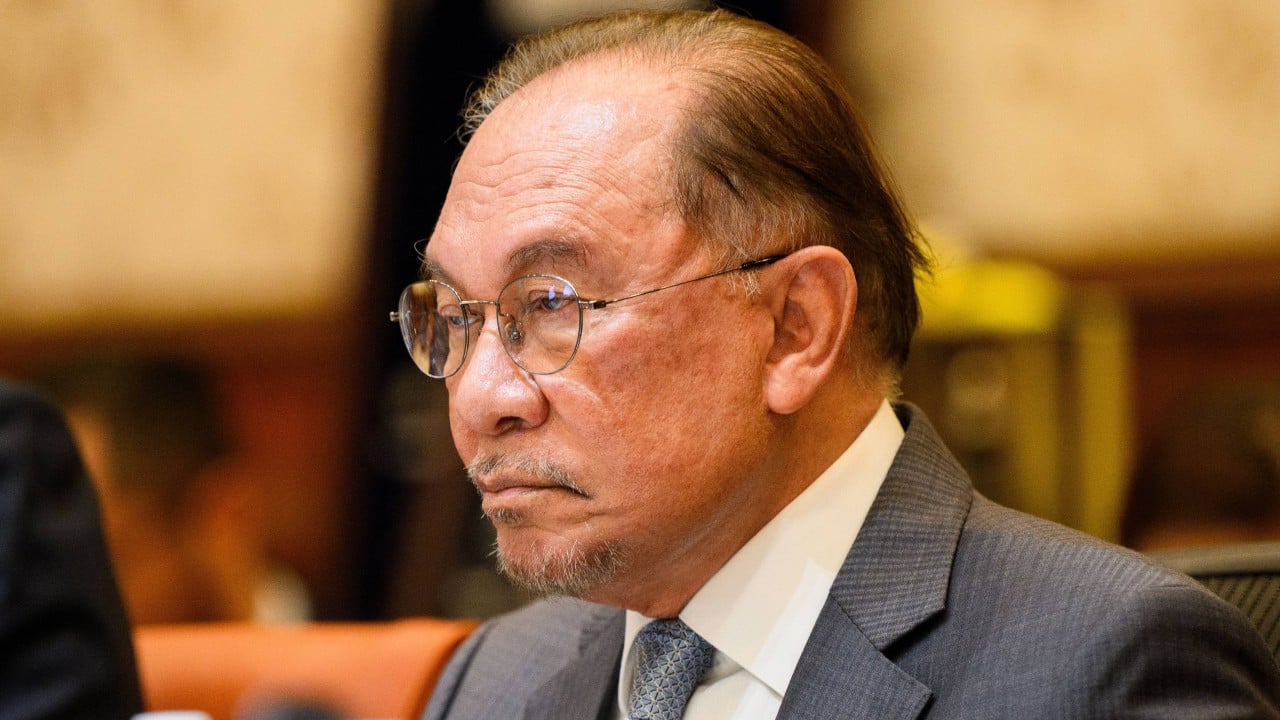
The international press is obsessed with a fairytale. They want to believe that Malaysia is a fragile laboratory for "reformist" democracy, currently under siege by book-banning zealots and Middle Eastern geopolitics. They frame Anwar Ibrahim as a tragic figure, a man of the West caught between his liberal promises and a conservative tide.
This narrative is a fundamental misunderstanding of Malaysian power dynamics.
Anwar isn't "failing" to reform Malaysia. He is successfully recalibrating the status quo to ensure survival. The "reform agenda" everyone laments was never a checklist of Western liberal values; it was a campaign slogan designed to consolidate a fractured base. If you’re waiting for a secular, progressive utopia to emerge from the Madani administration, you haven't been paying attention to the last thirty years of Southeast Asian realpolitik.
The Myth of the Reluctant Censor
Foreign observers point to the recent bans on LGBTQ-themed literature or the "Allah" socks controversy as evidence of Anwar "caving" to the right-wing Perikatan Nasional (PN). This assumes he wants to go the other way.
Let's be clear: Anwar Ibrahim has always been an Islamist. His roots in ABIM (Angkatan Belia Islam Malaysia) weren't a phase; they are his DNA. The shock from the liberal elite when his government enforces morality laws is a symptom of their own projection. They saw what they wanted to see in a man who spent years in the wilderness.
Censorship in Malaysia isn't a bug; it’s a feature of the social contract. To govern Malaysia, you must hold the Malay-Muslim heartland. If you don't hold it, you don't have a mandate. Anwar isn't being "tested" by book bans—he is using them as a signal. He is signaling to the rural electorate that the "Madani" brand is just as protective of traditional values as the opposition. It’s not a retreat. It’s a hostile takeover of his opponent’s platform.
Geopolitics as Domestic Distraction
The chatter about the "Iran war" or Malaysia’s stance on Hamas is often framed as a risky foreign policy gamble that might alienate Western investors. The "lazy consensus" says Anwar is playing with fire by being the most vocal pro-Palestine leader in the region.
The reality? This is the cheapest, most effective domestic policy tool in his shed.
By taking an aggressive stance on the global stage, Anwar achieves two things:
- He renders the opposition's religious critiques impotent. How can PN claim he’s a "Western puppet" when he’s the one shouting loudest at the UN?
- He creates a rally-around-the-flag effect that transcends economic anxiety.
Investors aren't as squeamish as journalists think. Capital doesn't care about fiery rhetoric at a rally in Kuala Lumpur; it cares about the Ringgit’s stability and the semiconductor supply chain. Despite the headlines, US tech giants are still pouring billions into Malaysian data centers. Microsoft and Google aren't looking for a "liberal" leader; they’re looking for a predictable one. Anwar’s "radical" foreign policy is the theater that allows him to maintain a pro-market, neoliberal domestic agenda without getting lynched by the populist right.
The Economic Mirage of Reform
We hear constant talk about "structural reform." This usually refers to ending the race-based economic policies of the New Economic Policy (NEP).
Here is the truth nobody wants to say: No Malaysian Prime Minister will ever dismantle the NEP. To do so would be political suicide. Anwar knows this better than anyone. He was the Finance Minister under Mahathir during the boom years. He understands that the Malaysian economy is built on a foundation of patronage and ethnic quotas.
Instead of reform, we get "rationalization." We get subsidy cuts—like the recent move on diesel—packaged as fiscal responsibility. This isn't reform; it’s accounting. It’s an attempt to balance the books while keeping the underlying structure of "Bumiputera" preference intact.
The danger isn't that Anwar will fail to change the system. The danger is that the system will bankrupt itself while he’s busy trying to manage the optics. Malaysia is stuck in the Middle-Income Trap not because of a lack of "reformist will," but because the political cost of productivity is too high for any incumbent to pay.
Stop Asking the Wrong Questions
Most analysts ask: "Can Anwar survive the conservative wave?"
The real question is: "How much of the conservative wave is Anwar actively riding?"
If you think he’s a victim of circumstances, you're missing the calculated nature of his maneuvers. Every time the government raids a bookstore or takes a hardline stance on a social issue, it isn't a "setback" for the administration. It is a brick in the wall they are building to keep the opposition out.
The Western press treats these events as "crises of identity." For the people in the Prime Minister's Office, these are tactical wins. They are successfully moving the goalposts. They have convinced the liberal wing of the coalition (DAP) to stay silent in the name of "stability," while they out-Islamist the Islamists.
The Cost of "Stability"
There is a price for this strategy. The "battle scars" of Malaysian politics show that when you try to be everything to everyone, you eventually become nothing to no one.
I’ve seen administrations try to play this double game before. They think they can control the tiger they are riding. By validating the rhetoric of the far-right to stay in power, Anwar is narrowing the space for any future secular discourse. He isn't holding the line against extremism; he is moving the line to include himself.
This creates a vacuum. The youth who voted for "Reformasi" in 2022 are becoming cynical. You can only tell your base "Wait, the time isn't right" for so long before they stop listening. The risk isn't a coup or a war; it’s a slow, grinding apathy that rots the institution from the inside out.
The Intelligence of the "Inconsistency"
To the outside world, Anwar Ibrahim looks inconsistent. He talks about human rights in Gaza but enforces draconian laws at home. He courts Western AI investment while bashing Western foreign policy.
This isn't confusion. It’s high-level hedging.
In a world that is decoupling, Malaysia is attempting to be the ultimate "non-aligned" hub. Anwar’s strategy is to be too useful to the West to be sanctioned, and too "Islamic" for the East to be ignored. He is betting that the world’s need for chips and oil will outweigh its desire for a consistent moral narrative.
So, stop looking for the "Reformist" Anwar. He doesn't exist. He is a pragmatic survivor leading a country that is fundamentally resistant to the very changes the world is demanding. If you want to understand Malaysia, stop reading the manifestos and start looking at the survival instincts.
The "sternest test" isn't whether he can reform the country. It’s whether he can keep the masks from slipping long enough to finish his term.
The reform movement died the moment the Unity Government was formed in a hotel backroom. Everything we’ve seen since is just the funeral procession, expertly choreographed to look like a marathon.
Stop looking for a revolution. Start watching the consolidation.