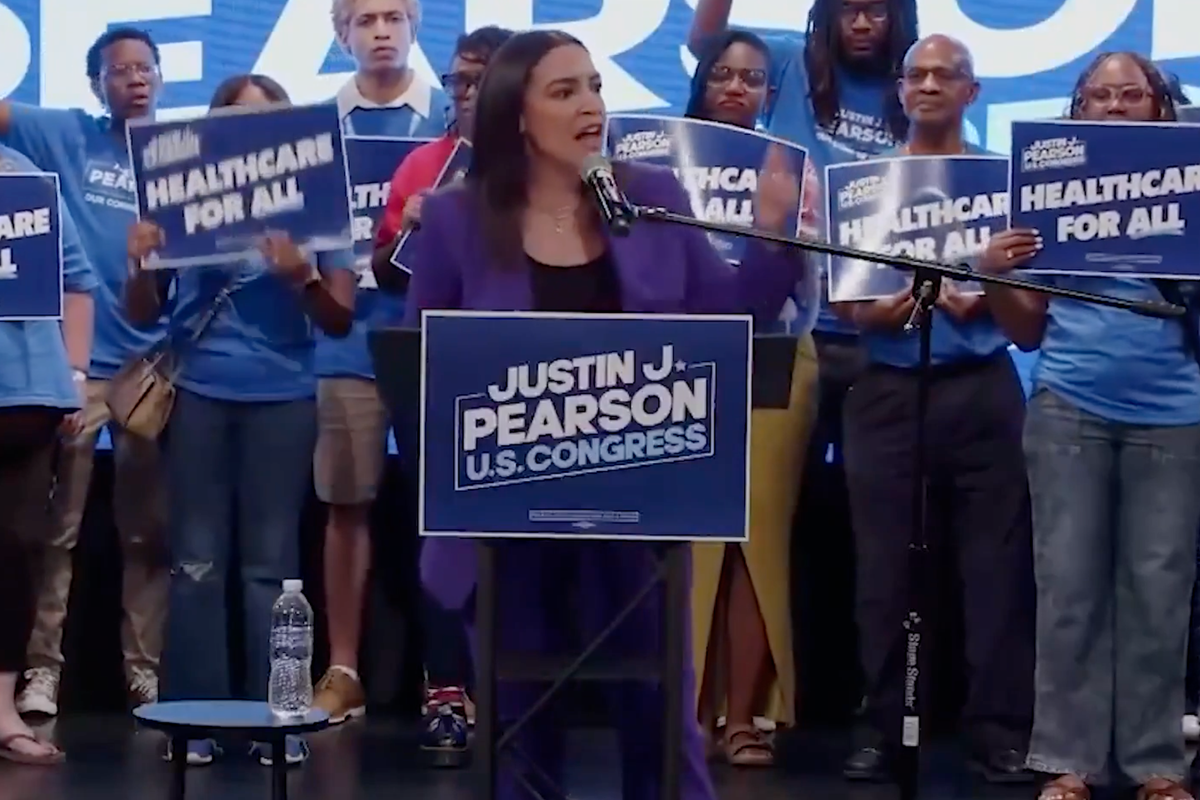
When Representative Alexandria Ocasio-Cortez stepped up to the microphone at a Get Out The Vote rally in Memphis, Tennessee alongside Justin J. Pearson, she brought high-voltage energy. She talked about civil rights, environmental justice, corporate power, and economic hardship.
Yet within hours, social media blew up over something completely different.
Conservative critics and MAGA commentators jumped on her delivery, claiming she suddenly adopted a "fake Southern accent" to appeal to the local crowd. Clips went viral, commentary shows ran segments on it, and political opponents framed it as cringe-worthy pander politics.
It happens every few years. A politician speaks to a specific crowd, their cadence shifts, their vowels lengthen or sharpen, and the internet erupts into mockery. But why does code-switching trigger such violent political reactions? Is it calculated manipulation or basic human speech adaptation?
What Code Switching Actually Means in Politics
Sociolinguists have documented linguistic adaptation for decades. The technical term is code-switching, or communication accommodation theory. When people interact with different groups, they naturally adapt their tone, cadence, syntax, and sometimes accent to build rapport or reflect the energy in the room.
Everyone does this to some extent. You don't talk to your boss the same way you talk to your high school buddies over a beer. You don't use the same cadence at a funeral that you use at a football tailgate.
When AOC spoke in Memphis, her speech cadence leaned into a rhythmic, preacher-style delivery common in Southern grassroots rallies and Black church traditions. For her supporters, it was authentic emotional engagement and solidarity with Justin J. Pearson's movement. For her detractors, it sounded like a New Yorker putting on a accent performance to trick voters.
The outrage isn't really about linguistics. It's about perceived authenticity.
The Long History of Accent Controversies
Ocasio-Cortez is far from the first politician to get roasted for changing her voice on the campaign trail. Political history is filled with candidates whose speech shifted depending on their zip code.
- Hillary Clinton: Infamously mocked in 2007 when she quoted James Cleveland at a church in Selma, Alabama, adopting a distinct Southern drawl. Critics dubbed it her "instant accent."
- Barack Obama: Frequently adjusted his cadence, vocabulary, and vocal cadence depending on whether he spoke to rural white audiences, urban crowds, or policy think tanks.
- George W. Bush: Raised in Connecticut and educated at Yale and Harvard, Bush deliberately leaned heavily into his Midland Texas drawl to burnish his good-old-boy populist image.
- Joe Biden: Regularly shifts into a blue-collar Scrantonian cadence when talking to labor unions, dropping g's and using working-class colloquialisms.
Political speech is fundamentally persuasive performance art. Every major political figure tunes their vocal instrument for the room they're playing to.
Why MAGA Critics Zeroed In on Memphis
So why did this specific Tennessee rally moment trigger such a massive wave of conservative pushback?
First, AOC represents a lightning rod in modern American politics. Anything she does will be magnified and analyzed under a microscope by right-wing media outlets looking for hypocrisies.
Second, the contrast is sharp. AOC is strongly identified with New York City, specifically the Bronx and Queens. Her baseline public persona is fast-talking, sharp, Northeastern, and distinctly urban. When that vocal baseline abruptly shifts during a speech in the South, the shift feels jarring to anyone watching online clips out of context.
Third, modern political commentary thrives on viral moments of cringe. A 10-second video snippet highlighting a sudden shift in cadence makes for perfect outrage bait on X, TikTok, and cable news broadcasts.
Authenticity vs Performance in Modern Campaigning
The core issue facing modern candidates is that local moments no longer stay local.
Twenty-five years ago, a candidate could drop into a church in Memphis or a diner in Iowa, adopt the local vernacular, and connect with the 200 people in the room. Today, a high-definition video of that exact moment gets broadcast to tens of millions of people who aren't in that room and don't share that cultural context.
What feels natural and empathetic to the live audience can look calculated and phony through a smartphone screen thousands of miles away.
Linguistic flexibility can build real trust with the people sitting in front of you. But in a hyper-connected media environment, it creates a massive vulnerability with everyone else.
What You Should Watch For Next Time
The next time a politician gets called out for "changing their voice" on the stump, don't just laugh at the viral clip. Look at what's actually happening underneath the political spin.
- Check the baseline: Compare the speech clip to how the speaker talks in quiet, one-on-one interviews, not just on formal Senate floors.
- Examine the audience: Notice who is in the room. Are they adapting to the energy and cultural norms of the crowd, or are they literally faking a regional dialect?
- Separate rhythm from accent: Much of what people call a "fake accent" is actually a shift in vocal rhythm, pitch, and pacing rather than actual altered vowel sounds.
Politicians aren't going to stop code-switching anytime soon. As long as voters demand both relatable authenticity and passionate performances, candidates will keep tuning their voices to the crowd in front of them—and their opponents will keep calling them fake for doing it.