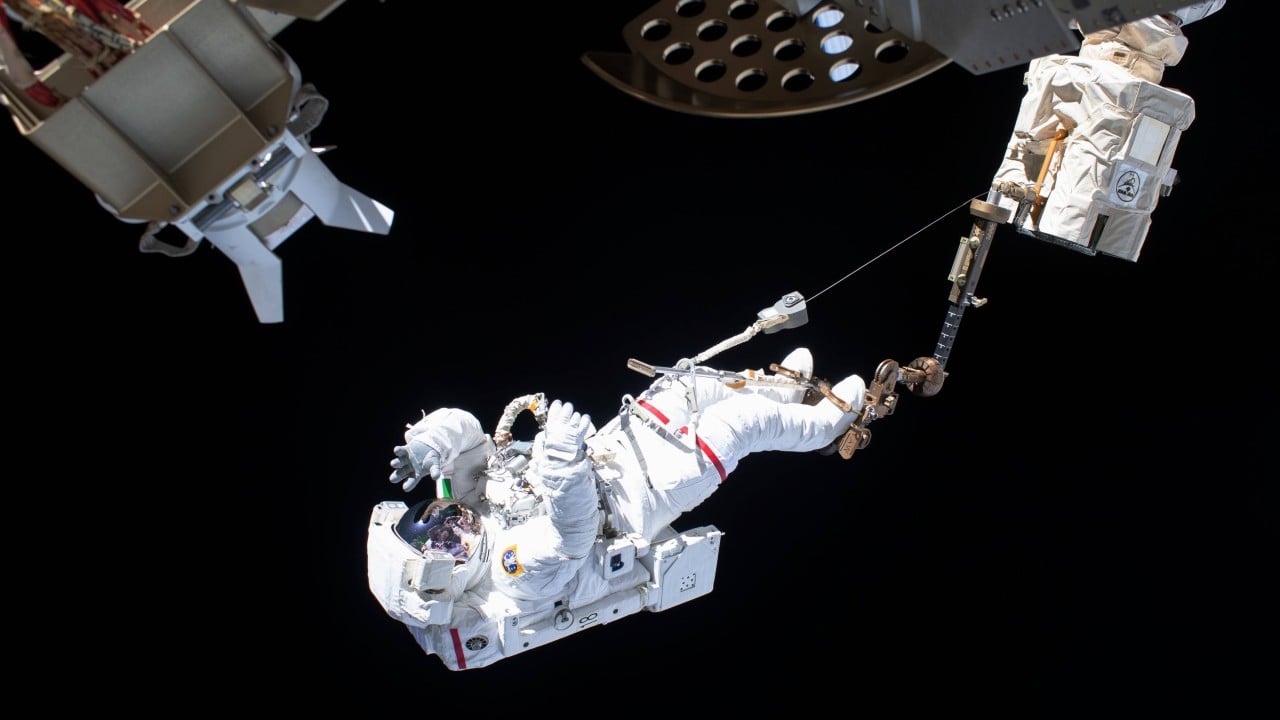
NASA’s selection of the Artemis III crew signals a fundamental shift from exploration to deep-space logistics management. By naming Randy Bresnik (Commander), Luca Parmitano (Pilot), Frank Rubio (Mission Specialist), and Andre Douglas (Mission Specialist) to a re-baselined low Earth orbit (LEO) mission, the agency has prioritized architectural validation over a premature landing attempt. This operational pivot alters the risk profile of the entire Artemis program, decoupling the testing of complex docking mechanisms from the environmental hazards of the lunar South Pole.
The primary objective of the 2027 Artemis III flight is to execute an orbital infrastructure demonstration. Rather than executing a direct-return lunar trajectory as originally envisioned, the mission will evaluate the technical interplay between three disparate heavy-lift architectures: NASA’s Space Launch System (SLS), SpaceX’s Starship Human Landing System (HLS), and Blue Origin’s Blue Moon lander. Managing the complex choreography of these assets within LEO forms a strict prerequisite for the crewed lunar landing now deferred to Artemis IV in 2028.
The Triple-Vehicle Rendezvous Framework
The revised execution plan introduces a multi-launch, multi-provider operational envelope. To understand why this structural modification was required, one must evaluate the architectural dependencies established across the private and public components of the mission.
+--------------------------------------------------------------+
|                    Multi-Launch Campaign                     |
+--------------------------------------------------------------+
|  1. Blue Moon / Starship Pathfinders -> Launched into LEO     |
|  2. Space Launch System (SLS)       -> Launches Crew in Orion|
|  3. Orbital Rendezvous Block         -> Dual-Lander Docking   |
+--------------------------------------------------------------+
The mission profile dictates that the commercial lander pathfinders—capable of remaining active in orbit for multiple weeks—will launch first via independent commercial launch vehicles, such as Blue Origin’s New Glenn and SpaceX’s Super Heavy. Following asset insertion and health verification in LEO, the crew will launch aboard the Orion spacecraft powered by the SLS.
This sequence establishes three distinct technical gates:
- Co-planar Insertion: The launch windows for the SLS must align precisely with the drifting orbital planes of the pre-deployed commercial landers to minimize Orion's delta-V propellant expenditure during intercept maneuvers.
- Dissimilar Docking Interfaces: Orion must establish a rigid structural and data link with two entirely distinct commercial architectures. The flight plan requires docking with the Blue Moon lander, conducting internal ingress and environmental system checkouts over approximately 48 hours, undocking, and subsequently repeating the sequence with SpaceX’s Starship.
- Dual-Architecture Life Support Integration: The crew must verify that the Environmental Control and Life Support Systems (ECLSS) of both commercial vehicles can normalize pressures, scrub carbon dioxide, and maintain thermal equilibrium when mated with the Orion capsule.
By isolating these variables in LEO, the agency isolates mechanical or software integration failures from the compounding risks of a deep-space environment. A docking system failure or an ECLSS pressure anomaly in LEO permits an immediate, low-energy abort-to-Earth sequence via a standard Orion atmospheric reentry profile. Conversely, encountering the same failure mode in a Near-Rectilinear Halo Orbit (NRHO) around the Moon introduces severe delta-V penalties and extends the emergency return timeline to several days.
Quantitative Human Factors and Crew Selection Logic
The selection of the specific four-man crew correlates directly with the operational bottlenecks inherent to an unproven, multi-vehicle profile. NASA has engineered a matrix of hyper-specialized competencies to mitigate identified flight risks.
Command and System Familiarity
Commander Randy Bresnik provides the mandatory legacy system continuity required for an experimental flight. As a veteran of both the Space Shuttle program and the International Space Station (ISS), Bresnik holds over 7,000 flight hours and extensive Extravehicular Activity (EVA) experience. His subsequent role managing crew insight during vehicle development translates to deep familiarity with the nominal and off-nominal software states of the Orion capsule.
High-Stress Aerodynamic Control
Pilot Luca Parmitano of the European Space Agency (ESA) fills a critical operational requirement for manual piloting intervention. A graduate of the Italian Air Force Academy and an experienced test pilot with certifications across 40 distinct aircraft types, Parmitano possesses the spatial awareness and manual control proficiency required if automated proximity operations between Orion and the massive commercial lander structures fail.
Physiological Endurance and System Stress Isolation
Mission Specialist Frank Rubio holds the absolute U.S. record for continuous spaceflight at 371 days. His selection provides an unmatched baseline for analyzing personal and system endurance during high-stress operational cadences. As a trained flight surgeon and former military helicopter pilot, Rubio can serve as a primary analytical node for evaluating the human-machine interfaces of the newly developed commercial lander cockpits under active flight conditions.
Architectural Prototyping and Backup Continuity
Mission Specialist Andre Douglas represents the direct insertion of engineering design expertise into the live cockpit. Having served as the primary backup crew member for Artemis II, Douglas completed the end-to-end training syllabus for Orion operations. His background as a systems engineer allows him to act as an effective translator between the flight crew and the engineering teams on the ground when debugging real-time integration anomalies across the commercial hardware.
Thermal Protection and Supply Chain Constraints
The technical realities constraining the Artemis III timeline extend beyond crew readiness to critical hardware components. The mission serves as the initial flight test for two fundamental hardware redesigns: the primary thermal protection system and the heavy-lift launch infrastructure.
During the uncrewed Artemis I mission, the spacecraft's primary heat shield experienced unexpected ablation behavior, shedding material in distinct fragments rather than eroding smoothly through uniform charring. A subsequent root-cause investigation identified insufficient material porosity as the primary driver of the structural flaking, which risked localized thermal pockets during high-velocity atmospheric insertion.
While Artemis II bypassed a total hardware replacement by utilizing an altered, lower-energy atmospheric entry trajectory to bound thermal loads, Artemis III will feature the first deployment of the fully redesigned, higher-permeability heat shield structure. The two-week flight duration in LEO provides an operational buffer to observe the integrity of this thermal barrier under baseline orbital soaking conditions prior to the high-velocity, hyperbolic entry velocities exceeding 11 kilometers per second that characterize a direct return from the Moon.
Simultaneously, the program faces launch pad infrastructure constraints. Blue Origin’s recent New Glenn structural anomaly on its Florida launch pad introduced immediate timeline friction. Repairing the ground support equipment, verifying the structural integrity of the flame deflector systems, and validating the launch pad fluid lines must occur concurrently with NASA’s stacking of the SLS solid rocket boosters at the Kennedy Space Center. The tight coupling of these independent supply chains introduces an operational bottleneck: any delay in commercial pad recertification directly compresses the window available to execute the pre-launch pathfinder operations required for the 2027 flight window.
The Strategic Path toward Artemis IV
The structural re-baselining of Artemis III from a premature lunar landing to an orbital validation flight represents a calculated compromise between geopolitical timelines and rigorous risk management. The definitive framework for the next 24 months requires treating LEO as a high-fidelity laboratory to systematically retire the core technical risks of human deep-space logistics.
The final strategic objective of this flight profile is the standardization of the commercial supply chain. By forcing Blue Origin and SpaceX to simultaneously deliver flight-ready test articles to orbit in 2027, NASA establishes a competitive operational paradigm. The data gathered during the dual-docking phases of Artemis III will dictate the finalized structural, software, and procedural baselines for the Artemis IV mission in 2028. This shifts the program away from bespoke, single-use hardware validation and transitions it toward an iterative, high-cadence procurement model capable of sustaining a permanent infrastructure footprint at the lunar South Pole.